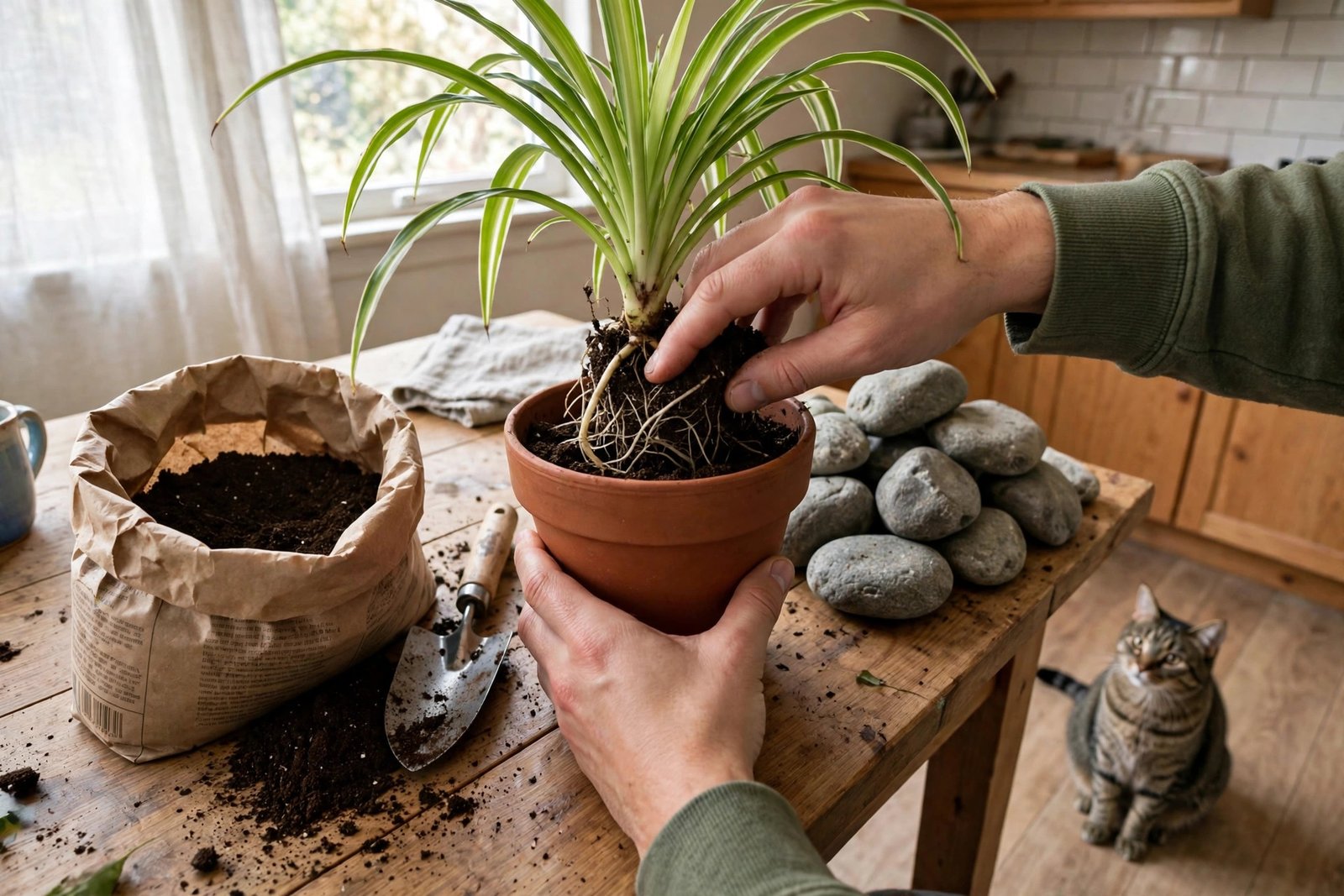
Most cat owners check the plant before they bring it home, looking up the botanical name to confirm it is non-toxic. Few check what the plant is sitting in. Choosing cat safe potting materials matters just as much as choosing a safe plant, because a curious cat does not only chew leaves: cats dig, paw at loose soil, and swallow what they find.
The soil itself is rarely the biggest problem. Plain potting mix is not generally considered highly toxic to cats, and good cat safe potting materials are deliberately boring — peat or coir, bark, perlite, and vermiculite.
The Short Answer
Start with a plain, untreated potting mix with no added fertilizer, pesticide, or cocoa shell mulch, and read the label before you buy. If the bag lists bone meal, blood meal, iron, slow-release fertilizer pellets, or a systemic insecticide, keep it sealed and out of reach. That single label check is the most important part of choosing cat safe potting materials.
Cover the soil with large, smooth stones too big to swallow or a mesh grid, and choose a heavy pot your cat cannot tip over. If your cat eats potting mix or fertilizer, call your veterinarian or poison control promptly. Plain mix, a covered surface, and a heavy pot: that is cat safe potting materials done right.
What Is Actually in Potting Mix?
Potting mix is not soil dug from the garden. Here is what you will find inside most cat safe potting materials.
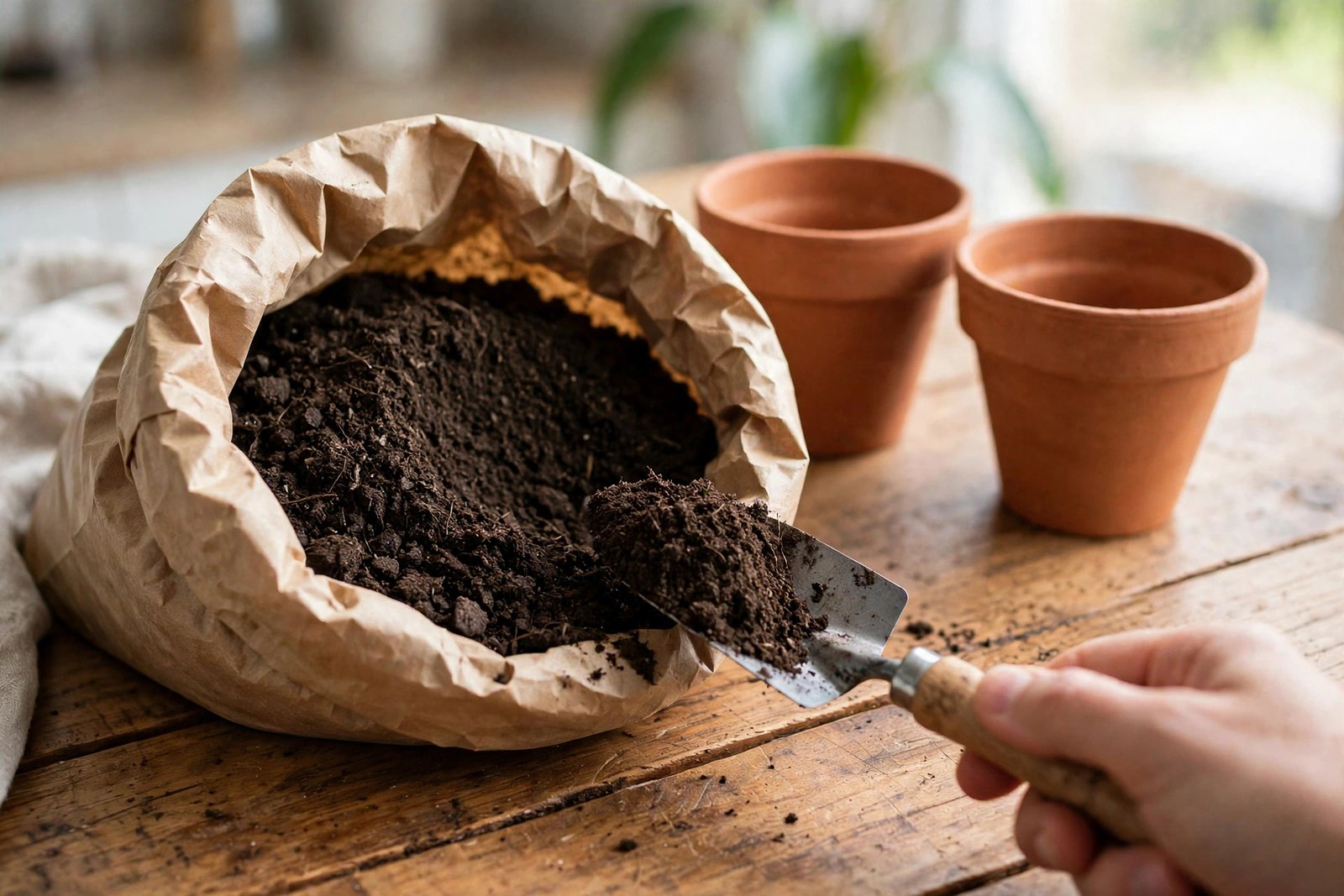
Peat moss or coir. Peat moss is decayed sphagnum moss; coir is shredded coconut husk fiber. Both hold water. Neither is listed as toxic to cats.
Bark chips. Shredded bark, usually pine or fir, adds air space and drainage. Plain, untreated bark is not listed as toxic to cats. Small pieces can choke, and eating a lot may cause a blockage. Coarse sand or grit improves drainage for cacti and succulents; use horticultural sand only.
Perlite. Those little white pieces are perlite, a volcanic mineral heated until it pops. Perlite is widely regarded as non-toxic and inert, and it is a standard part of cat safe potting materials. Eating a few pieces is usually harmless, but a large amount can cause mild stomach upset.
Fertilizer. Many bagged mixes already contain fertilizer, mixed in or as slow-release pellets — the ingredient that matters most for cats. Finished compost is low-risk, but homemade compost can contain mold and scraps toxic to cats, such as onion. Some mixes also contain moisture-retaining gel crystals — keep them mixed into the soil, never on the surface, as they can swell inside the stomach.
The One Mulch to Never Use: Cocoa Shell Mulch
If you remember one thing from this guide, make it this: do not use cocoa shell mulch in a home with cats. Cocoa shell mulch is made from spent cocoa bean shells, a by-product of chocolate production. It contains theobromine and caffeine, the same compounds that make chocolate toxic to pets, and it has no place in cat safe potting materials.
ASPCA data puts the theobromine in cocoa bean shells at 0.19% to 2.98%, and dogs that ate cocoa mulch developed methylxanthine poisoning signs. Theobromine is harmful to cats too: eating cocoa mulch can cause vomiting, diarrhea, restlessness, a rapid heart rate, tremors, and seizures.
There is no safe amount, and levels vary from bag to bag, so do not use cocoa shell mulch at all — not indoors, not outdoors, and not as a top dressing. When you choose cat safe potting materials, judge a product by its ingredients, not by the word on the front of the bag.
Fertilizers: The Main Risk in Potting Materials
Fertilizer is where cat safe potting materials go from low-risk to genuinely dangerous. Most fertilizers contain nitrogen, phosphorus, and potassium (the N-P-K numbers on the bag), plus iron and other minerals.
Pet Poison Helpline lists drooling, vomiting, diarrhea, abdominal pain, difficulty breathing, and “muddy” colored gums. A cat can seem fine for hours and then become ill, so call for advice right away instead of watching and waiting. Choosing cat safe potting materials means treating every fertilizer label as a warning label until you have read it.
Meal-Based Fertilizers (Bone Meal, Blood Meal, Feather Meal)
Bone meal, blood meal, and feather meal smell like food to pets. Pet Poison Helpline warns that large ingestions can form a concretion — a hard mass — in the stomach, causing a bowel obstruction or pancreatitis. They have no place in cat safe potting materials for indoor plants.
Iron-Containing Fertilizers
Some fertilizers, lawn foods, and moss killers contain iron, which can cause iron poisoning. Large ingestions can lead to bloody vomit, bloody stools, lethargy, a rapid heart rate, and liver or kidney damage.
Slow-Release Pellets
Slow-release fertilizer comes as small, round, brightly colored pellets mixed into potting soil or sprinkled on top. Each pellet holds weeks of fertilizer in one small bead, and cats can easily pick them up. Bury any top layer under plain mix and sweep up spills at once.
How to Feed Plants More Safely
Feed lightly, only in spring and summer. A balanced liquid fertilizer at half strength, once a month, is enough for most easy houseplants. Water it in, keep the cat out until the soil surface is dry, and store the bottle sealed. That routine keeps your plants fed and keeps cat safe potting materials safe.
Never let your cat drink from a plant saucer: drainage water from a fertilized pot can carry fertilizer residue. Empty saucers after watering.
Pesticide-Treated Soil and Systemic Insecticides
Read the label before you buy. If a bag mentions insect control, systemic insecticide, or a chemical name you do not recognize, treat it as a treated product: use it only where the cat cannot reach it. That is the whole point of cat safe potting materials — the plain bag is the safe bag.
If a plant arrives already treated — many are sprayed before sale — quarantine it in a cat-free room for one to two weeks. For the full quarantine routine, see introducing new houseplants.
How to Choose: A Two-Minute Checklist
Use this checklist in the garden center — it takes two minutes and is the fastest way to pick good cat safe potting materials.
Read the ingredients list. Look for peat or coir, bark, perlite, and vermiculite. Avoid bone meal, blood meal, feather meal, iron, slow-release pellets, and cocoa shell.
Prefer unfertilized mix. A plain, seed-starting, or cactus mix with no added fertilizer gives you control over feeding.
Check “pet safe” claims carefully. There is no standard definition of “pet safe” on a soil bag. A product can carry the claim and still contain bone meal or iron.
Avoid cocoa shell mulch entirely. Do not use it indoors or outdoors where a cat can reach it.
Buy fresh, sealed bags. Old, torn, or damp bags can grow mold, and unlabelled bulk soil may contain anything. Store bags sealed and upright.
A quick label check every time you buy keeps cat safe potting materials safe.
Choosing the Right Pot: Terracotta vs Plastic vs Ceramic
The pot matters as much as the mix in cat safe potting materials. A light pot full of damp soil is easy for a cat to tip over, spilling soil everywhere.
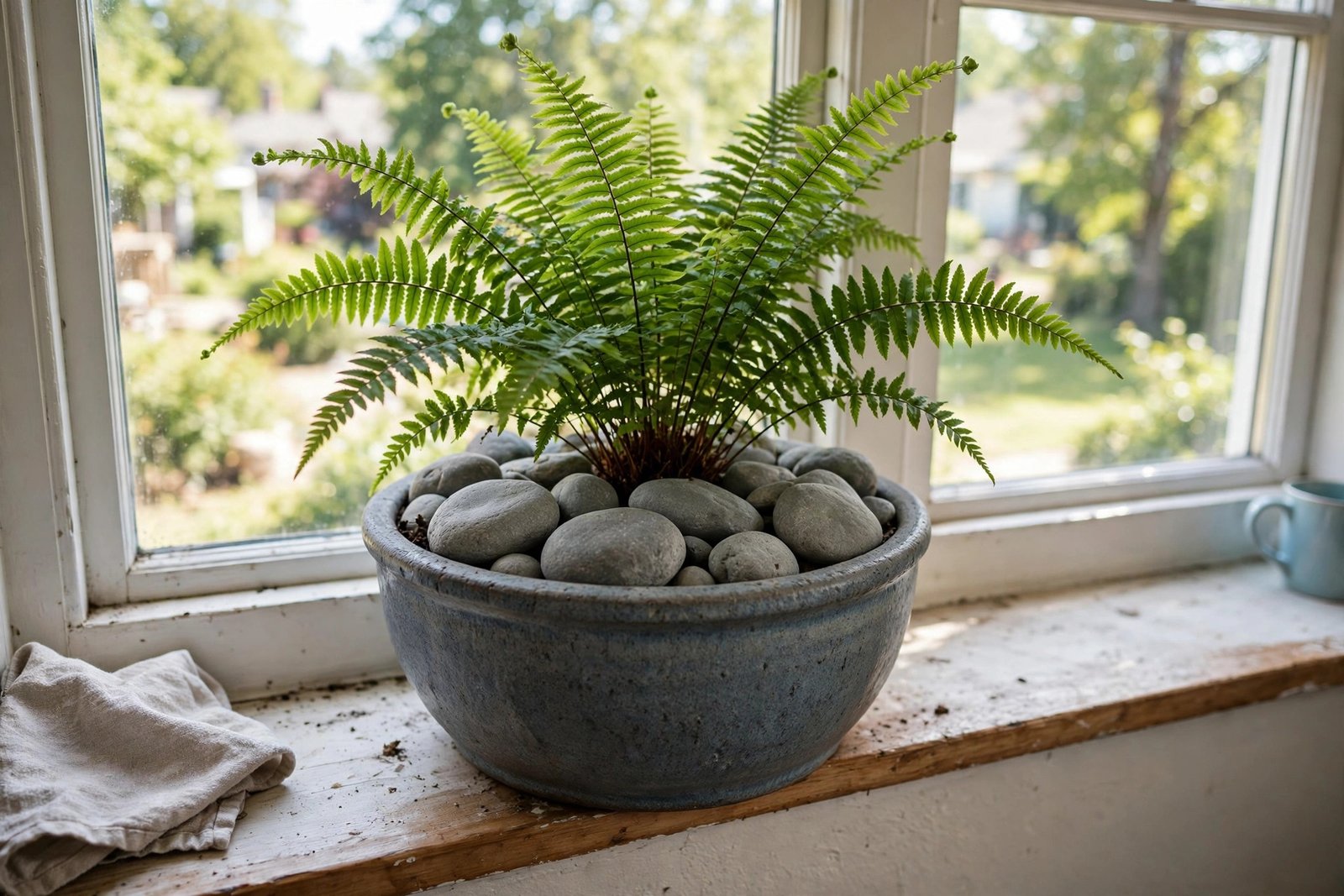
Terracotta. Unglazed terracotta is porous, so it dries out faster and lets roots breathe — good for succulents. A small terracotta pot is still light enough to knock over, so use a heavy outer pot.
Plastic. Plastic pots are cheap, light, and keep moisture in longer. That lightness makes it the easiest to tip. Sit plastic pots inside a heavy ceramic outer pot.
Ceramic. Glazed ceramic pots are heavy, stable, and easy to wipe clean — the best default choice for a home with cats. Check that the glaze is intact and the pot has a drainage hole.
Always use a pot with drainage holes and empty the saucer after watering: standing water can carry fertilizer residue. A heavy pot with drainage, a saucer you empty, and plain mix inside serves both the plant and the cat — and it is what good cat safe potting materials look like in practice.
Covering the Soil to Stop Digging
Even the safest mix is not food — so block access to the surface.
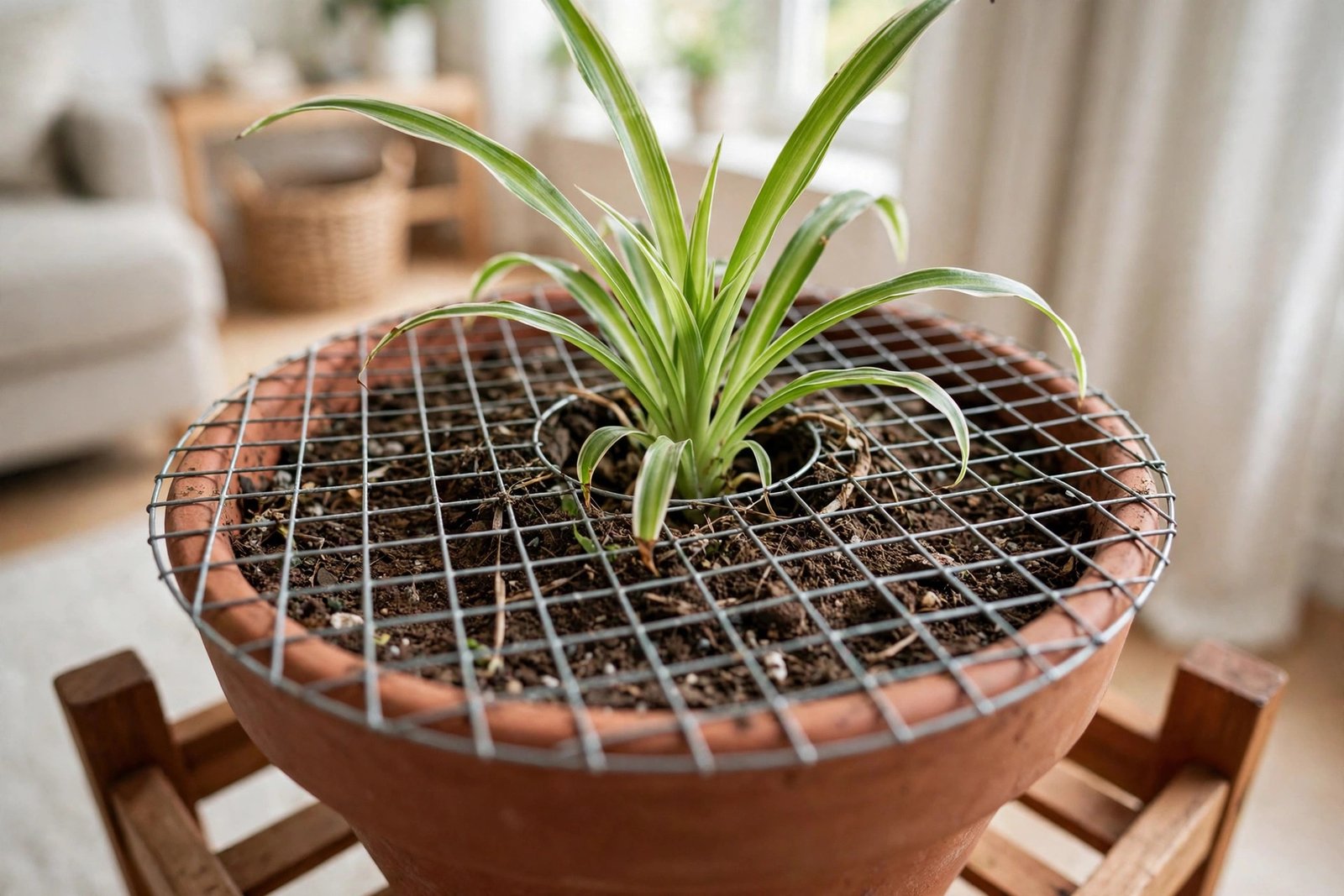
Cover the soil with large, smooth stones too big for your cat to swallow. Large smooth stones are the simplest cat safe potting materials cover you can buy. Do not use small pebbles or cocoa shell mulch as a cover. For the full digging guide, see stopping cats digging in soil.
A mesh grid cut to fit the pot is the other reliable option. Use a grid with openings small enough to block paws but wide enough for water, with a hole cut for the stem. A grid plus a heavy pot is one of the most reliable cat safe potting materials setups for a determined digger. For more ways to keep plants and cats apart without harming either, see keeping cats out of houseplants.
Place plants out of easy reach, and give the cat a pot of cat grass — grown from untreated seed in plain potting soil with no fertilizer — to dig in and chew. For placement ideas, see where to place houseplants.
Repotting Day: A Safer Routine
Repotting is the riskiest day for soil exposure: bags are open, soil is loose, and the cat is curious. Put the cat in another room until you have finished and cleaned up.
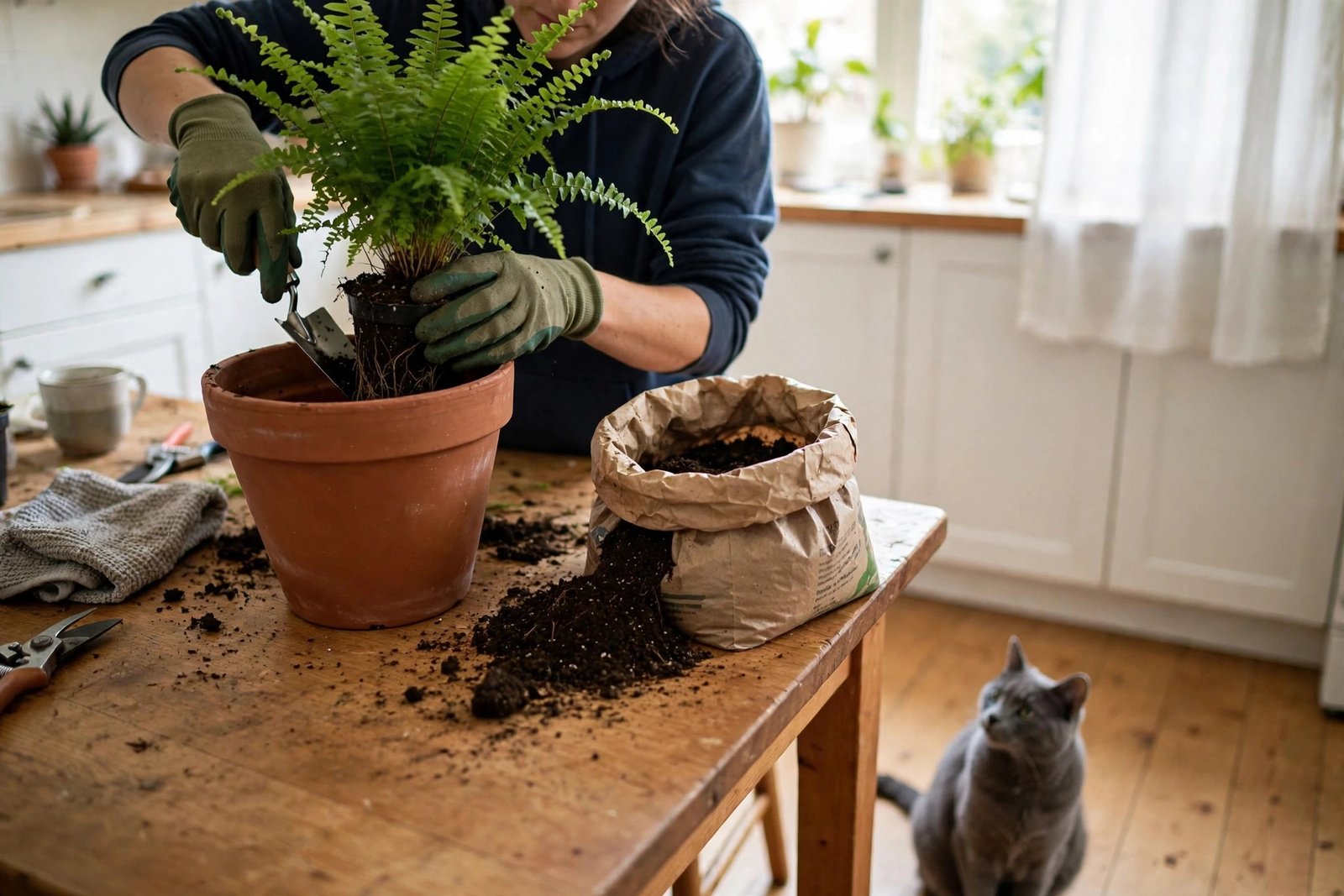
Dampen the mix before you pour it. Sweep up every spill before the cat comes back: perlite, fertilizer pellets, and loose soil are exactly what a cat investigates first. Put the bag away sealed and out of reach. Choosing cat safe potting materials is only half the job — handling them with the cat out of the room is the other half.
What to Do If Your Cat Eats Potting Mix or Fertilizer
If your cat eats potting mix, fertilizer, or mulch, treat it as an exposure and act promptly. First, move the cat away from the soil or bag and prevent more eating. If there is soil in your cat’s mouth, remove it only if you can do so safely.
Second, save the bag or take a photo of the label. The product name, N-P-K numbers, and ingredient list are what your veterinarian needs. Keep the bag: its label tells your veterinarian exactly which cat safe potting materials your cat reached.
Third, call your veterinarian or poison control promptly. In the United States, the ASPCA Animal Poison Control Center is available at (888) 426-4435, and Pet Poison Helpline is available at (855) 764-7661. Do not wait for symptoms — Cornell’s Feline Health Center advises calling a veterinarian immediately after a suspected toxic ingestion. For a fuller emergency guide, see what to do if your cat eats a toxic plant.
Fourth, watch your cat closely for the next few hours. Keep the cat indoors, in a quiet room, with fresh water available. If the cat vomits repeatedly, drools heavily, seems lethargic, or has difficulty breathing, contact a veterinarian again immediately. Do not try a home remedy, and do not try to make your cat vomit.
Frequently Asked Questions
Is potting soil toxic to cats?
Plain potting soil is not generally considered highly toxic to cats. The real risk is what has been added to it: fertilizer, bone or blood meal, iron, pesticides, or cocoa shell mulch.
Is perlite toxic to cats?
Perlite is widely regarded as non-toxic and inert, and it is a standard ingredient in cat safe potting materials. Eating a few pieces is usually harmless, but a large amount can cause mild stomach upset, and the dust can irritate the airways.
Is cocoa shell mulch safe for cats?
No. Cocoa shell mulch contains theobromine and caffeine, the compounds that make chocolate toxic to pets. Never use cocoa shell mulch anywhere a cat can reach it — it is the one product no list of cat safe potting materials should ever include.
What fertilizer is safest to use around cats?
Use a plain, unfertilized mix and feed separately with a liquid fertilizer at half strength, once a month in spring and summer. Avoid meal-based fertilizers (bone meal, blood meal, feather meal), iron-containing products, and slow-release pellets on the soil surface. None of these belong in cat safe potting materials — Pet Poison Helpline warns large ingestions can cause severe poisoning, blockages, or pancreatitis.
How do I stop my cat from digging in potting soil?
Cover the soil surface with large, smooth stones too big to swallow, or a mesh grid cut to fit the pot — the simplest cat safe potting materials fix for a determined digger. Use a heavy pot and offer a pot of cat grass instead.
Conclusion
Safe potting choices are simple: a plain, untreated mix; no cocoa shell mulch; no meal-based or iron-heavy fertilizer; a heavy pot; and a soil cover.
Start with the next bag you buy: check the ingredients list and put back anything with bone meal, blood meal, cocoa shell, or slow-release pellets. That one habit prevents most soil emergencies before they start, and it is the simplest form of cat safe potting materials care there is.
Disclaimer: This article is for general information only and does not replace advice from a veterinarian. If your cat eats potting mix, fertilizer, or mulch, contact your veterinarian or poison control promptly.
Sources
- Pet Poison Helpline — Fertilizers Are Toxic to Pets: Most fertilizers contain nitrogen, phosphorus, and potassium; larger ingestions can cause severe poisoning.
- Cornell University College of Veterinary Medicine, Cornell Feline Health Center — Common Cat Hazards: Advises calling a veterinarian immediately after a suspected toxic ingestion; do not induce vomiting unless directed to do so.
- ASPCA Animal Poison Control Center — Toxic and Non-Toxic Plant List, Cats: The ASPCA database used to check plant toxicity listings for cats by botanical name.
- ASPCA Animal Poison Control Center — People Foods to Avoid Feeding Your Pets: Lists chocolate among foods that are toxic to pets; chocolate toxicity comes from theobromine and caffeine, also found in cocoa shell mulch.
- ASPCA Animal Poison Control Center: Poison control guidance for pet owners, including the (888) 426-4435 helpline.
1 thought on “Cat Safe Potting Materials for a Cat-Friendly Plant Home”