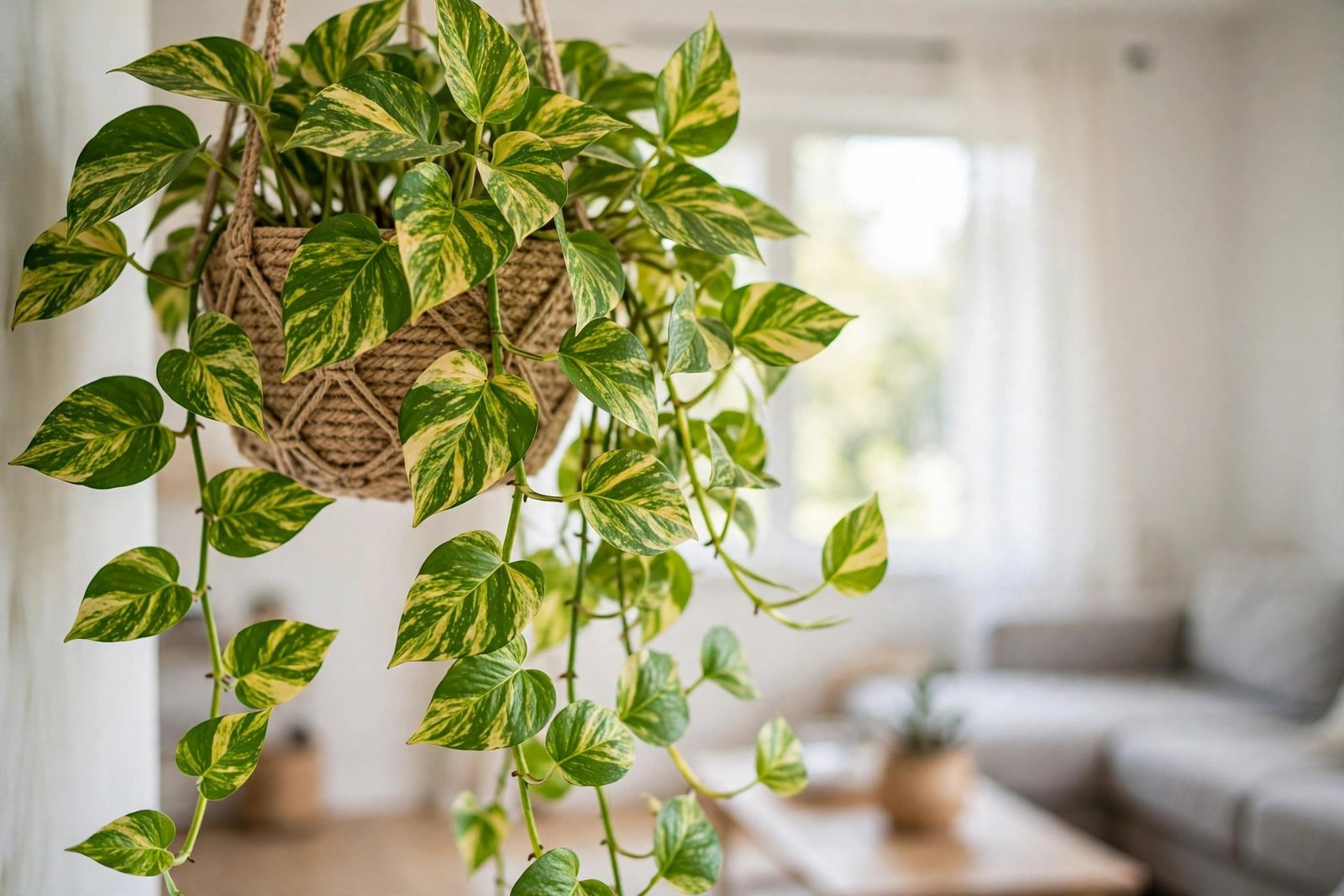
If you are asking are pothos plants toxic to cats, the short answer is yes. The ASPCA Animal Poison Control Center lists Golden Pothos, Epipremnum aureum, as toxic to cats and dogs, and its toxic principle is insoluble calcium oxalates. The ASPCA’s listed signs are oral irritation, intense burning and irritation of the mouth, tongue, and lips, excessive drooling, vomiting, and difficulty swallowing.
Pothos is cheap and forgiving, and sold in almost every store, so many people buy one without checking the label. That is why are pothos plants toxic to cats is one of the most common plant-safety questions cat owners ask. This guide covers the toxicity, the signs, what to do, and safer trailing alternatives.
This article is for general education only and does not replace advice from your veterinarian. If you think your cat has chewed or swallowed any part of a pothos, contact your veterinarian or the ASPCA Animal Poison Control Center at (888) 426-4435 promptly — do not wait for symptoms to appear.
Why Pothos Is Toxic to Cats
Pothos belongs to the arum family, Araceae. The ASPCA entry for Golden Pothos gives its scientific name as Epipremnum aureum and its other common names as Pothos, Devil’s Ivy, Taro Vine, and Ivy Arum. The same plant can appear under several names, so the scientific name is the part to trust.
So, are pothos plants toxic to cats because of a poison in the sap? Not exactly.
The ASPCA names insoluble calcium oxalates as the toxic principle. These are microscopic, needle-shaped crystals held in the plant tissue. When a cat bites a leaf or stem, the tissue breaks open and the crystals are released against the soft lining of the mouth, tongue, and throat.
That is why the ASPCA’s listed signs are mostly local: pain and burning where the plant touched, drooling, vomiting, and trouble swallowing. The irritation is often enough to make a cat stop chewing, but a small bite cannot be ignored. The ASPCA does not list a safe amount, and only a veterinarian who knows your cat can judge how it will respond. That is why are pothos plants toxic to cats has no safe middle ground — there is no bite size you can assume is harmless.
Pothos is not a true lily, and the risk is different. True lilies (Lilium species) and daylilies (Hemerocallis species) can cause kidney failure in cats, and Cornell notes lilies are especially toxic to cats and can cause life-threatening kidney failure if ingested even in tiny amounts — including from pollen or vase water. Are pothos plants toxic to cats in the same way lilies are?
No — the listed risk is a painful mouth and throat injury, not kidney failure — but it still needs prompt professional advice. To compare the risks, see our guide to whether lilies are toxic to cats.
How to Identify Pothos
Pothos is a trailing or climbing vine with heart-shaped leaves. Young plants often look compact at first, then send out long vines. Once you know what to look for, are pothos plants toxic to cats is a question you can answer about the right plant.
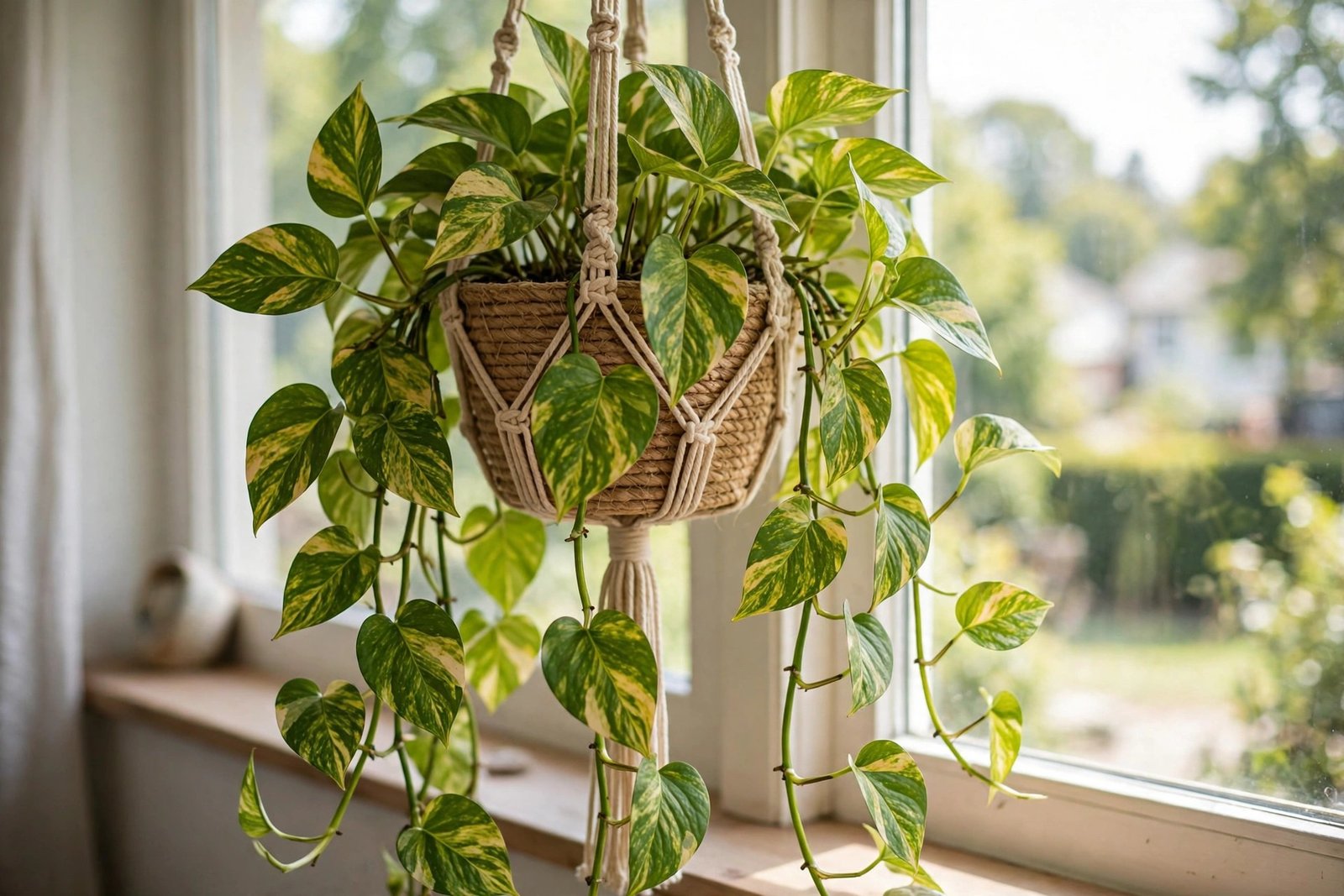
The most common form is Golden Pothos, with green leaves marbled in yellow or cream. Other cultivars of Epipremnum aureum include Marble Queen, Neon, N’Joy, and Jade Pothos. These are all the same species, and the ASPCA’s toxic listing applies to the species, not to one color pattern.
Check the label for the scientific name before you buy — a tag that says only “pothos” is not enough. Look for Epipremnum aureum on the pot or care card. If the seller cannot give you the scientific name, treat the plant as unidentified. Pothos is also easy to confuse with heartleaf philodendron (Philodendron hederaceum).
Cornell lists philodendrons among the plants toxic for cats, so a mix-up does not make the plant safer. If you are still unsure after checking the label, keep the plant away from your cat — and remember are pothos plants toxic to cats is a question to settle before the plant comes home, not after your cat has chewed it.
Satin Pothos and Other Plants Sold as “Pothos”
The name “pothos” is used loosely in shops. Satin pothos is usually Scindapsus pictus, not Epipremnum aureum, with matte silver-marked leaves, rather than the glossy leaves of golden pothos. So are pothos plants toxic to cats when the plant is satin pothos?
Yes — the ASPCA lists Satin Pothos, Scindapsus pictus, as toxic to dogs, cats, and horses, with the same toxic principle, insoluble calcium oxalates. Its listed signs are oral irritation, pain and swelling of the mouth, tongue, and lips, excessive drooling, vomiting (not in horses), and difficulty swallowing.
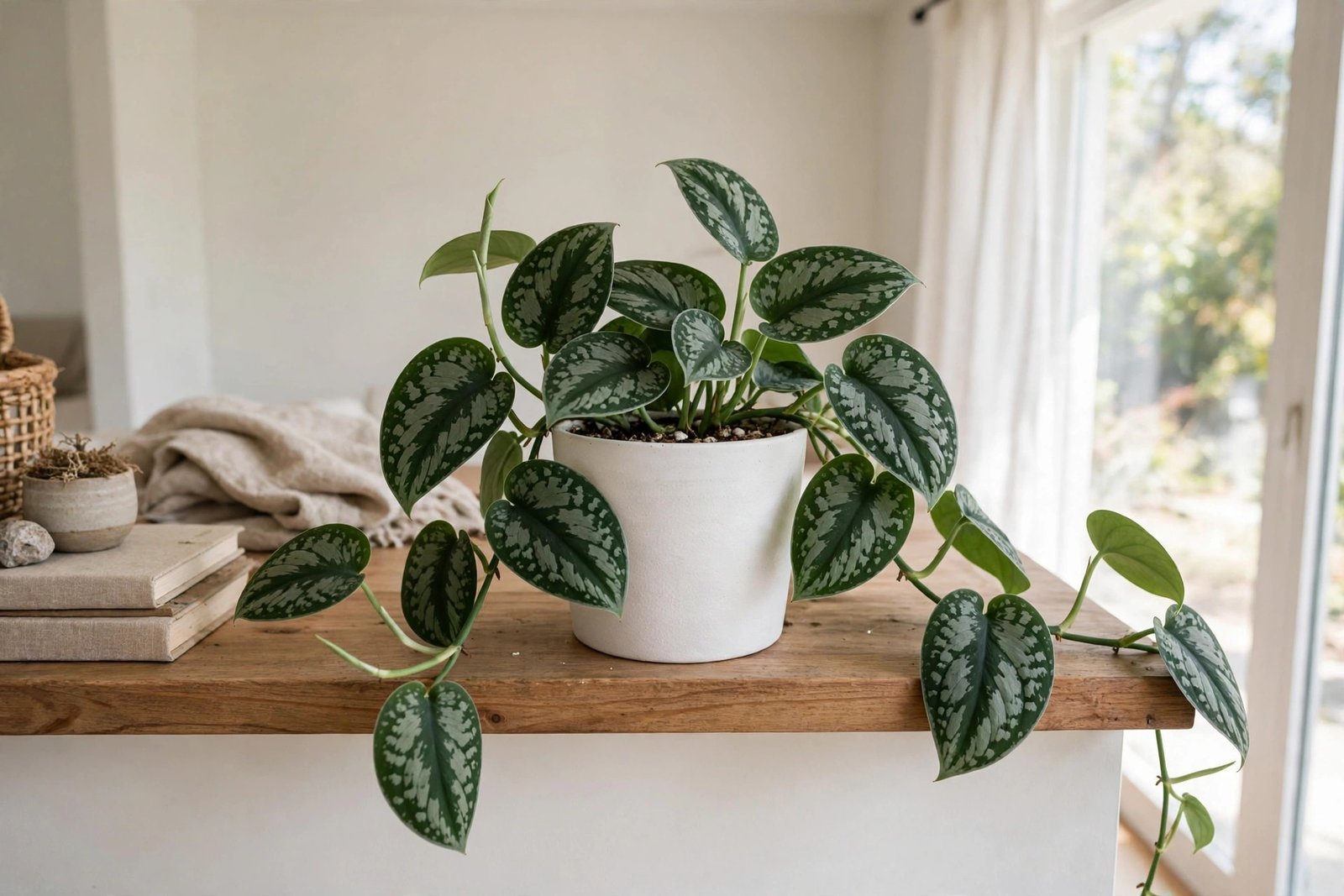
Cebu Blue pothos, usually Epipremnum pinnatum, is a close relative. If a plant is sold as pothos, satin pothos, silk pothos, or devil’s ivy, check the scientific name — Epipremnum aureum and Scindapsus pictus are both ASPCA-listed as toxic to cats. When a shop uses the name loosely, the scientific name is the only label you can trust — and are pothos plants toxic to cats covers every plant sold under that name until the species is confirmed.
Symptoms to Watch For
The ASPCA does not single out one part of the plant as safe. The crystals are present in the leaves and stems, so leaves, vines, cuttings, and fallen leaves should all be treated as a risk. A cat does not need to eat a whole plant: chewing is enough. That is why are pothos plants toxic to cats is worth knowing before a bite happens — a single chew can be enough.

The ASPCA lists these clinical signs for Golden Pothos in cats: oral irritation, intense burning and irritation of the mouth, tongue, and lips, excessive drooling, vomiting, and difficulty swallowing. A cat that has chewed pothos may also paw at its mouth, turn away from food or water, or seem restless, and its lips, tongue, or mouth may look red or swollen.
Do not use the absence of symptoms as a reason to wait — some cats hide discomfort. Difficulty breathing, heavy swelling of the mouth or throat, repeated vomiting, or a cat that cannot swallow its own saliva needs urgent care. If you are wondering whether are pothos plants toxic to cats enough to need a vet visit after one small bite, the answer is yes — call promptly and do not wait to see if symptoms appear. For warning signs across many plants, see our guide to common houseplants that are toxic to cats.
What to Do If Your Cat Eats Pothos
If you see your cat chewing pothos, act promptly and calmly. These are general safety steps, not a treatment plan. Only your veterinarian or a poison control service can advise on treatment.
First, move the plant out of reach, without chasing or startling your cat. Check your cat without forcing its mouth open, looking for drooling, pawing at the mouth, swelling, vomiting, or trouble swallowing. Do not try to pull plant material out of the throat. Knowing are pothos plants toxic to cats is the first step; the second is knowing exactly who to call.
Note the time, which plant it was, and how much was chewed. Keep the plant label or take a clear photo of the damaged leaves.
Then call your veterinarian or the ASPCA Animal Poison Control Center at (888) 426-4435 promptly — the ASPCA notes that a consultation fee may apply. In the United States, the Pet Poison Helpline at (855) 764-7661 is another poison control resource, and a fee may apply there too. Describe the plant by its scientific name, Epipremnum aureum, and follow the professional’s instructions.
Do not try to induce vomiting. Do not give milk, food, oil, salt, or any home remedy, and do not give any medication. These steps are not part of the ASPCA’s advice, and they can make irritation worse or delay proper care. Knowing are pothos plants toxic to cats is only half the job.
Knowing what not to do matters just as much. For a step-by-step guide covering any toxic plant, see our guide to what to do if your cat eats a toxic plant.
Can You Keep Pothos, and What Should You Grow Instead?
Many owners ask whether they can keep a pothos if they hang it high enough. The question are pothos plants toxic to cats even when the plant hangs high up comes up often — and the answer stays yes. No arrangement makes a toxic plant safe to chew: cats climb and jump, a hanging basket can swing within reach, and fallen leaves can land on the floor. If your cat is a known chewer, the safest choice is to remove the pothos or give it to a household without cats.

The plants below are all ASPCA-listed as non-toxic to cats and dogs. Note that “non-toxic” is not the same as safe to eat without limit: the ASPCA also notes that eating any plant material may cause vomiting and stomach upset.
Spider plant (Chlorophytum comosum) is the closest match: ASPCA-listed non-toxic to dogs and cats, with arching striped leaves and trailing plantlets. If you are replacing a pothos because are pothos plants toxic to cats, the spider plant is the easiest swap. See our guide to whether spider plants are safe for cats.
Boston fern (Nephrolepis exaltata ‘Bostoniensis’) is ASPCA-listed non-toxic, with full arching fronds that spill over the edge of a hanging basket. It likes humidity and bright indirect light.
Parlor palm (Chamaedorea elegans) is ASPCA-listed non-toxic. It is slow-growing, tolerates lower light, and stays compact.
Calathea (Calathea spp.) is ASPCA-listed non-toxic to dogs, cats, and horses, with boldly patterned leaves that prefer humidity and indirect light.
| Plant | ASPCA listing for cats | Look |
|---|---|---|
| Spider plant (Chlorophytum comosum) | Non-toxic | Trailing, arching, striped leaves |
| Boston fern (Nephrolepis exaltata ‘Bostoniensis’) | Non-toxic | Full, arching fronds |
| Parlor palm (Chamaedorea elegans) | Non-toxic | Upright, feathery fronds |
| Calathea (Calathea spp.) | Non-toxic | Patterned, upright leaves |
| Pothos (Epipremnum aureum) | Toxic | Trailing, heart-shaped leaves |
For a wider list, see our guide to 15 cat-safe houseplants. Once you know are pothos plants toxic to cats, swapping to one of these plants keeps the look without the risk.
Frequently Asked Questions
Are pothos plants toxic to cats?
Yes. The ASPCA lists Golden Pothos, Epipremnum aureum, as toxic to cats and dogs, with insoluble calcium oxalates as the toxic principle and oral irritation, burning, drooling, vomiting, and difficulty swallowing as the listed signs. In short, are pothos plants toxic to cats is a question the ASPCA answers with a clear yes. If your cat has chewed pothos, contact your veterinarian or the ASPCA Animal Poison Control Center at (888) 426-4435 promptly.
Are all types of pothos toxic to cats?
Yes. All common cultivars of Epipremnum aureum — Golden, Marble Queen, Neon, N’Joy, and Jade — are the same species, so the listing covers them all. The short answer to are pothos plants toxic to cats across every cultivar is yes — the species, not the leaf pattern, decides the listing. Satin pothos, Scindapsus pictus, is a different species, but the ASPCA also lists it as toxic to cats.
My cat took one small bite of pothos. Should I worry?
Yes, take it seriously and call your veterinarian or the ASPCA Animal Poison Control Center promptly. The ASPCA does not list a safe amount, and a single bite can cause mouth pain. Even one small bite is a reason to ask are pothos plants toxic to cats and then call for advice — do not give any home remedy and do not wait to see if symptoms appear.
Can pothos kill a cat?
This article makes no claim about death from pothos, because the ASPCA’s listed signs do not include death or kidney failure. Pothos can still cause significant pain, swelling, vomiting, and trouble swallowing. If you are asking are pothos plants toxic to cats because you fear the worst, the listed risk is a painful mouth and throat injury — and that still deserves a prompt call to your veterinarian.
Is pothos safe if it is hanging high up?
No. Hanging it high reduces access, but cats can climb and jump, vines can swing within reach, and fallen leaves can land on the floor. If your cat chews plants, keep pothos out of the home or in a closed room the cat cannot enter, and clean up fallen leaves daily.
What plants look like pothos but are safe for cats?
Spider plant (Chlorophytum comosum) is the closest trailing alternative, ASPCA-listed non-toxic to cats and dogs, and Boston fern, parlor palm, and calathea are also ASPCA-listed non-toxic to cats. If you came here asking are pothos plants toxic to cats because you want the trailing look without the risk, the spider plant is the closest match.
Conclusion
Pothos is a beautiful, easy plant, but for a home with a cat, the answer is clear: it is toxic to cats. So, are pothos plants toxic to cats? Yes — the ASPCA lists Epipremnum aureum as toxic to cats and dogs, with insoluble calcium oxalates as the toxic principle and mouth irritation, drooling, vomiting, and difficulty swallowing as the listed signs. Satin pothos, Scindapsus pictus, carries the same warning.
Check every plant in your home by its scientific name against the ASPCA list. If you find a pothos and your cat chews plants, move it out of reach and replace it with a trailing plant such as a spider plant. Save the ASPCA Animal Poison Control number, (888) 426-4435, and your veterinarian’s number where you can find them quickly. If a friend asks are pothos plants toxic to cats, you can now answer yes — and explain what to do next.
Disclaimer: This article is for general education only and does not replace advice from a veterinarian. Plant toxicity can vary with the plant, the amount chewed, and your cat’s health. If you suspect your cat has eaten a toxic plant, contact your veterinarian or the ASPCA Animal Poison Control Center promptly.
Sources and References
- ASPCA Animal Poison Control — Golden Pothos (Epipremnum aureum): Toxic to Dogs, Toxic to Cats; Toxic Principles: Insoluble calcium oxalates; Clinical Signs: Oral irritation, intense burning and irritation of mouth, tongue and lips, excessive drooling, vomiting, difficulty swallowing. https://www.aspca.org/pet-care/animal-poison-control/toxic-and-non-toxic-plants/golden-pothos
- ASPCA Animal Poison Control — Satin Pothos (Scindapsus pictus): Toxic to Dogs, Toxic to Cats, Toxic to Horses; Toxic Principles: Insoluble calcium oxalates; Clinical Signs: Oral irritation, pain and swelling of mouth, tongue and lips, excessive drooling, vomiting (not horses), difficulty swallowing. https://www.aspca.org/pet-care/animal-poison-control/toxic-and-non-toxic-plants/satin-pothos
- ASPCA Animal Poison Control — Spider Plant (Chlorophytum comosum): Non-Toxic to Dogs, Non-Toxic to Cats. https://www.aspca.org/pet-care/animal-poison-control/toxic-and-non-toxic-plants/spider-plant
- ASPCA Animal Poison Control — Boston Fern (Nephrolepis exaltata bostoniensis): Non-Toxic to Dogs, Non-Toxic to Cats. https://www.aspca.org/pet-care/animal-poison-control/toxic-and-non-toxic-plants/boston-fern
- ASPCA Animal Poison Control — Parlor Palm (Chamaedorea elegans): Non-Toxic to Dogs, Non-Toxic to Cats. https://www.aspca.org/pet-care/animal-poison-control/toxic-and-non-toxic-plants/parlor-palm
- ASPCA Animal Poison Control — Calathea (Calathea spp.): Non-Toxic to Dogs, Non-Toxic to Cats, Non-Toxic to Horses. https://www.aspca.org/pet-care/animal-poison-control/toxic-and-non-toxic-plants/calathea
- ASPCA — Toxic and Non-Toxic Plant List, Cats. https://www.aspca.org/pet-care/animal-poison-control/cats-plant-list
- Cornell University College of Veterinary Medicine, Cornell Feline Health Center — Common Cat Hazards: lilies are especially toxic to cats and can cause life-threatening kidney failure if ingested even in tiny amounts; philodendrons are listed among plants toxic for cats. https://www.vet.cornell.edu/departments-centers-and-institutes/cornell-feline-health-center/health-information/feline-health-topics/common-cat-hazards
9 thoughts on “Are Pothos Plants Toxic to Cats? Symptoms and Safer Alternatives”