
Are lilies toxic to cats? Yes — true lilies and daylilies are among the most dangerous plants a cat can meet. A small bite of a leaf, a few grains of pollen on the fur, or a sip of vase water can lead to sudden kidney failure. If your cat may have touched a lily at all, treat it as an emergency and call a veterinarian or poison control now.
Do not wait for symptoms. The U.S. Food and Drug Administration (FDA) warns that a small piece of a leaf or petal, pollen licked off the coat, or water from a vase that held lilies can cause fatal kidney failure in less than three days. That is why so many cat owners ask, “Are lilies toxic to cats?” — and why the answer should be clear before a bouquet ever comes home.
Why True Lilies and Daylilies Are So Dangerous
True lilies belong to the genus Lilium, and daylilies belong to the genus Hemerocallis. Both can cause sudden kidney failure in cats — the ASPCA lists kidney failure among the clinical signs. Cats are the only species known to react this way.
The exact toxic compound has not been found yet, so there is no known safe amount — any suspected exposure is a reason to call for help. Timing matters. The FDA describes early signs in the first 0 to 12 hours, kidney damage from about 12 to 24 hours, and kidney failure within 24 to 72 hours. Treatment delayed by 18 hours or more generally leaves irreversible kidney failure.
If you have ever wondered, “Are lilies toxic to cats?” — the short answer is yes, and the danger is greater than most people expect. The clock starts at exposure.
Which Lilies Are Most Dangerous?
Start with the botanical genus. If the plant is a Lilium or Hemerocallis species, treat it as a kidney emergency for a cat. Common names alone are not reliable — “lily” is used for many plants that are not related at all.
True lilies (Lilium species)

True lilies include many cut flowers and potted plants sold for Easter, Mother’s Day, weddings, and funerals. Pet Poison Helpline names Easter lily (Lilium longiflorum), tiger lily (Lilium lancifolium), Stargazer lily (Lilium orientalis), Japanese show lily (Lilium speciosum), and Asiatic lilies. The FDA’s list adds Oriental, rubrum, and wood lilies. Keep any plant sold as a true lily out of a home with cats.
True lilies usually have large, trumpet-shaped or star-shaped flowers with six petals, prominent stamens, and heavy pollen, often orange or yellow, and they grow from bulbs. This is the group most people picture when they ask, “Are lilies toxic to cats?” Looks alone are not a safe test — check the label or ask the florist before you bring an unfamiliar bouquet home.
Daylilies (Hemerocallis species)
Daylilies are garden perennials rather than bouquet flowers, but they carry the same kidney risk. The ASPCA lists daylilies as toxic to cats, with vomiting, loss of appetite, lethargy, kidney failure, and death among the signs. Pet Poison Helpline groups true lilies and daylilies together as highly toxic to cats.
Daylilies grow in grassy clumps of long, strap-like leaves, with flowers on tall, leafless stalks. Each flower lasts only about a day, but one plant produces many buds over the season. That long bloom season means the risk lasts for weeks, so gardeners who ask, “Are lilies toxic to cats?” should count daylilies too.
How Lily Exposure Happens
Any part of a true lily or daylily — leaves, flowers, pollen, or even the water from the vase — can trigger sudden kidney failure in cats, according to Pet Poison Helpline. The FDA says the stem, leaves, flowers, pollen, and vase water are all hazardous. Many owners do not realize how easily exposure happens, so “Are lilies toxic to cats?” is worth asking before a bouquet comes home.
Chewing or eating any part. Leaves, petals, stems, and bulbs are all dangerous. A cat that nibbles a leaf out of curiosity has already been exposed.
Pollen on the fur, paws, or face. True lilies produce large amounts of sticky pollen. A cat that brushes against a flower can pick it up on its coat and swallow it while grooming, and the ASPCA warns that even small exposures to pollen can cause kidney failure or death.
Drinking vase water. Water in a vase that held true lilies or daylilies can carry the plant’s toxic material, so a cat that drinks from a vase has been exposed even if it never touched a petal.
Signs of Lily Poisoning in Cats
Do not wait for these signs before calling for help. According to the FDA, early signs in the first 0 to 12 hours can include being less active than usual, drooling, vomiting, and not eating. These early signs are easy to miss, especially in a cat that hides when it feels unwell — one more reason to settle “Are lilies toxic to cats?” before an exposure, not during one. For the full list of warning signs, see symptoms of plant poisoning in cats.
Kidney damage can begin at about 12 to 24 hours, including urinating more than usual and dehydration, and kidney failure can follow within 24 to 72 hours. The ASPCA also lists vomiting, loss of appetite, and lethargy among the signs.
Some cats look fine at first and then get worse fast — if you are still asking, “Are lilies toxic to cats?” the time to call is now, not when symptoms show up.
What to Do If Your Cat May Have Been Exposed
If you are asking, “Are lilies toxic to cats?” because your cat may have been exposed, here is what to do — in order, and fast. Our guide on what to do if a cat eats a toxic plant walks through the same first steps in more detail.
1. Contact a veterinarian or animal poison control immediately. Call your veterinarian, an emergency clinic, the ASPCA Animal Poison Control Center at (888) 426-4435, or Pet Poison Helpline at (855) 764-7661. Poison control calls in the United States may involve a fee. Do not wait for symptoms or the next morning.
If you found this page by asking “are lilies toxic to cats,” you already have the key fact: call now.
2. Take the cat and the plant with you if you are told to go in. Bring the plant, a photo of it, or the plant label — but do not delay leaving to identify the plant perfectly.
3. Tell them exactly what happened. Share the plant’s name, which part the cat may have chewed or drunk from, whether pollen is on the fur, and when it happened. If you are unsure, say so.
4. Keep the cat safe while you get help. Move the cat away from the plant and remove the plant from reach. If pollen is on the fur, ask the veterinarian or poison control adviser what to do.
5. Follow the professional advice you receive. Only the veterinarian examining the cat can decide what care is needed. Early care gives the best chance of protecting the kidneys, according to the ASPCA.
What NOT to Do After a Lily Exposure
Do not wait and watch for symptoms. Do not try to make your cat vomit. Never give a home remedy, human medicine, or any substance to try to “flush out” the toxin. Knowing “Are lilies toxic to cats?” is only half the job — acting on it the right way is the other half.
Do not give food, milk, oil, or water to “dilute” the exposure unless a veterinarian or poison control adviser tells you to. These home steps can waste precious time or make things worse. Call a professional right away.
Not Every Plant Called a “Lily” Carries the Same Risk
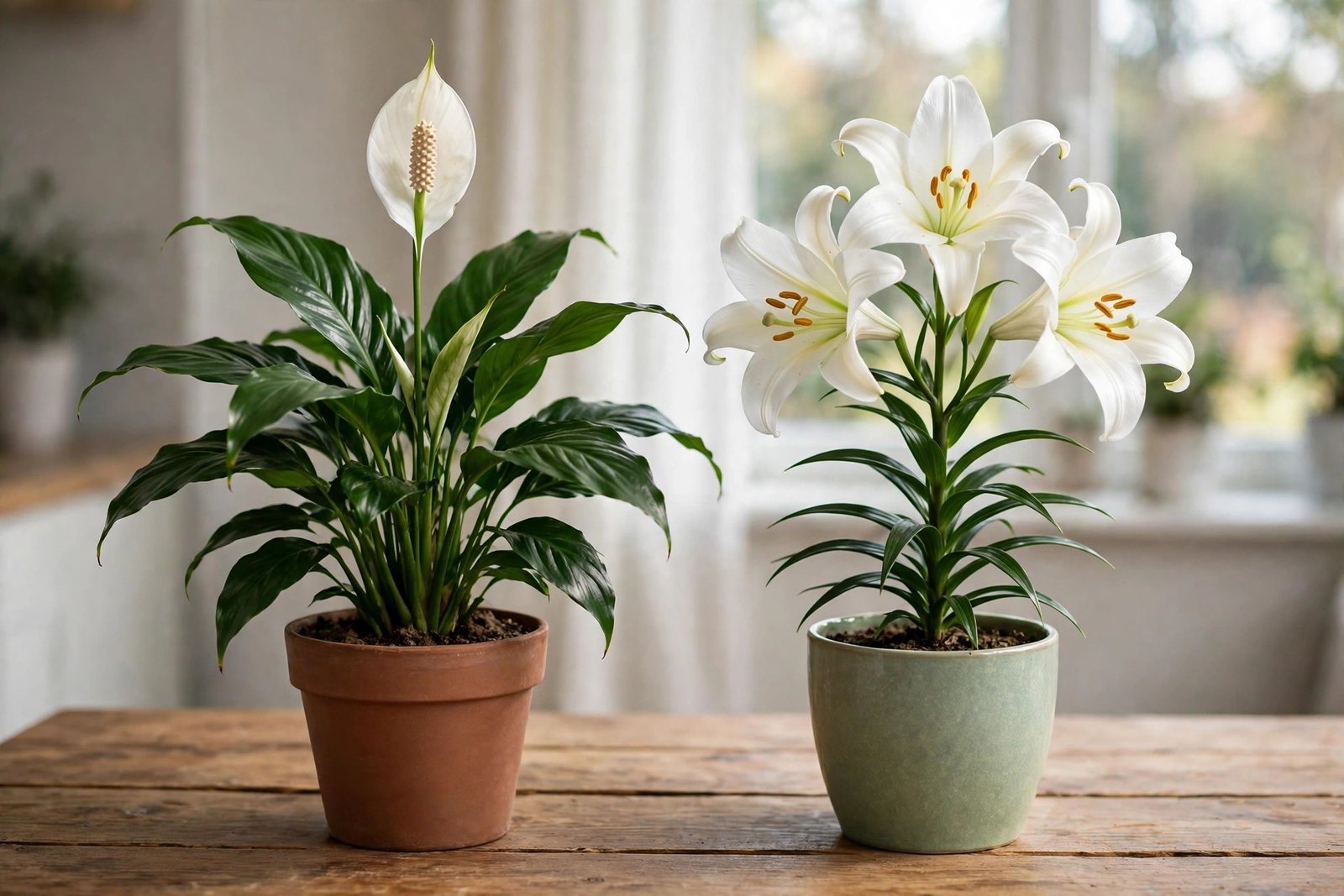
Only true lilies (Lilium) and daylilies (Hemerocallis) are linked to the sudden kidney failure above. Other plants with “lily” in their name carry different risks. Calla and peace lilies contain insoluble calcium oxalate and cause mouth and stomach irritation instead, while Peruvian lilies mainly cause mild stomach upset. The ASPCA’s test is the genus name: if it is Lilium or Hemerocallis, worry about the kidneys.
That is why “Are lilies toxic to cats?” needs a careful answer. Some lilies threaten the kidneys, some irritate the mouth, and some are not toxic at all. Knowing which one you have makes all the difference.
Peace lily (Spathiphyllum). A popular houseplant with glossy leaves and white, hood-shaped flowers — not a true lily. Its sharp insoluble calcium oxalate crystals irritate the mouth and stomach, causing drooling, vomiting, and mouth pain. It does not cause kidney failure. For the full rundown, see are peace lilies toxic to cats.
Calla lily (Zantedeschia). Smooth, funnel-shaped flowers, often sold as cut flowers or potted. Like peace lilies, they contain insoluble calcium oxalate crystals that irritate the mouth and stomach, but they do not cause kidney failure.
Peruvian lily (Alstroemeria). Common in grocery-store bouquets, with smaller trumpet-shaped flowers, often pink, orange, or yellow with freckles. Pet Poison Helpline and the ASPCA both list Alstroemeria as non-toxic to cats, though eating any plant material may still cause stomach upset. They are not linked to kidney failure, but they can look much like a true lily in a bouquet — check the label.
Lily of the valley (Convallaria majalis). A different risk again, and a serious one. It is not a true lily, but it is toxic to cats. Pet Poison Helpline explains that it contains cardiac glycosides, which can cause weakness, stomach upset, and heart problems, including an abnormal heart rate or rhythm. The ASPCA lists it as toxic to cats.
If a cat may have eaten it, contact a veterinarian or poison control promptly — the danger is to the heart, not the kidneys, but it is still an emergency.
Other “lilies.” Pet Poison Helpline lists other plants with “lily” in the common name, including gloriosa lily and amaryllis lily, and notes their toxicity varies. Find the botanical name on the label and check it in the ASPCA’s plant database. If you cannot identify it, keep it away from your cat.
How to Identify a True Lily or Daylily
Read the label first. Plant tags and bouquet cards often include the botanical name. Look for Lilium or Hemerocallis. True lilies have large, six-petalled, trumpet-shaped or star-shaped flowers, prominent stamens with heavy pollen, and grow from bulbs.
Daylilies have long, grass-like leaves in a clump and flowers on tall, leafless stalks. Learn both shapes, because “are lilies toxic to cats” covers the garden as well as the vase.
If the label is missing, do not guess. Keep the plant out of reach and ask a florist or garden center to identify it before it goes near your cat. A quick check now beats answering “Are lilies toxic to cats?” after an exposure.
Safer Flower Alternatives for Cat Households
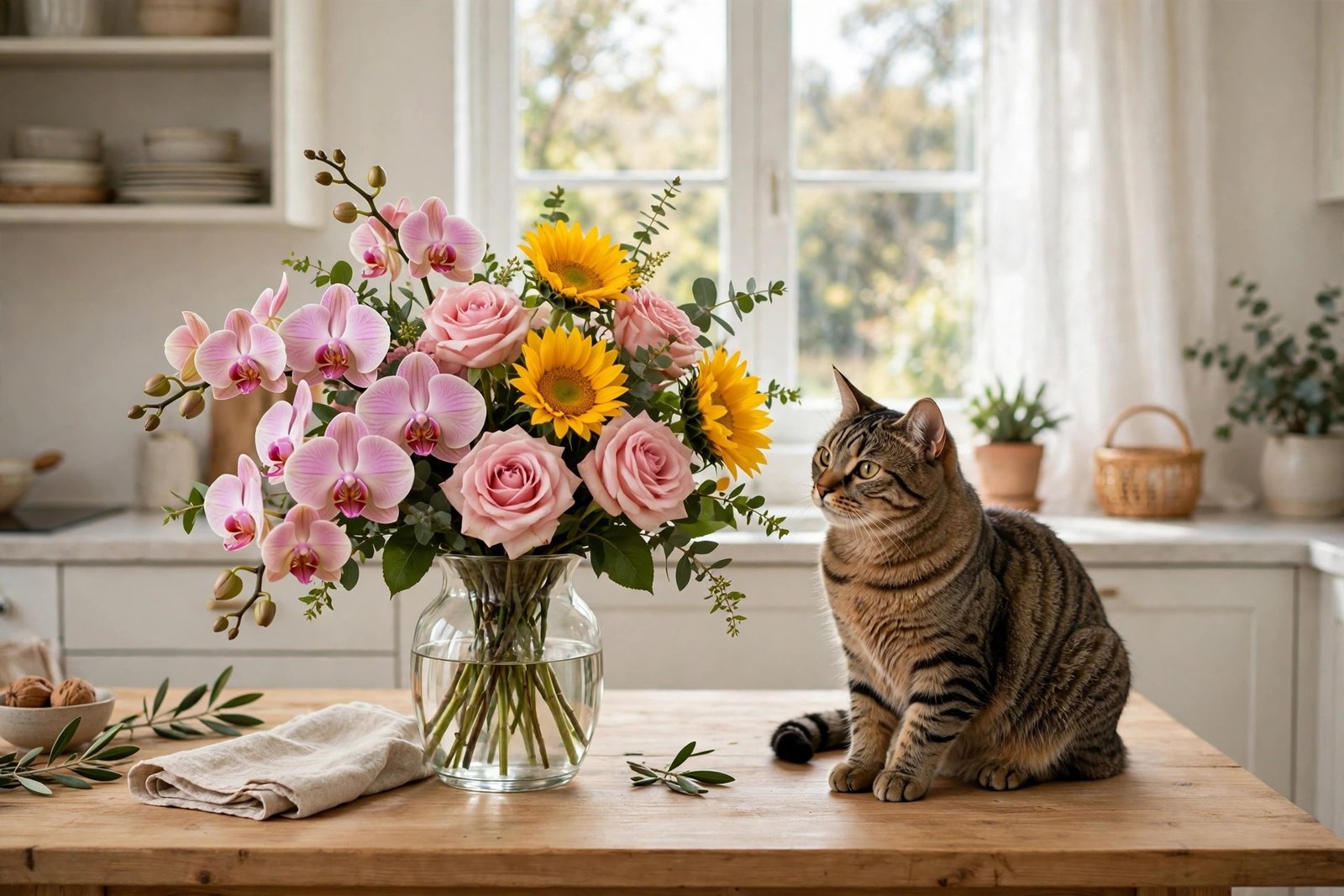
If you love flowers and keep asking, “Are lilies toxic to cats?” — the choices below let you enjoy blooms without the risk. The ASPCA lists roses (Rosa), sunflowers (Helianthus), orchids (including Phalaenopsis), snapdragons (Antirrhinum), gerbera daisies, zinnias, and Peruvian lilies (Alstroemeria) as non-toxic to cats. For a full list of safe picks, see cat-safe houseplants.
“Non-toxic” does not mean “safe to eat.” The ASPCA warns that eating any plant material may cause vomiting and stomach upset. Roses are non-toxic, but their thorns can injure a cat’s mouth or paws. Check the whole bouquet, too — fillers and greenery can be toxic even when the main flowers are not.
Prevention: Keeping Lilies Out of a Cat’s World

Start with a clear household rule: no true lilies or daylilies in a home with cats, and no daylilies where a cat can reach them. The ASPCA’s advice is direct — do not bring lilies into the home if you have an indoor cat, and do not let your cat in the garden if you have outdoor lilies. The simplest answer to “Are lilies toxic to cats?” is to make sure they never meet.
Check every bouquet, including surprise deliveries. Easter, Mother’s Day, Valentine’s Day, weddings, and funerals are when lilies most often appear, so ask guests not to bring them. Walk your garden for daylilies, true lilies, and lily of the valley, and fence off or remove any you find if your cat goes outside.
Frequently Asked Questions
Are lilies toxic to cats?
Yes. For true lilies (Lilium) and daylilies (Hemerocallis), the answer to “Are lilies toxic to cats?” is a firm yes. They are highly toxic to cats and can cause sudden kidney failure. The FDA warns that even a small amount of leaf or petal, a few grains of pollen, or vase water can cause fatal kidney failure in under three days.
How much lily does it take to poison a cat?
No safe amount has been established, because the toxic compound has not been identified. Anyone asking “are lilies toxic to cats” should treat any suspected exposure as an emergency, whatever the amount.
Are daylilies as dangerous as true lilies?
Yes — when people ask “are lilies toxic to cats” about daylilies, the answer matches true lilies. Daylilies carry the same kidney risk. The ASPCA lists them as toxic to cats, with vomiting, loss of appetite, lethargy, kidney failure, and death among the signs.
Is a peace lily as dangerous as a true lily?
No — but a peace lily is still toxic, just differently. Peace lilies (Spathiphyllum) contain calcium oxalate crystals that irritate the mouth and stomach — drooling, vomiting, and mouth pain — but not kidney failure.
What should I do if my cat licks lily pollen off its fur?
Contact a veterinarian or animal poison control right away, even if your cat looks fine. The ASPCA warns that even small exposures to pollen can cause kidney failure or death.
Can a cat recover after lily poisoning?
It depends on how fast treatment starts. The FDA warns that treatment delayed by 18 hours or more generally leaves irreversible kidney failure. Early veterinary care gives a cat the best chance, so anyone asking, “Are lilies toxic to cats?” after an exposure should focus on speed — call for help first, and ask questions later.
Conclusion: When in Doubt, Call — and Leave Lilies Out
Are lilies toxic to cats? For true lilies and daylilies, the answer is a clear and urgent yes. A small bite, a few grains of pollen, or a sip of vase water can lead to kidney failure, and the FDA warns that treatment delayed by 18 hours or more generally leaves irreversible damage.
So the response to a suspected exposure is not to watch and wait. Call a veterinarian or animal poison control service right away, and keep true lilies and daylilies out of your home and garden. The best answer to “Are lilies toxic to cats?” is prevention — a home with no true lilies never faces this emergency.
Disclaimer: This article is for general information only and does not replace advice from a veterinarian. If you think your cat may have been exposed to a lily or any other toxic plant, contact your veterinarian, an emergency veterinary clinic, the ASPCA Animal Poison Control Center at (888) 426-4435, or Pet Poison Helpline at (855) 764-7661 right away. Do not use home remedies or try to treat a suspected poisoning yourself.
Sources and References
- ASPCA — Do You Know Which Flowers and Plants Are Toxic to Pets? Our Experts Explain! — https://www.aspca.org/news/do-you-know-which-flowers-and-plants-are-toxic-pets-our-experts-explain
- ASPCA — Which Lilies Are Toxic to Pets? — https://www.aspca.org/news/which-lilies-are-toxic-pets
- ASPCA — Tips for a Pet-Safe Yard and Garden — https://www.aspca.org/news/tips-pet-safe-yard-and-garden
- ASPCA — Lily of the Valley (Toxic and Non-Toxic Plants) — https://www.aspca.org/pet-care/animal-poison-control/toxic-and-non-toxic-plants/lily-valley
- ASPCA Professional — Debunking Internet Myths & Rumors About Pet Toxins — https://www.aspcapro.org/resource/debunking-internet-myths-rumors-about-pet-toxins
- Pet Poison Helpline — Lilies Toxic to Pets — https://www.petpoisonhelpline.com/blog/lilies-lilies-and-more-lilies/
- U.S. Food and Drug Administration — Lovely Lilies and Curious Cats: A Dangerous Combination — https://www.fda.gov/animal-veterinary/animal-health-literacy/lovely-lilies-and-curious-cats-dangerous-combination
- Cornell Feline Health Center, Cornell University College of Veterinary Medicine — Easter Peril: Look Out for Lilies and Other Items — https://vet.cornell.edu/departments-centers-and-institutes/cornell-feline-health-center/health-information/cat-health-news/easter-peril-look-out-lilies-and-other-items
- Cornell Feline Health Center — Common Cat Hazards (fact sheet) — https://www.vet.cornell.edu/sites/default/files/CatConLA-FactSheet1.pdf
25 thoughts on “Are Lilies Toxic to Cats? Types, Exposure Risks, and Urgent Steps”