
Every spring, cat owners ask the same question: are tulips toxic to cats? The answer is yes. Tulips (Tulipa spp.) are listed by the ASPCA Animal Poison Control Center as toxic to cats, dogs, and horses. A cat that chews one develops vomiting, drooling, diarrhea, and lethargy.
Tulips are not true lilies, so they do not cause the kidney failure that makes true lilies so feared. But the bulb holds far more toxin than the leaf or flower, and a cat that eats a bulb can become seriously ill.
The Short Answer
If your cat has just chewed or eaten any part of a tulip — especially a bulb — do not wait for symptoms. Move the plant out of reach, keep your cat calm, and call your veterinarian or poison control promptly: the ASPCA Animal Poison Control Center at (888) 426-4435 or Pet Poison Helpline at (855) 764-7661. A consultation fee may apply.
The ASPCA names tulipalin A and B as the toxic principles, and lists vomiting, depression, diarrhea, and hypersalivation, with the highest toxin concentration in the bulb. Pet Poison Helpline adds that large bulb ingestions can raise heart rate and change breathing.
So, are tulips toxic to cats? Every part carries some toxin, and the risk depends on which part your cat ate and how much went down. For a fuller emergency guide, see What to Do If Your Cat Eats a Toxic Plant: A Safety Guide.
What Is a Tulip?
A tulip is a spring-flowering bulb plant in the genus Tulipa, family Liliaceae, growing from an underground bulb with a single stem, long grey-green leaves, and a cup-shaped flower.
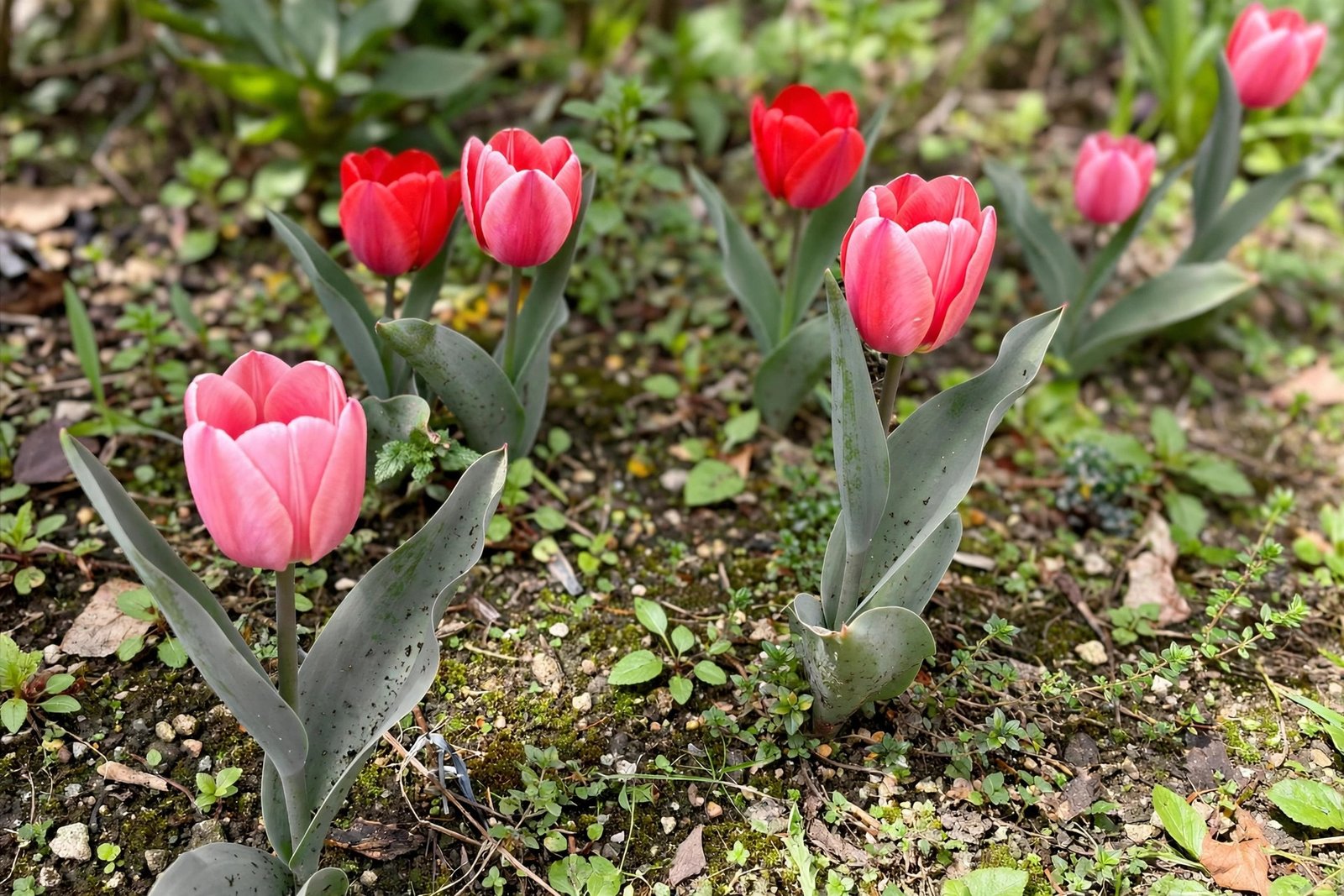
Tulips reach cats three ways: potted tulips, in bloom at the height a cat investigates; cut tulips in vases, with stems a cat can bat at and chew; and garden tulips, whose bulbs sit in soil, storage bags, and the ground, where a digging cat can reach them. If you are asking are tulips toxic to cats because a bouquet just arrived, check every stem before it goes in a vase.
Why Tulips Are Toxic
The compounds are present throughout the plant, but not evenly: the ASPCA and Pet Poison Helpline both state the toxic principle is very concentrated in the bulb, versus the leaf or flower. That is the most important fact about tulip poisoning — and why are tulips toxic to cats has a different answer for a petal than for a bulb.
Tulips also belong to the lily family, Liliaceae, and that connection causes real confusion: they are in the same family as true lilies, but they are not true lilies. True lilies (Lilium spp.) and daylilies (Hemerocallis spp.) contain different compounds that can cause sudden kidney failure in cats, even from a tiny nibble or pollen on fur. Tulips do not do that: tulipalin irritates the gut and is not known to cause kidney failure. For the full true lily guide, see Are Lilies Toxic to Cats? Types, Exposure Risks, and Urgent Steps.
Bulb vs Leaf vs Flower: Which Part Is Most Dangerous?
Not every tulip exposure is equal: the part the cat ate decides how worried you should be, and how fast to act. When you ask are tulips toxic to cats, always ask next: which part did the cat eat?
The Bulb: The Most Dangerous Part
The bulb holds the highest concentration of tulipalin A and B. A cat that chews bulb material faces far worse symptoms than one that nibbles a leaf: longer vomiting and diarrhea, lethargy, loss of appetite and, in large amounts, a raised heart rate and breathing trouble. This is the core of are tulips toxic to cats: the bulb is the danger.

Leaves and Stems
Leaves and stems carry less tulipalin than the bulb, but they are still toxic: a cat that chews a leaf or stem usually develops drooling, nausea, and vomiting, often mild and short-lived. A leaf nibble still counts when you ask are tulips toxic to cats — the reaction depends on how much was eaten.
Flowers and Petals
Flowers and petals hold the lowest toxin concentrations, but they are not safe: a cat that eats petals may still drool, vomit, or develop diarrhea. Petals are also the part most likely to fall on the floor, where a cat finds them. Even a petal matters if you are asking are tulips toxic to cats.
| Plant part | Toxin level | Typical signs after eating |
|---|---|---|
| Bulb | Highest by far | Prolonged vomiting, diarrhea, lethargy; large amounts raise heart rate |
| Leaves and stems | Moderate | Drooling, nausea, vomiting |
| Flowers and petals | Lower, still toxic | Drooling, mild vomiting or diarrhea |
| Vase water | Low, not a kidney risk | Stomach upset if swallowed |
Symptoms to Watch For
Signs usually begin within a few hours, often sooner, and drooling and vomiting are commonly first, since the toxins irritate the mouth and stomach on contact. If you are wondering whether are tulips toxic to cats enough to make a healthy cat sick, the answer is yes.

Early signs include excessive drooling or foaming at the mouth, pawing at the face, lip licking, nausea, vomiting, diarrhea, and a sudden loss of appetite. A cat may seem unusually quiet, tired, or withdrawn — the “depression” the ASPCA lists — and may hide or refuse food. With a larger amount, especially a bulb, signs can worsen: repeated vomiting, dehydration, belly pain, a rapid heart rate, or difficulty breathing. Those signs need a veterinarian right away, because are tulips toxic to cats is not a question to wait out.
How Serious Is Tulip Poisoning?
Tulips are less dangerous than true lilies, but a bulb ingestion is a different matter: the concentrated toxin can cause prolonged vomiting and diarrhea, dehydration, lethargy, and, in large amounts, heart rate and breathing changes that need veterinary treatment. Kittens, older cats, and unwell cats are more vulnerable, and there is no published safe amount — so the real answer to are tulips toxic to cats is: any chewing deserves a phone call, and any bulb chewing deserves an urgent one.
What to Do If Your Cat Chews or Eats a Tulip
Act promptly, even if your cat seems normal at first. If you have just learned that are tulips toxic to cats is a yes, remember this.
First, remove the plant and prevent more chewing. Pick up the tulip, fallen leaves or petals, and bulb pieces, and put them out of your cat’s reach. Check the floor, saucer, and garden bed for dug-up bulbs. If plant material is in your cat’s mouth, remove it only if you can do so safely.
Second, call your veterinarian or poison control promptly — the ASPCA Animal Poison Control Center at (888) 426-4435, or Pet Poison Helpline at (855) 764-7661. Share the plant name or a photo, which part your cat ate, how much and when, and your cat’s age, weight, health, and signs. Say at once if it was a bulb, since are tulips toxic to cats matters most when the bulb is involved.
Third, watch your cat closely for the next few hours, indoors in a quiet room with fresh water available. If the cat vomits repeatedly, has diarrhea that does not settle, drools heavily, cannot swallow, has a rapid heartbeat, or has difficulty breathing, contact a veterinarian again immediately.
What NOT to Do
Do not induce vomiting. Never try to make your cat vomit at home unless a veterinarian specifically tells you to — vomiting can cause more harm, and a nauseous cat can choke. Cornell University’s Feline Health Center warns the same. If you are unsure whether are tulips toxic to cats means you should act, the answer is yes — call first and ask.
Do not give home remedies such as milk, oil, food, or activated charcoal — none treat tulipalin irritation, and some can cause vomiting or other harm. Do not rinse your cat’s mouth forcefully or squirt water into it, because that can cause choking. Do not wait for symptoms before calling.
Can You Keep Tulips With a Cat?
Tulips are not made safe by a high shelf: cats climb, petals fall, and a knocked-over pot can spill a bulb onto the floor. If you are asking are tulips toxic to cats and still hoping to keep a vase on the table, the honest answer is that no arrangement makes them safe — only arrangements that make an accident less likely.
Potted tulips are no safer: the whole plant, bulb included, sits in a small pot a cat can tip over. Garden tulips need the same care — fence off bulb beds and store unplanted bulbs in a closed container the cat cannot enter. If your cat has ever chewed a houseplant or can enter the room when you are not home, keep tulips out of the home and garden — that is the practical side of are tulips toxic to cats. For more ideas on keeping plants out of reach, see How to Keep Cats Out of Houseplants Without Harming Them and Where to Place Houseplants in a Home With Cats.
Safer Spring Flower Alternatives
You do not have to give up spring flowers. These alternatives are listed by the ASPCA as non-toxic to cats — which does not mean the plant is food, as eating any plant material may cause stomach upset. Once you know are tulips toxic to cats, these swaps keep the spring color without the risk.
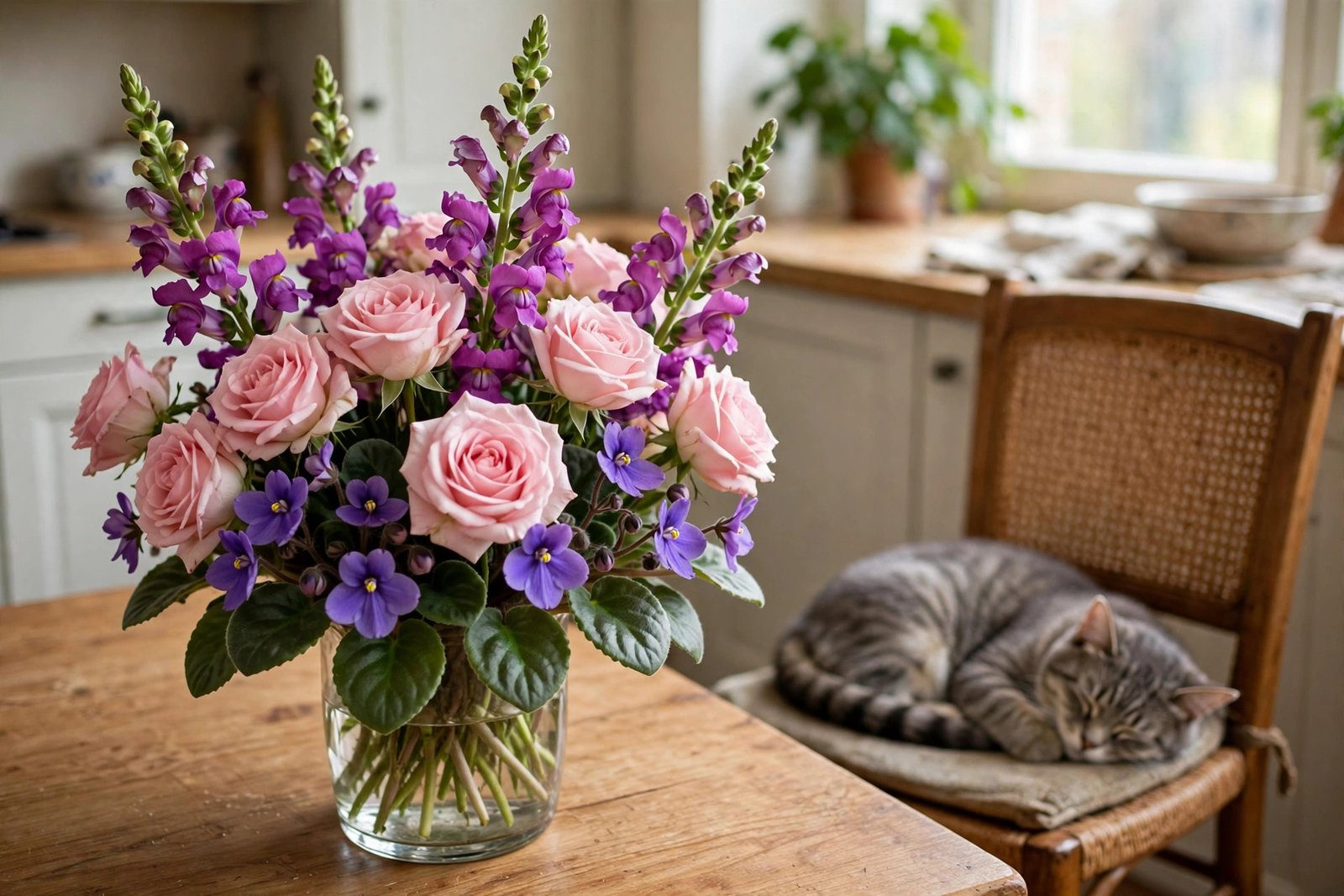
Roses (Rosa spp.) are the classic safe cut flower, widely available in spring bouquets and listed as non-toxic to cats. Snapdragons (Antirrhinum majus) give tall, colorful spikes in a similar spring style, also listed as non-toxic. For a potted plant, the African violet (Saintpaulia spp.) blooms for months on a windowsill, listed as non-toxic — see Are African Violets Safe for Cats? Benefits, Risks, and Care Tips. The moth orchid (Phalaenopsis spp.) is also listed as non-toxic. These are the safe answer if you ask are tulips toxic to cats and still want spring flowers.
Frequently Asked Questions
Are tulips toxic to cats?
Yes. Tulips (Tulipa spp.) are listed by the ASPCA as toxic to cats, dogs, and horses, with tulipalin A and B as the toxic principles and vomiting, depression, diarrhea, and drooling as the signs. The highest toxin concentration is in the bulb — which is why are tulips toxic to cats is a question to ask before buying flowers.
Are tulip bulbs toxic to cats?
Yes — the bulb is the most toxic part. The ASPCA states the toxin is most concentrated in the bulb, and Pet Poison Helpline notes large bulb ingestions can raise heart rate and affect breathing. A cat that chews a bulb needs veterinary advice at once, even if it seems fine — the bulb is where the toxin is strongest, the point of are tulips toxic to cats.
Do tulips cause kidney failure in cats like true lilies?
No. Tulips do not cause kidney failure — that danger belongs to true lilies (Lilium spp.) and daylilies (Hemerocallis spp.). Tulips cause gut irritation from tulipalin A and B: drooling, vomiting, and diarrhea, not organ damage. They are still toxic and still need a prompt call to a veterinarian — the point of are tulips toxic to cats is gut irritation, not kidney failure.
What happens if a cat eats a tulip leaf or petal?
A cat that chews a leaf, stem, or petal usually develops drooling, nausea, and vomiting. Most cases are mild and short-lived, but they still deserve a call to a veterinarian or poison control — even a leaf counts when you ask are tulips toxic to cats.
Can I have cut tulips in a vase if I have a cat?
It is not a safe setup. Cut tulips in a vase sit at cat height, the stems are chewable, and fallen petals land on the floor. Keep the bouquet in a room your cat cannot enter, or choose roses or snapdragons instead. The question of are tulips toxic to cats does not change with a vase: the stems and petals carry the same irritants.
Conclusion
Tulips are toxic to cats. Tulipa spp. contain tulipalin A and B, irritants that cause drooling, vomiting, diarrhea, and lethargy — and the bulb holds the highest concentration, so a cat that eats a bulb faces a more serious poisoning.
If your cat has chewed or eaten any part of a tulip, move the plant out of reach and call your veterinarian or poison control now, even if your cat seems fine — and say at once if it was a bulb. If you cannot keep tulips separate from your cat, keep them out and pick a non-toxic spring flower instead. That is the whole answer to are tulips toxic to cats: yes, and the bulb is the part to fear.
Disclaimer: This article is for general information only and does not replace advice from a veterinarian. If your cat has chewed or eaten a tulip, contact your veterinarian or an animal poison control service promptly. Do not use home remedies, induce vomiting, or give medication without veterinary advice.
Sources
- ASPCA Animal Poison Control Center — Toxic and Non-Toxic Plants: Tulip (Tulipa spp.). Lists tulips as toxic to cats, dogs, and horses; names tulipalin A and B; highest toxin concentration is in the bulb. https://www.aspca.org/pet-care/aspca-poison-control/toxic-and-non-toxic-plants/tulip
- Pet Poison Helpline — Tulips and Hyacinths. Tulips contain allergenic lactones, very concentrated in the bulbs; chewing irritates the mouth and esophagus; large bulb ingestions can raise heart rate and change breathing. https://www.petpoisonhelpline.com/poison/tulip/
- Pet Poison Helpline — Top 10 Plants Poisonous to Pets. Lists tulips and hyacinths among the most poisonous plants for pets. https://www.petpoisonhelpline.com/pet-owners/basics/top-10-plants-poisonous-to-pets/
- ASPCA Animal Poison Control Center — Toxic and Non-Toxic Plant List, Cats. Used to confirm the tulip listing and check alternatives by botanical name. https://www.aspca.org/pet-care/animal-poison-control/cats-plant-list
- Cornell University College of Veterinary Medicine, Cornell Feline Health Center — Common Cat Hazards. Advises calling a veterinarian immediately after a suspected toxic ingestion; warns against inducing vomiting unless directed. https://www.vet.cornell.edu/departments-centers-and-institutes/cornell-feline-health-center/health-information/feline-health-topics/common-cat-hazards
2 thoughts on “Are Tulips Toxic to Cats? Bulb, Leaf, and Flower Risks”