
Knowing what to do if a cat eats a toxic plant can make a real difference in the first minutes. Move your cat away from the plant, try to identify the plant, and contact your veterinarian or an animal poison control service right away.
A cat may look fine at first, yet some plants damage the kidneys or liver before clear signs appear. That is why what to do if a cat eats a toxic plant starts with the exposure, not with how your cat looks.
Call now: your veterinarian or the nearest emergency veterinary clinic; ASPCA Animal Poison Control Center at (888) 426-4435 (24 hours a day, 365 days a year; a consultation fee may apply); or Pet Poison Helpline at (855) 764-7661 (24 hours; a consultation fee may apply). If your cat is having trouble breathing, has seizures, has collapsed, or is not responding, go to the nearest veterinary emergency hospital right away.
What to Do If a Cat Eats a Toxic Plant
Here is what to do if a cat eats a toxic plant, step by step.

Move your cat away from the plant. Move your cat to another room and close the door.
Remove plant material you can see, safely. If you can see plant pieces in your cat’s mouth, remove them only if you can do so safely. Do not reach deep into your cat’s throat. Wipe pollen or sap from fur and paws gently, since cats groom and can swallow it later.
Identify the plant. The plant’s name is one of the most useful things you can give a veterinarian, and the botanical name is even better. Check the plant tag or receipt, take clear photos, and save a small piece in a sealed bag.
Call your veterinarian or poison control right away. Call your regular veterinarian, an emergency clinic, the ASPCA Animal Poison Control Center at (888) 426-4435, or Pet Poison Helpline at (855) 764-7661. If the plant was a true lily or a daylily, say that first. Calling promptly is the most important part of what to do if a cat eats a toxic plant.
Follow the instructions you are given. Follow the veterinary professional’s instructions exactly, and write down what they tell you. Have your cat’s carrier ready.
What Information to Give the Vet or Poison Control
When you know what to do if a cat eats a toxic plant, the next step is giving the vet clear details.

Share as many of these details as you can: the plant’s name, common and botanical, or photos and a sample if you do not know it; which part your cat ate, such as leaves, flowers, stem, bulb, or pollen; how much your cat ate, or that you are not sure; when it happened; your cat’s age, weight, and health problems or medicines; and what your cat is doing now, such as vomiting, drooling, hiding, or lethargy. If you are unsure about an answer, say so. A clear “I don’t know” is far more useful than a guess.
How to Identify the Plant When You Do Not Know Its Name
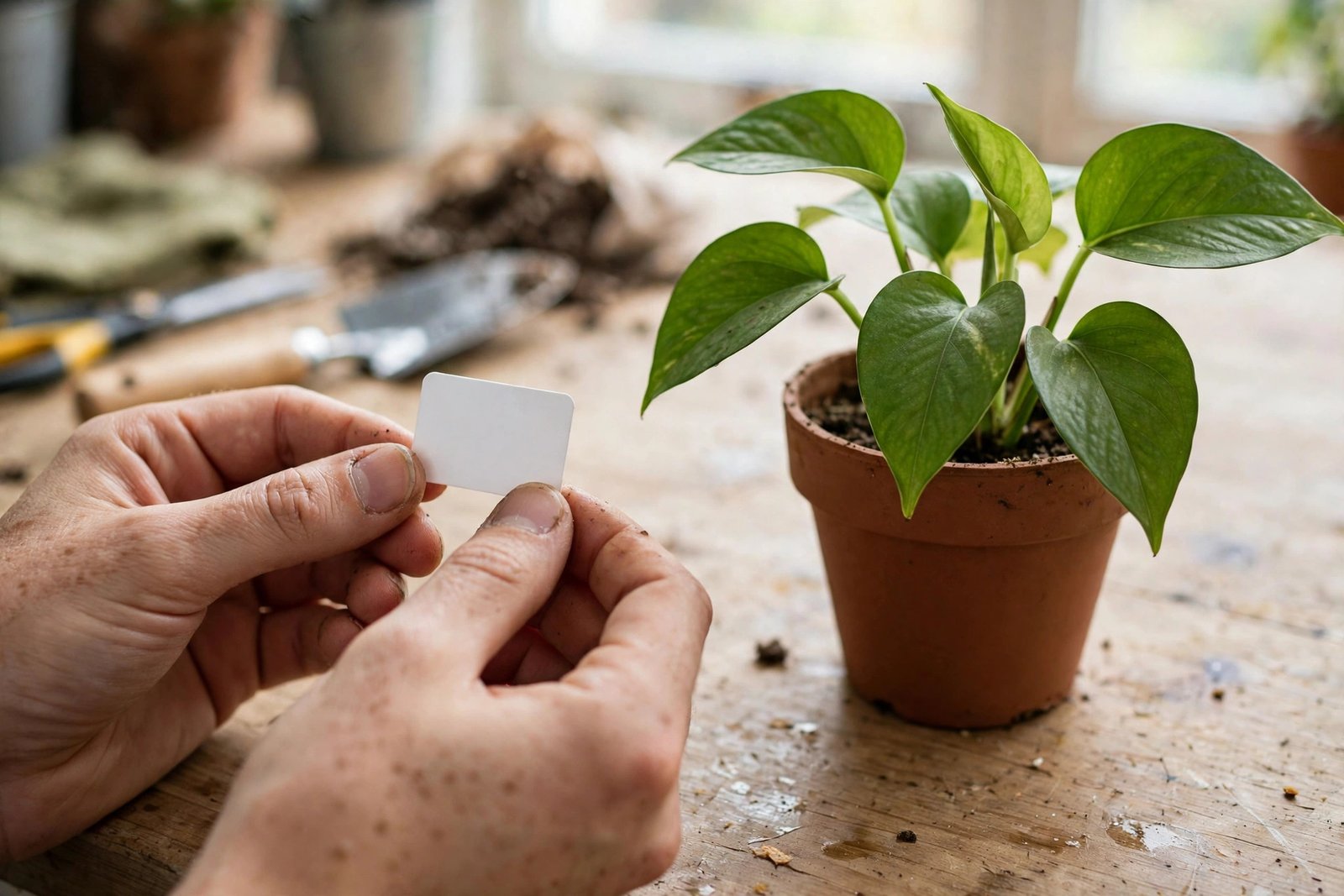
Part of what to do if a cat eats a toxic plant is finding the plant’s name fast. Start with the plant tag. Check your purchase history, receipt, or email confirmation.
If you received the plant as a gift or in a bouquet, ask the person who gave it to you, since one bouquet can mix safe flowers with a toxic one. Take photos from several angles: the whole plant, a single leaf, the stem, flowers or berries, and the pot or tag.
What NOT to Do After a Cat Eats a Toxic Plant
Knowing what to do if a cat eats a toxic plant also means knowing what to avoid. Here are the four mistakes cat owners make most often.
Do not wait for symptoms
The ASPCA notes that if your pet is showing mild signs, or even no signs at all, after ingesting something potentially hazardous, you should not wait for the signs to worsen before getting help. With true lilies, early signs may appear within 6 to 12 hours, according to Pet Poison Helpline. What to do if a cat eats a toxic plant starts with acting on the exposure, not waiting for signs.
Do not induce vomiting
Do not try to make your cat vomit unless a veterinarian specifically tells you to. Cornell Feline Health Center states this clearly: do not induce vomiting unless directed to do so, because certain poisons can cause more damage during vomiting than if left in the stomach. That is part of what to do if a cat eats a toxic plant: leave that decision to the professional on the phone.
Do not use hydrogen peroxide or any other household substance to induce vomiting in a cat.
Do not give milk, food, oil, or home remedies
Do not give your cat milk, peanut butter, vegetable oil, or other foods or liquids to “soak up” the toxin. Part of what to do if a cat eats a toxic plant is resisting the urge to try a home fix.
Do not give human medicine, activated charcoal, or any home remedy unless a veterinarian tells you to.
Do not assume a small bite is safe
A small nibble is less likely to cause harm than a large meal of a toxic plant, but “small” does not mean “safe” for every plant. With true lilies, Pet Poison Helpline notes that as few as one or two leaves, or even a small amount of pollen, can cause severe kidney failure. The amount matters, but the plant matters more. That is why the question of what to do if a cat eats a toxic plant has the same answer even for a small bite: call your vet or poison control right away.
Signs of Plant Poisoning in Cats
Learning what to do if a cat eats a toxic plant includes knowing which signs to report to the vet — these are signs to tell the vet about, not a checklist to wait for.
Cornell Feline Health Center lists these as some common signs of poisoning in cats: vomiting, diarrhea, seizures, blood in the stool or urine, lethargy, loss of appetite, bruising, nosebleeds, irregular heartbeat, inability to urinate, and difficulty breathing. Other signs include drooling, pawing at the mouth, and hiding. Note when each sign started.
Why Some Plants Are Emergencies: Lilies and Sago Palm
True lilies and sago palm are the two most urgent plant exposures in cats, and knowing what to do if a cat eats a toxic plant matters most with these two. True lilies (Lilium species) and daylilies (Hemerocallis species), including Easter, Asiatic, tiger, and stargazer lilies, cause sudden kidney failure in cats, according to Pet Poison Helpline.
Exposure to any part — leaves, flowers, pollen, or even the water from the vase — is a problem, and a veterinarian or Pet Poison Helpline should be consulted immediately. Cornell Feline Health Center agrees: lilies can cause life-threatening kidney failure if ingested even in tiny amounts. Pet Poison Helpline also notes that a delay in treatment of more than 18 hours often results in kidney failure.
If the plant is a lily, what to do if a cat eats a toxic plant starts with one word: say “lily” first, so the vet knows the clock is ticking. For more detail, see Are Lilies Toxic to Cats? Types, Exposure Risks, and Urgent Steps.
Not every plant with “lily” in its name carries the same risk. Peace lily, calla lily, and Peruvian lily do not cause the same kidney injury as true lilies, though they can still cause mouth irritation or vomiting. Lily of the valley (Convallaria majalis) can cause vomiting and serious heart problems.
Sago palm (Cycas revoluta) is another emergency. All parts are toxic, and the seeds carry the most concentrated dose of the toxin cycasin. Pet Poison Helpline notes that a small amount can cause severe vomiting, bloody stools, liver failure, and in some cases death. For the full picture, see Are Sago Palms Toxic to Cats?.
Common Toxic Houseplants to Know by Name
Part of what to do if a cat eats a toxic plant is knowing which plants are the usual suspects. Here are the ones cat owners meet most often. This is not a complete list, and a plant not listed here is not automatically safe.
| Plant | Botanical Name | Main Risk in Cats |
|---|---|---|
| Pothos | Epipremnum aureum | Mouth pain, drooling, vomiting |
| Philodendron | Philodendron species | Mouth irritation, drooling |
| Monstera | Monstera deliciosa | Mouth irritation, drooling |
| Peace lily | Spathiphyllum species | Mouth irritation, vomiting |
| Snake plant | Dracaena trifasciata | Nausea, vomiting, diarrhea |
| Aloe vera | Aloe barbadensis | Vomiting, diarrhea |
| Jade plant | Crassula ovata | Vomiting, loss of coordination |
| Tulips and daffodils | Tulipa and Narcissus species | Vomiting, diarrhea; bulbs worst |
| Sago palm | Cycas revoluta | Liver failure, can be fatal |
| True lilies and daylilies | Lilium and Hemerocallis species | Kidney failure, can be fatal |
For a fuller list with identification details and safer alternatives, see Common Houseplants That Are Toxic to Cats: What to Avoid. Note that areca palm and parlor palm are listed as non-toxic by the ASPCA, while sago palm is a cycad, not a true palm, and is highly toxic. If you cannot find a plant’s botanical name in the ASPCA database, treat it as unverified.
What Happens After You Call for Help
Once you know what to do if a cat eats a toxic plant, the next question is what happens after the call. The exact steps depend on the plant, the amount, the time since exposure, and your cat’s health. Only the veterinarian or poison control professional who has your details can decide the plan.
They may ask you to bring your cat in, or to watch your cat at home and call back if anything changes. Whatever they advise, knowing what to do if a cat eats a toxic plant means following their plan, not improvising your own.
This guide does not give treatment plans, medication doses, or home care instructions. Those decisions belong to the veterinarian treating your cat. Follow the plan you were given.
If You Are Not Sure the Plant Is Toxic
Call anyway. A call to your veterinarian or poison control is the right step when you are unsure. They can help you identify the plant and decide whether your cat needs to be seen.
If you are not sure the plant is toxic, what to do if a cat eats a toxic plant is still the same: call. The ASPCA also notes that eating any plant material can cause vomiting and stomach upset in cats, even when the plant is listed non-toxic.
How to Prevent the Next Plant Emergency
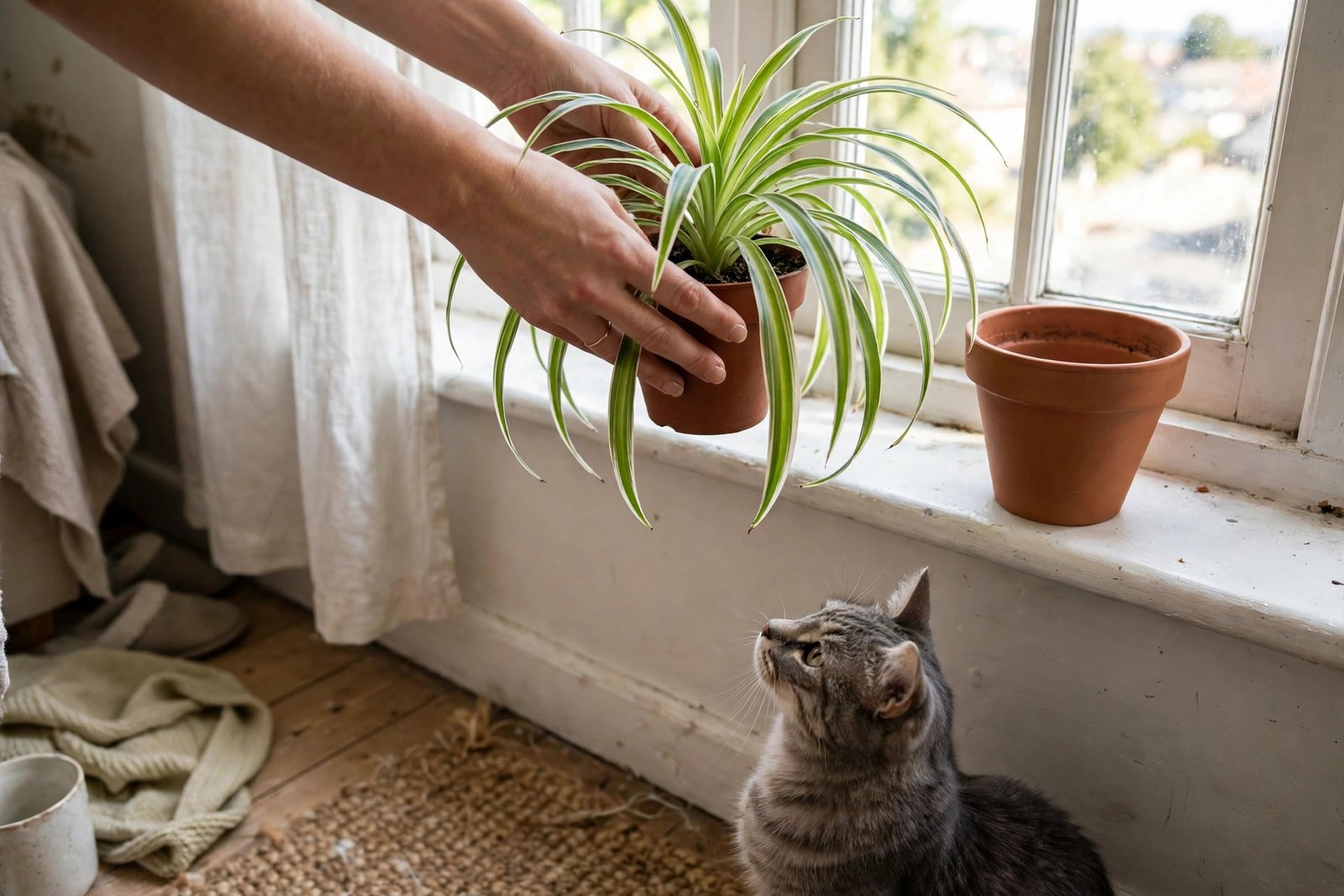
The best follow-up to what to do if a cat eats a toxic plant is making sure it does not happen again. Walk through your home and check each plant’s botanical name against the ASPCA toxic and non-toxic plant database. Remove or rehome any plant you cannot confirm as non-toxic.
Make the botanical name part of your shopping habit. Read the tag and search the ASPCA database before you pay. Be careful with bouquets and gift plants: a bouquet can include a true lily tucked in with roses. Cat grass, usually wheatgrass or oat grass, gives your cat a safe outlet.
Choose non-toxic plants for the rooms your cat uses most. For ideas, see 15 Cat-Safe Houseplants for a Greener, Pet-Friendly Home. You can also read our guide on how to keep cats out of houseplants for placement tricks that work. Save the emergency numbers where everyone at home can find them.
Frequently Asked Questions
What should I do first if my cat eats a toxic plant?
Move your cat away from the plant, identify the plant if you can, and call your veterinarian or poison control right away. Do not wait for symptoms. That is what to do if a cat eats a toxic plant in the first minutes.
Should I make my cat vomit after eating a toxic plant?
No, unless a veterinarian specifically tells you to. Cornell Feline Health Center warns that certain poisons can cause more damage during vomiting than if left in the stomach.
My cat only took one small bite. Do I still need to call the vet?
Yes. The risk depends on the plant: with true lilies, even one or two leaves or a small amount of pollen can cause severe kidney failure, according to Pet Poison Helpline. Even one bite is why what to do if a cat eats a toxic plant starts with a call.
What if I do not know what plant my cat ate?
Call anyway. Take clear photos, check the plant tag or receipt, and save a small piece in a sealed bag if you can. The vet or poison control can help you identify the plant from your photos.
How do I know if my cat has plant poisoning?
Signs can include vomiting, diarrhea, drooling, pawing at the mouth, or lethargy. Some cats show no signs at first, so do not wait for signs to appear. Knowing what to do if a cat eats a toxic plant means calling even when the signs are unclear.
What is the ASPCA poison control number for cats?
The ASPCA Animal Poison Control Center number is (888) 426-4435, available 24 hours a day, 365 days a year. A consultation fee may apply. Pet Poison Helpline is (855) 764-7661.
Conclusion
The short version of what to do if a cat eats a toxic plant is simple: move your cat away from the plant, identify the plant if you can, and call your veterinarian or an animal poison control service right away. After the scare, audit your plants and check every new plant before you buy it.
If it just happened, call now: your veterinarian, the ASPCA Animal Poison Control Center at (888) 426-4435, or Pet Poison Helpline at (855) 764-7661.
Disclaimer: This article is for general information only. It is not veterinary advice and does not replace advice from a veterinarian. If you think your cat has eaten a toxic plant, contact your veterinarian or an animal poison control service promptly.
Sources
- ASPCA. “What to Do if Your Pet Is Poisoned.” https://www.aspca.org/news/what-do-if-your-pet-poisoned
- ASPCA. “My Pet Ate Something! When Should I Seek Help?” https://www.aspca.org/news/my-pet-ate-something-when-should-i-seek-help
- ASPCA. “Toxic and Non-Toxic Plants.” https://www.aspca.org/pet-care/animal-poison-control/toxic-and-non-toxic-plants
- Pet Poison Helpline. “Lily Toxicity.” https://www.petpoisonhelpline.com/uncategorized/paws-on-safety-1-min-pet-clinic-lily-toxicity/
- Pet Poison Helpline. “Easter Lilies.” https://www.petpoisonhelpline.com/pet-owners/seasons/easter/
- Pet Poison Helpline. “Summer Plants Toxic to Pets.” https://www.petpoisonhelpline.com/uncategorized/veterinarians-warn-pet-owners-about-summer-plants-and-substances-poisonous-to-dogs-and-cat/
- Cornell University College of Veterinary Medicine, Cornell Feline Health Center. “Common Cat Hazards.” https://www.vet.cornell.edu/departments-centers-and-institutes/cornell-feline-health-center/health-information/feline-health-topics/common-cat-hazards
- Cornell University College of Veterinary Medicine, Cornell Feline Health Center. “Poisons.” https://www.vet.cornell.edu/departments-centers-and-institutes/cornell-feline-health-center/health-information/feline-health-topics/poisons
- PetMD. “Garden Plant Toxicity in Cats.” https://www.petmd.com/cat/poisoning/garden-plant-toxicity-in-cats
25 thoughts on “What to Do If a Cat Eats a Toxic Plant: A Safety Guide”