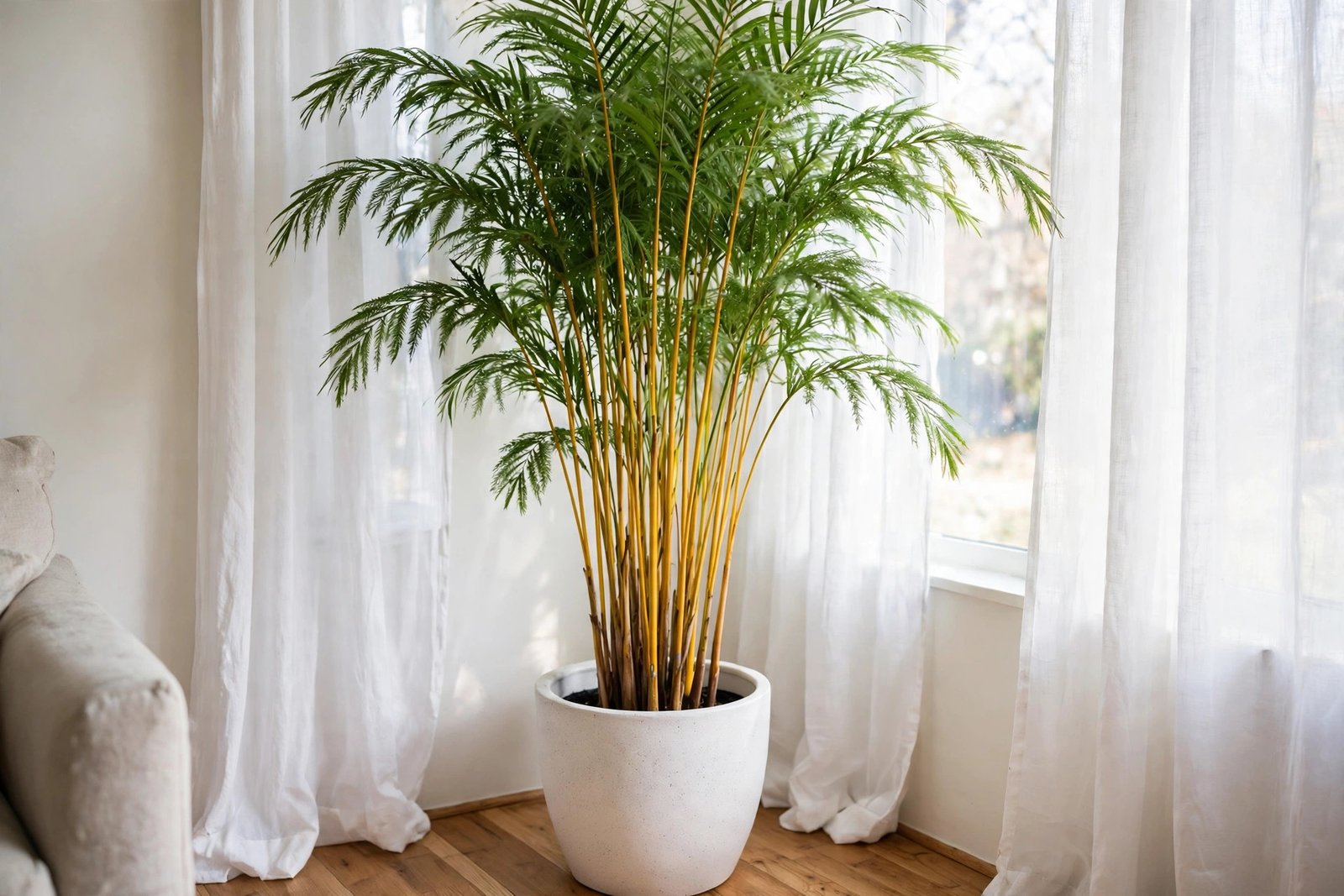
If you are asking are areca palms safe for cats, the short answer is yes — with one honest caveat. The ASPCA Animal Poison Control Center lists the areca palm, Dypsis lutescens, as non-toxic to cats, dogs, and horses, making it one of the few tall, leafy houseplants that works well in a home with cats.
So are areca palms safe for cats in every situation? Mostly yes, but the details matter — especially if your cat is a determined chewer, and especially because not every plant sold as a “palm” is a true palm. This guide covers the ASPCA listing, identification, the toxic sago look-alike, and care.
Are Areca Palms Safe for Cats? The Short Answer
When people ask are areca palms safe for cats, the ASPCA entry is the first place to check: it lists the areca palm as non-toxic to cats, dogs, and horses, filed under Dypsis lutescens, with the common names Golden Butterfly Palm, Cane Palm, Golden Feather Palm, and Yellow Palm. Common names vary by store, so check the scientific name.
The short answer to are areca palms safe for cats is yes in the toxicology sense: no part of the plant is known to poison a cat. Eating any plant material can still cause mild stomach upset, so a cat that eats a large amount of tough, fibrous fronds can vomit or have a soft stool.
If your cat eats a large amount, vomits repeatedly, seems lethargic, or stops eating, contact your veterinarian or poison control promptly. Do not wait, and do not try a home remedy. For plants that are not suitable for cats, see our guide to common houseplants that are toxic to cats.
What Is an Areca Palm?
The areca palm is a clumping tropical palm native to Madagascar, grown indoors for soft, arching fronds and upright, cane-like stems. A mature indoor plant often reaches 6 to 8 feet tall.
Each cane is slender and often golden-yellow, sometimes with dark speckles, and each frond is divided into many narrow leaflets for a feathery look.
Once you can spot those golden canes, are areca palms safe for cats is a question you can answer about the right plant — the label is the proof, not the nickname. For owners who want height without worry, are areca palms safe for cats is the question that decides whether this palm earns its corner.
How to Identify an Areca Palm
Check the stems first: an areca palm grows as a clump of several slender canes, not a single thick trunk, and the canes are usually smooth and golden-yellow.
Next, check the fronds: long, arching, and feathery, with many narrow leaflets. The leaflets are soft and flexible, not stiff, glossy, and spiky.
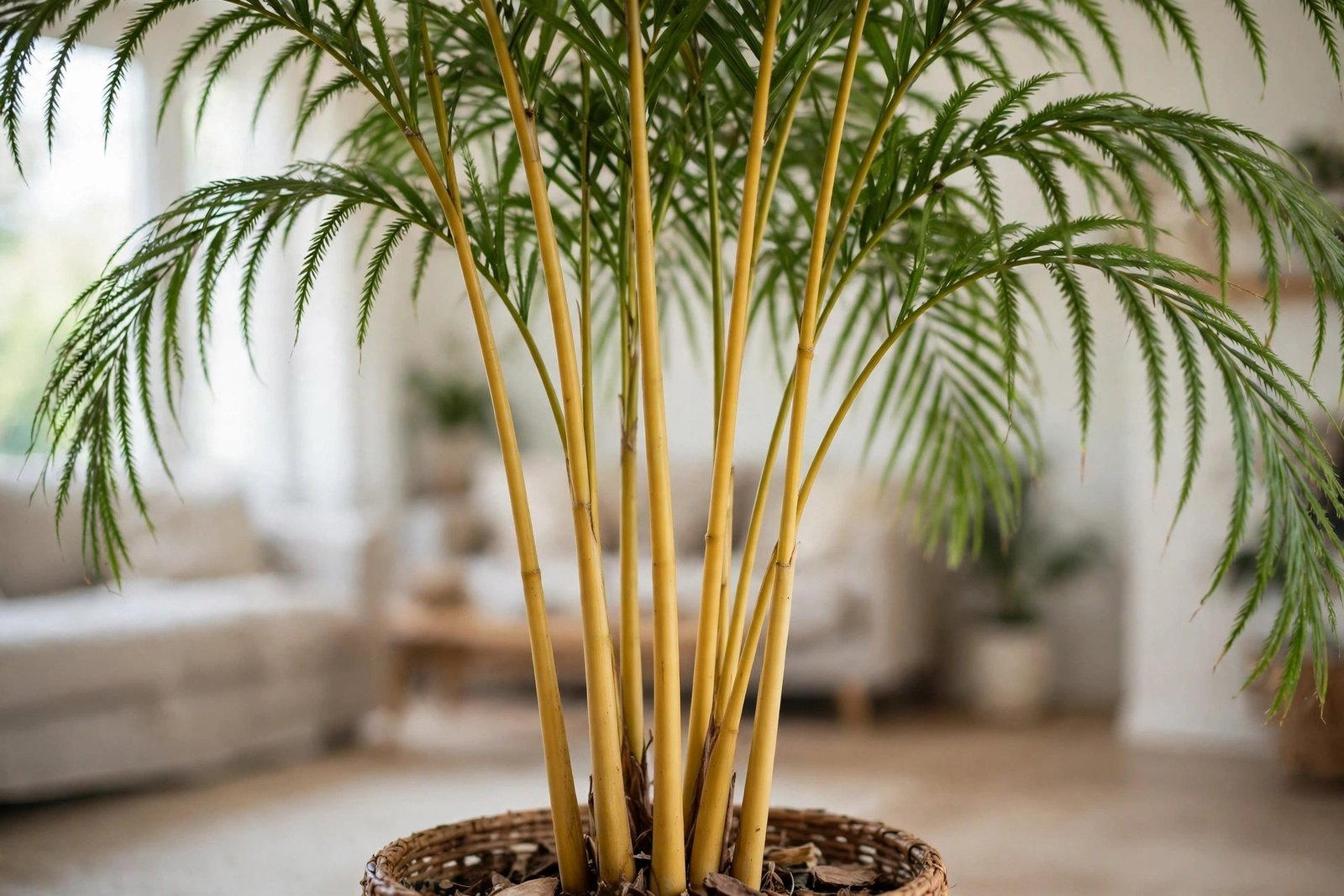
Finally, read the label for Dypsis lutescens or Chrysalidocarpus lutescens, an older name for the same plant. If it says only “palm,” ask the seller for the scientific name. If you cannot confirm it, do not assume the plant is safe — are areca palms safe for cats is only the right question when the label says Dypsis lutescens.
The Sago Palm Mistake
The main look-alike is the sago palm, Cycas revoluta — not a true palm but a cycad, listed by the ASPCA as toxic to cats, dogs, and horses. All parts are poisonous, and the seeds are the most dangerous part.
That is why “palm” on a label is not enough: a sago palm has stiff, glossy, sharp-tipped leaflets around a thick, rough trunk, while an areca palm has softer leaflets on slender canes.
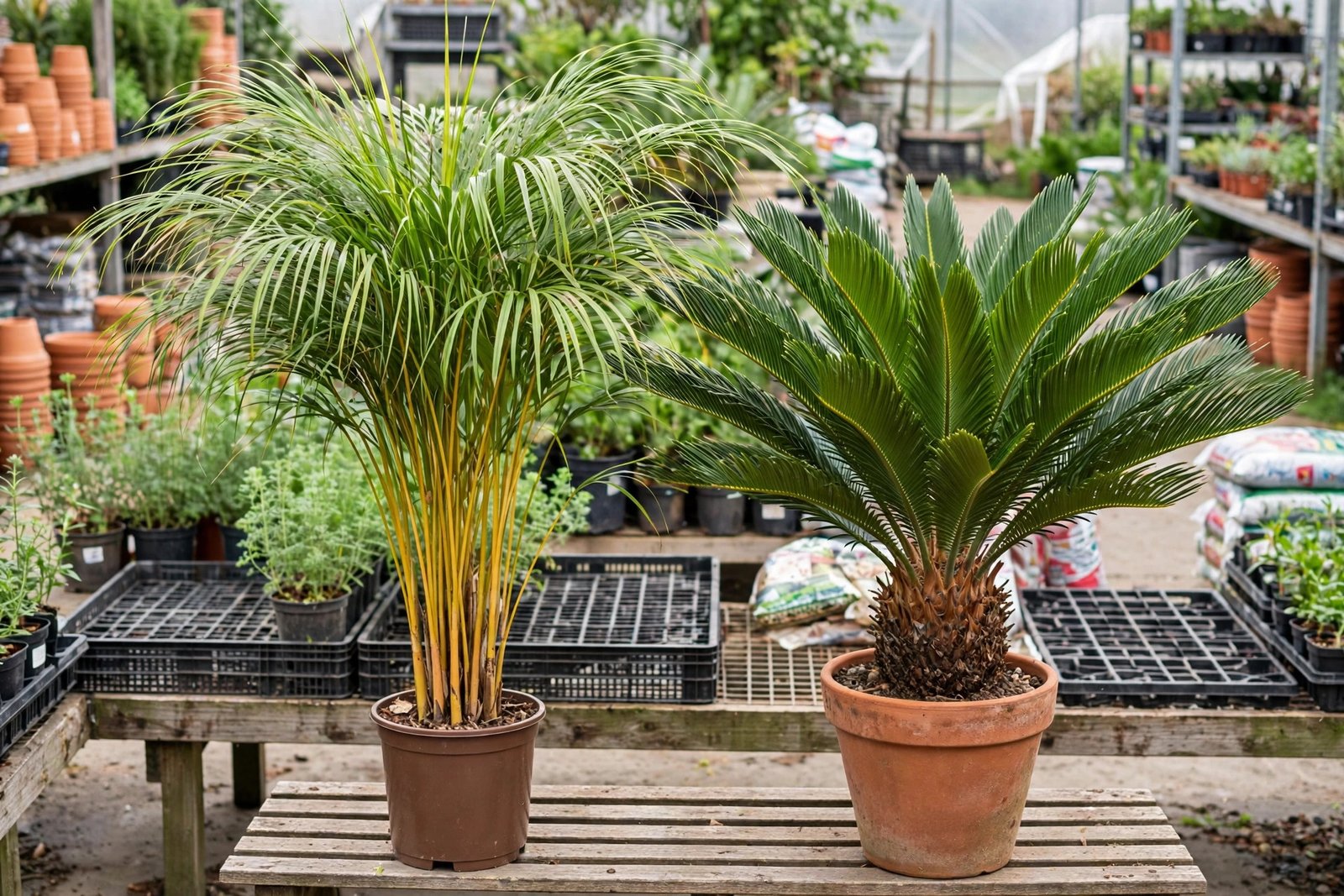
The question are areca palms safe for cats covers only the true palm, Dypsis lutescens, so if you have a plant labeled “palm” and are unsure of the species, keep it out of your cat’s reach until you can identify it. If you are unsure after an exposure, see our guide on what to do if your cat eats a toxic plant.
What “Non-Toxic” Really Means
Non-toxic means the ASPCA has not identified compounds in the plant known to poison cats, so a cat that nibbles a frond is not expected to be poisoned by the plant itself.
It does not mean digestible: palm leaflets are tough and fibrous, so a large amount may cause vomiting or loose stool, just as eating too much grass can. Chewing can also irritate a sensitive cat’s mouth or stomach.
The honest answer to are areca palms safe for cats is yes, with limits — chewing can damage the plant, and a cat that chews the same palm every day can strip fronds bare. A cat that eats a lot of palm can still vomit, which is why are areca palms safe for cats is a yes with a chewing limit, not a yes to unlimited eating.
It also does not cover sprays and soil additives: many plants are treated with pesticides or leaf-shine products before sale, and fertilizer in the pot can be a problem if a cat digs. Ask whether a new plant was treated, and keep the cat away from the soil for now.
Kittens, older cats, and cats with health problems may react differently to eating plant material, so ask your veterinarian before adding any new plant if your cat has a health condition.
Areca Palm Care
Areca palms prefer bright light, even moisture, and humidity above dry indoor air, and they dislike cold drafts, soggy soil, and harsh direct sun through glass. Care does not change whether are areca palms safe for cats — it only decides whether the plant thrives or declines.
Light
Give bright, indirect light, such as near an east-facing window or a few feet back from a south- or west-facing window. Direct midday sun through glass can scorch fronds, and low light can cause slow, leggy growth. Turn the pot weekly for even growth.
The answer to are areca palms safe for cats stays a yes whether the plant sits in an east window or a bright living room — light affects the plant’s health, not its toxicity.
Water
Water thoroughly, then let the top inch or two of soil dry before watering again. Let excess water drain away, and empty the saucer.
In spring and summer, that may be about once a week; in winter, water less often. Use the soil, not the calendar, as your guide.
Overwatering can lead to root rot and yellowing fronds, while underwatering can cause dry, brown tips. Areca palms are sensitive to fluoride and chlorine in tap water, so try filtered, distilled, or rainwater if brown tips recur.
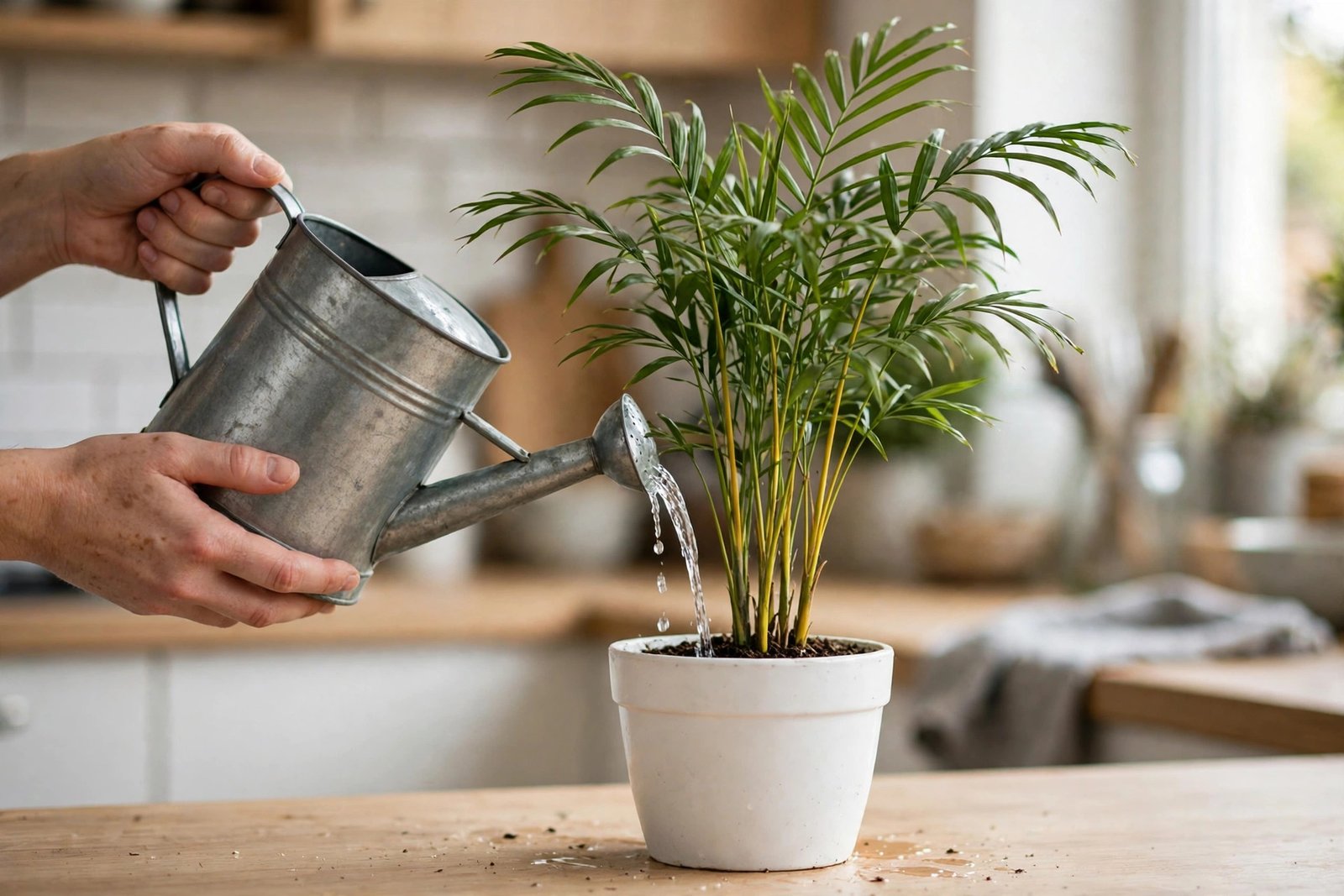
The watering routine does not change the answer to are areca palms safe for cats.
Humidity and Temperature
Areca palms prefer 40 to 60 percent humidity, while indoor air is often drier, especially in winter. Low humidity is a common cause of brown tips and can attract spider mites, so a cool-mist humidifier near the plant is usually the most reliable fix.
Keep the plant warm, ideally 65 to 80 degrees Fahrenheit (18 to 27 degrees Celsius), and avoid prolonged exposure below about 55 degrees Fahrenheit (13 degrees Celsius). Keep it away from cold drafts and hot air.
Humidity decides whether an areca palm thrives, though it never changes the answer to are areca palms safe for cats — the plant stays non-toxic in dry air too, it just looks worse.
Soil, Feeding, and Repotting
Use a well-draining mix that still holds some moisture, such as standard houseplant mix with added perlite or orchid bark. Feed lightly in spring and summer with a balanced houseplant fertilizer, used exactly as the label directs — too much can burn roots.
Repot every two to three years, or when roots are crowded, moving up only one pot size at a time. Feeding and repotting do not change the answer to are areca palms safe for cats either.
Placement in a Home With Cats
Choose a bright corner away from the main path of a running cat, and use a heavy, stable pot — a tall palm in a light plastic pot is easy to tip over. A heavier ceramic pot, or a pot inside a heavier cachepot, is more stable.
Placement is where are areca palms safe for cats meets a determined chewer.
Keep the plant away from a cat’s favorite perch. If it sits next to a windowsill or cat tree, the cat is more likely to bat at the fronds.
If your cat digs in the soil, cover it with large, smooth stones too big to swallow, or raise the pot on a plant stand — our guide to keeping cats out of houseplants has more ideas.

What to Do If Your Cat Chews an Areca Palm
Move the cat away calmly, without chasing or punishing it, and note what part was eaten, roughly how much, and when. Watch the cat for the rest of the day: a single episode of vomiting or loose stool can follow eating fibrous plant material, but if the cat is drinking and returns to normal, that is reassuring.
A small nibble is not an emergency, but the question are areca palms safe for cats still deserves a careful check of the label. If the tag is missing or says something else, treat the situation as uncertain and call your veterinarian.
If your cat chews a large amount, the question are areca palms safe for cats comes up again — and the answer stays yes for the plant itself, but your cat still needs watching. Contact your veterinarian or the ASPCA Animal Poison Control Center at (888) 426-4435 promptly if your cat vomits repeatedly, refuses food or water, or becomes lethargic. Never try to make your cat vomit at home.
Call the ASPCA Animal Poison Control Center at (888) 426-4435 or the Pet Poison Helpline at (855) 764-7661 (a fee may apply), and tell them the plant is Dypsis lutescens, how much was eaten, and when. Do not give milk, oil, home remedies, or medicine meant for people. Our guide on what to do if your cat eats a toxic plant covers the same first steps.
Common Problems
Brown leaf tips are the most common complaint, caused by low humidity, inconsistent watering, fluoride or chlorine in tap water, or overfertilizing.
Check water and humidity first, use filtered water if needed, and raise humidity with a humidifier. Trim only fully dead fronds at the base.
Brown tips do not change the answer to are areca palms safe for cats — the plant stays non-toxic even when the tips brown.
Spider mites are the most common pest, especially in dry air — look for fine webbing, tiny specks under fronds, and stippled leaves. Isolate an infested plant, rinse the fronds with plain water, and use only a product labeled for indoor houseplants, following the directions exactly. Keep cats away until the plant is dry.
Buying Checklist
Check the botanical name first: Dypsis lutescens or Chrysalidocarpus lutescens — if the label gives none, ask for it. Look for several slender, golden canes and soft, feathery fronds, and avoid stiff, spiky leaves and a single thick trunk.
Before you pay, are areca palms safe for cats is worth one last label check. A healthy plant has bright green fronds, firm canes, and no signs of pests or rot. Skip any palm with yellowing fronds, a sour smell, or a label you cannot read.
Frequently Asked Questions
Are areca palms safe for cats?
Yes. Areca palms (Dypsis lutescens) are listed as non-toxic to cats by the ASPCA, so a cat that nibbles a frond is not expected to be poisoned. Eating a large amount can still cause mild vomiting or a soft stool.
That is why are areca palms safe for cats is a yes even when a cat nibbles a few leaves — the risk is stomach upset, not poisoning.
Can my cat chew areca palm leaves?
A cat may chew a few leaflets without being poisoned, but chewing should still be discouraged — it can cause mild stomach upset and damage the plant. Offer cat grass instead.
Is the areca palm the same as the sago palm?
No. The areca palm is Dypsis lutescens, a true palm listed as non-toxic to cats, while the sago palm is Cycas revoluta, a cycad listed by the ASPCA as toxic to cats, dogs, and horses. All parts of a sago palm are poisonous, and the seeds are the most dangerous part.
How often should I water an areca palm?
Water thoroughly when the top inch or two of soil feels dry, then let excess water drain away. In spring and summer, that may be about once a week; in winter, water less often.
Why does my areca palm have brown tips?
Brown tips are common, caused by low humidity, inconsistent watering, fluoride or chlorine in tap water, or overfertilizing. Check humidity and watering first, and use filtered water if needed.
What should I do if my cat eats a lot of areca palm?
Move the cat away, note how much was eaten and when, and watch for vomiting, diarrhea, lethargy, or loss of appetite. If the cat eats a large amount or shows any worrying change, contact your veterinarian or poison control promptly. Do not try a home remedy, and do not try to make the cat vomit.
If the plant’s identity is uncertain, are areca palms safe for cats is a question you cannot answer yet — treat the exposure as uncertain and call your veterinarian or poison control.
Conclusion
So, are areca palms safe for cats? Yes — the ASPCA lists Dypsis lutescens as non-toxic to cats. The main question is care: can you give it bright indirect light, steady moisture, and humidity above dry indoor air?
If a friend asks are areca palms safe for cats, you can now answer yes — and explain the chewing caveat. To build a wider safe collection, see our guide on how to create a cat-friendly indoor plant space.
Disclaimer: This article is for general information only and does not replace advice from a veterinarian. Plant toxicity listings can change, and individual cats can react differently. If your cat eats a plant and you are worried, contact your veterinarian or the ASPCA Animal Poison Control Center at (888) 426-4435.
Sources and References
- ASPCA Animal Poison Control Center — “Areca Palm.” Toxic and Non-Toxic Plants. Lists Dypsis lutescens as non-toxic to dogs, cats, and horses, with additional common names Golden Butterfly Palm, Cane Palm, Golden Feather Palm, and Yellow Palm: https://www.aspca.org/pet-care/animal-poison-control/toxic-and-non-toxic-plants/areca-palm
- ASPCA Animal Poison Control Center — “Toxic and Non-Toxic Plants.” The ASPCA database used to check plant toxicity listings for cats: https://www.aspca.org/pet-care/animal-poison-control/toxic-and-non-toxic-plants
- Guide to Houseplants — “Areca Palm Tree.” General care reference for light, water, humidity, and temperature for Dypsis lutescens indoors: https://www.guide-to-houseplants.com/areca-palm-tree.html
- Potted Patch — “How to Care for an Areca Palm (Complete Guide).” General care reference for watering, soil, humidity, and common problems: https://www.pottedpatch.com/how-to-care-for-an-areca-palm-complete-guide/
1 thought on “Are Areca Palms Safe for Cats? What Cat Owners Should Know”