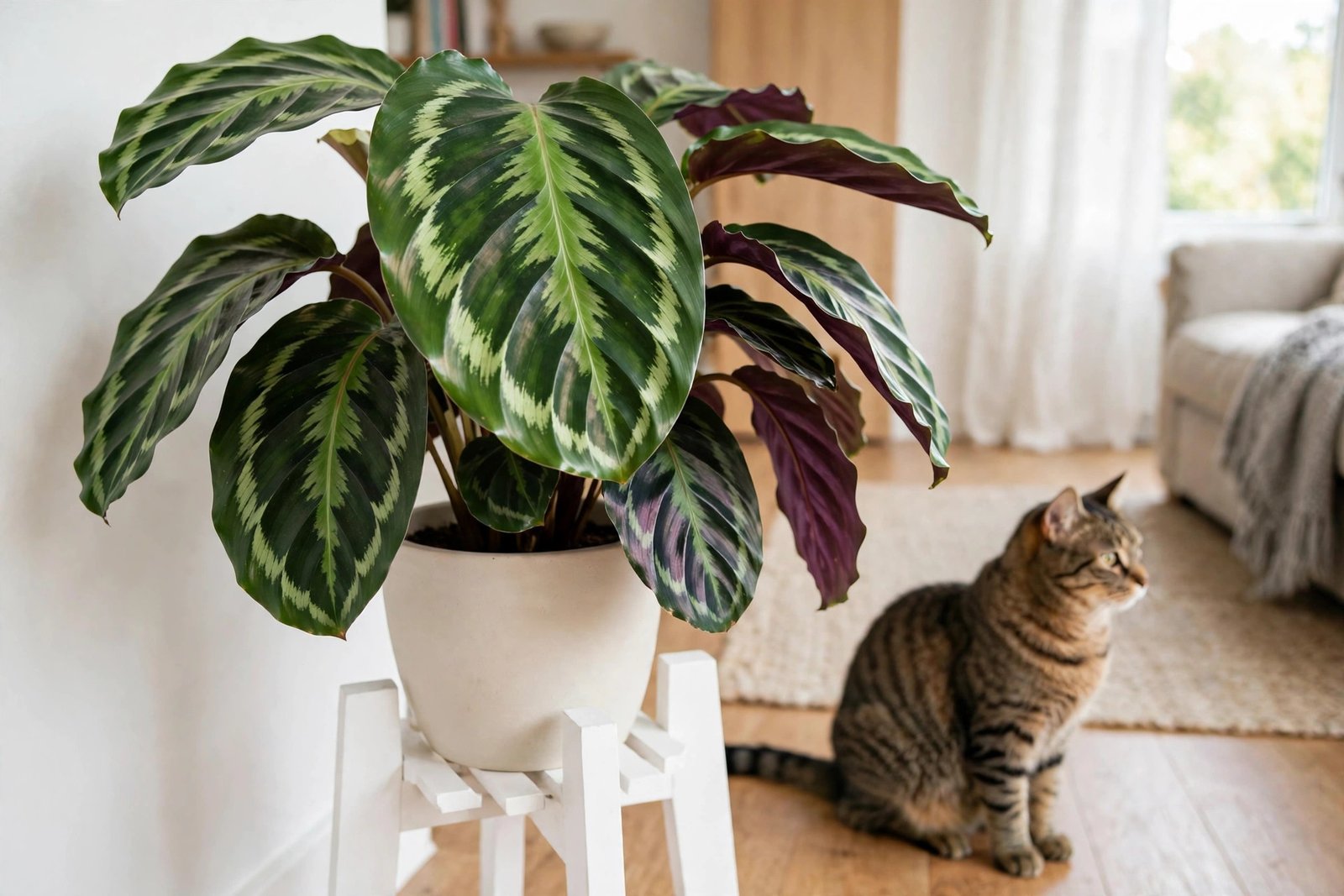
Are calatheas safe for cats? Yes — the ASPCA Animal Poison Control Center lists Calathea spp. as non-toxic to cats, dogs, and horses. That makes it one of the best patterned foliage plants for a cat home.
It does not mean a cat should eat it — non-toxic is not the same as safe to chew. Check the label: calatheas have been reclassified and share common names with other plants.
The Short Answer
Are calatheas safe for cats? For most households, yes. The ASPCA lists Calathea spp., family Marantaceae, as non-toxic to dogs, cats, and horses. The entry names no toxic principle or clinical signs, and the listing is genus-level.
Are calatheas safe for cats in a home with a curious kitten? The listing still holds, but a large amount of any plant can upset a small stomach. If your cat eats a lot, vomits repeatedly, seems lethargic, or stops eating, contact your vet or an animal poison control service promptly.
For plants that are not suitable for cats, see houseplants that are toxic to cats.
What Is a Calathea?
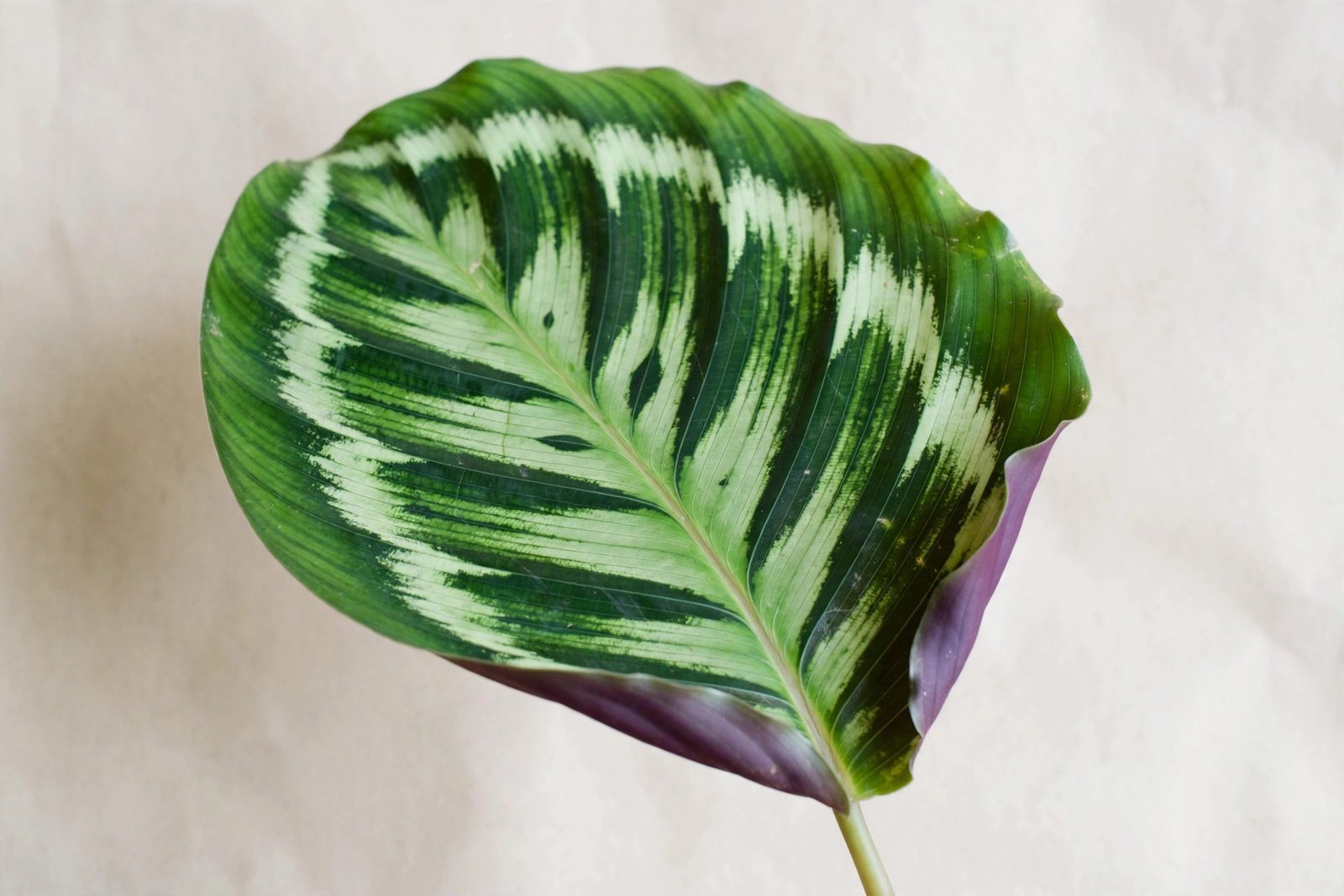
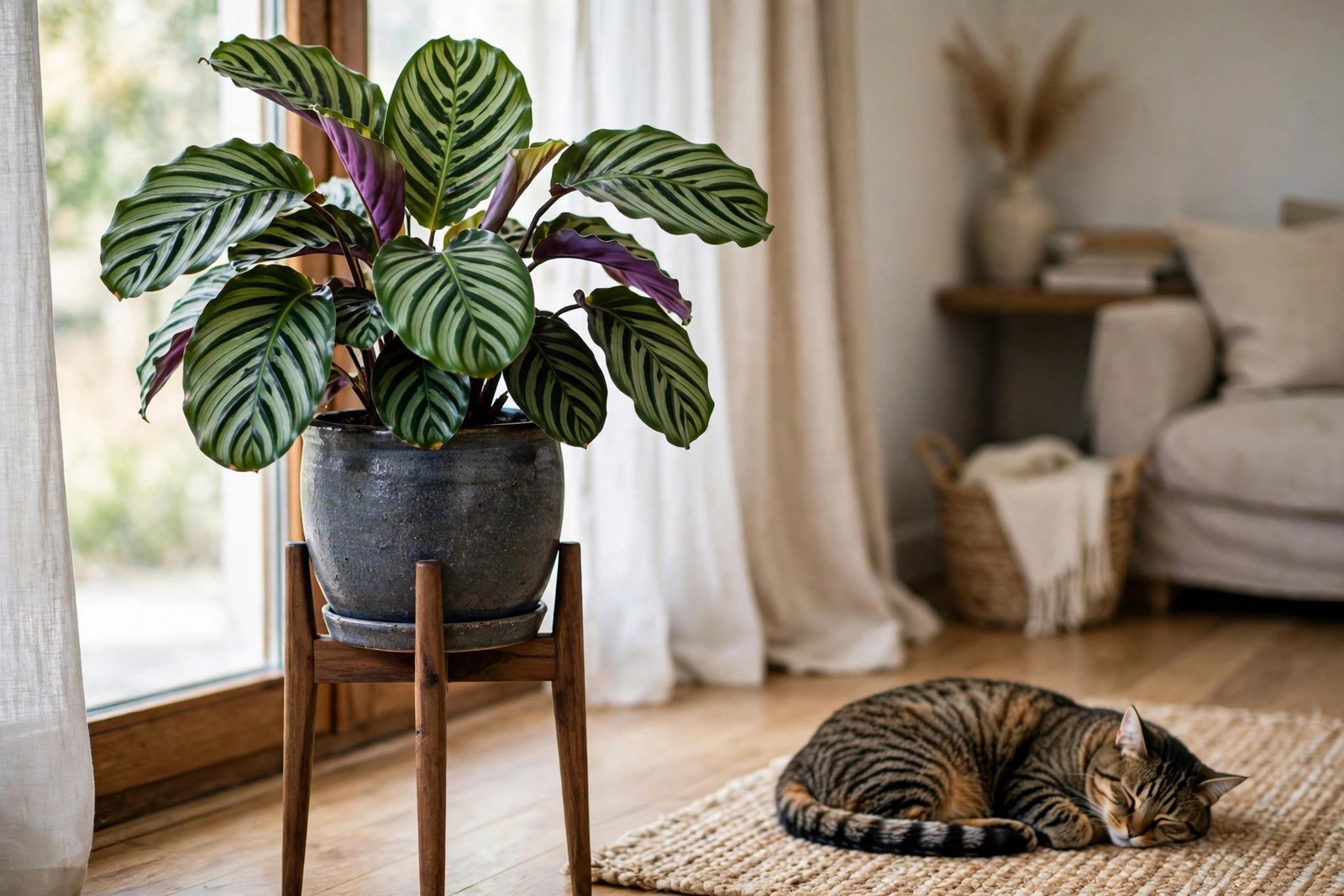
A calathea is a tropical foliage plant grown for its leaves, not its flowers. It comes from the rainforests of Central and South America, where it grows on the shaded forest floor. Indoors, it is grown for large, oval leaves with stripes, spots, or feathered markings, often with a purple underside.
Calatheas belong to the prayer plant family, Marantaceae, and many fold their leaves up at night, a movement called nyctinasty. Indoors, most grow 1 to 3 feet tall and wide and rarely flower.
Are calatheas safe for cats because of something in the leaves? No — it is the absence of known toxins that earns the listing.
How to Identify a Calathea
Check the leaves first: broad, oval leaves with bold, symmetrical patterns, often with a purple underside, on long stalks from the base. Next, watch the leaves at night: many fold up in the evening and open again in the morning.
Finally, read the label for Calathea spp. or Goeppertia spp. — if it gives no botanical name, ask the seller.
Are calatheas safe for cats if the label only says “prayer plant”? Not necessarily — that name is shared by more than one plant.
What “Non-Toxic” Really Means
Non-toxic means the ASPCA has not identified compounds in the plant known to poison cats, so a nibbling cat is not expected to be poisoned by the plant itself. The ASPCA notes that eating any plant material may cause vomiting and stomach upset, even when the plant is listed as non-toxic. Calathea leaves are fibrous, so a large amount may cause vomiting or loose stool.
Are calatheas safe for cats to chew? That is a different question from whether the plant is toxic. The listing also does not cover sprays and soil additives — many tropical plants are treated with pesticides or leaf-shine before sale, and fertilizer in the pot can be a problem if a cat digs. Ask whether a new plant was treated, and keep the cat away from the soil until you know.
Are calatheas safe for cats around other plants in the same room? The calathea itself is, but true lilies and daylilies can cause kidney failure in cats — even pollen or vase water can be harmful.
The Name Problem: Calathea, Goeppertia, and Prayer Plants
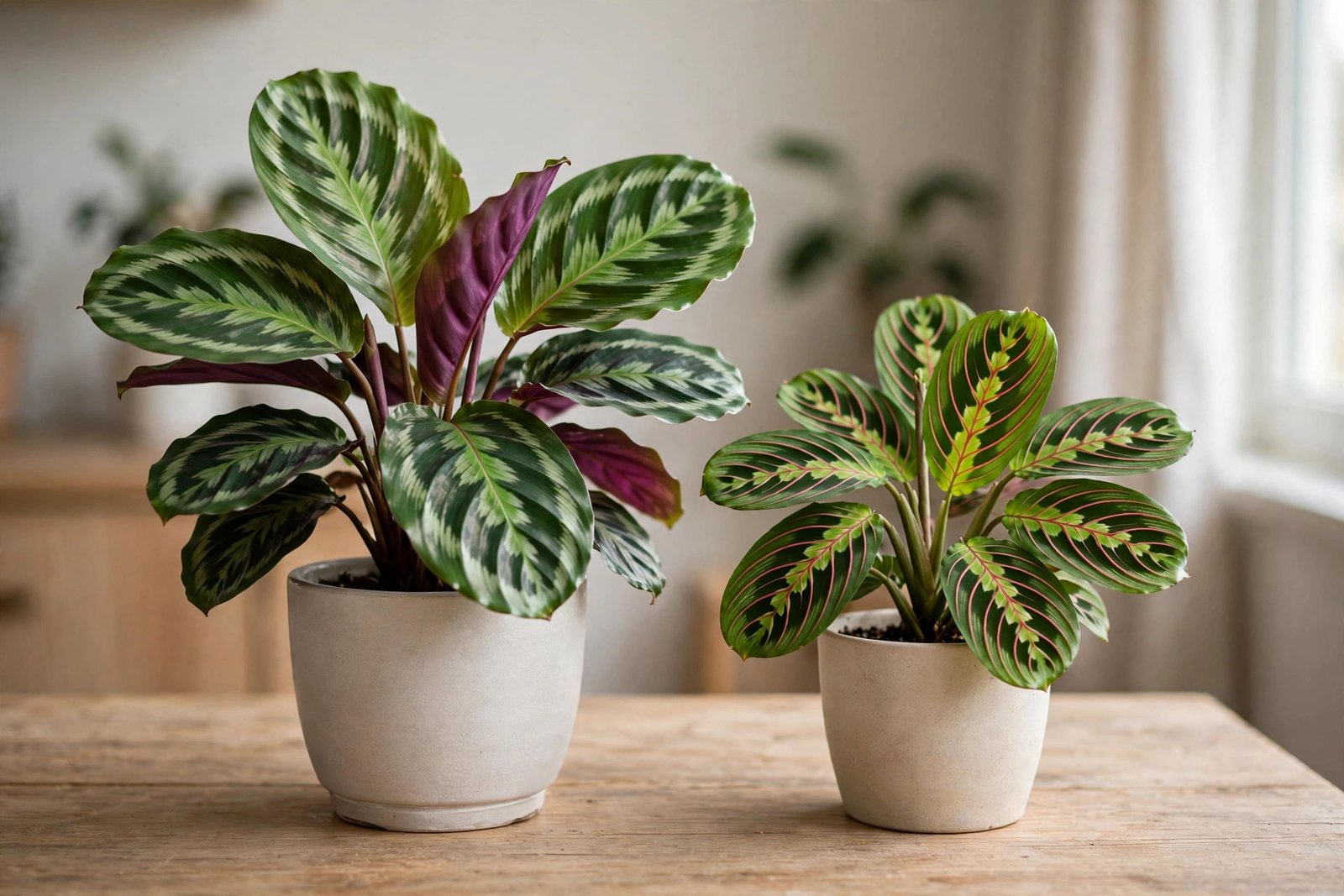
Calatheas are easy to buy under the wrong name, and the safety listing follows the botanical name, not the common one. First, the reclassification: Kew’s Plants of the World Online now places most former calatheas in the genus Goeppertia, while the ASPCA still files them under Calathea — a plant sold as Goeppertia orbifolia is the same plant the ASPCA lists as Calathea orbifolia, and a search of the ASPCA list for “Goeppertia” finds no entry.
Are calatheas safe for cats under the name Goeppertia? Yes — same plant under its newer name, and the ASPCA listing still applies.
Second, the prayer plant: the true prayer plant is Maranta leuconeura, a different genus in the same family, also non-toxic. But the ASPCA’s own “Prayer Plant” entry is filed under Calathea insignis.
Third, the peacock plant: the ASPCA’s “Peacock Plant” entry is Kaempferia, a ginger, not a calathea — also listed as non-toxic. “Peacock plant” is also a common name for Goeppertia makoyana and Goeppertia zebrina. Are calatheas safe for cats if the tag says “peacock plant”? Only if the botanical name checks out.
Fourth, the zebra plant: there is no ASPCA entry headed “Zebra Plant” — the name appears only as an additional common name on the Calathea insignis entries, and it is also used for unrelated plants. Never buy a “zebra plant” on the common name alone; match the botanical name to the ASPCA listing first.
Popular Calathea Varieties
Most calatheas sold as houseplants are covered by the ASPCA’s genus-level Calathea spp. entry, and North Carolina State Extension’s Plant Toolbox pages for individual species carry non-toxic tags.
Orbifolia (Goeppertia orbifolia). Round, silvery-striped leaves up to 12 inches wide; a good floor plant.
Peacock plant (Goeppertia makoyana). Feathered markings on pale green leaves with a purple underside; compact, good for a tabletop.
Zebra plant (Goeppertia zebrina). Velvety dark green leaves with pale lime stripes; dramatic and thirsty.
Rattlesnake plant (Goeppertia insignis). Long, narrow, wavy-edged leaves with dark spots and a purple underside; ASPCA-listed under Calathea insignis.
Medallion (Goeppertia roseopicta). Round leaves with a dark green edge, lighter center, and pink markings, with a deep purple underside.
Pinstripe plant (Goeppertia ornata). Dark green leaves with fine pink pinstripes; slow growing and fussy.
Velvet calathea (Goeppertia warscewiczii). Soft, velvety dark green leaves with a lighter fishbone pattern; striking but demanding.
Are calatheas safe for cats across all the popular varieties? The genus-level listing covers them.
Are calatheas safe for cats even in the fussiest varieties like warscewiczii? Yes — fussiness makes a plant harder to keep alive, not more dangerous. Are calatheas safe for cats while also looking dramatic? That combination is exactly why they are popular in pet homes.
Benefits in a Cat Household
A calathea gives a cat home big, tropical, patterned leaves with no toxicity concern. Many bold foliage plants are toxic — pothos, philodendron, and dieffenbachia among them. For more safe foliage options, see cat-safe houseplants.
Calathea Plant Care
Are calatheas safe for cats if they are stressed and dropping leaves? The listing does not change, but a stressed plant drops leaves a cat can find.
Light
Give bright, indirect light, such as near an east- or north-facing window, or a few feet back from a south- or west-facing window. Direct sun scorches the leaves and fades the patterns, while too little light fades the color and slows growth.
Are calatheas safe for cats in a bright east-facing window? Yes, and that light suits the plant too.
Water
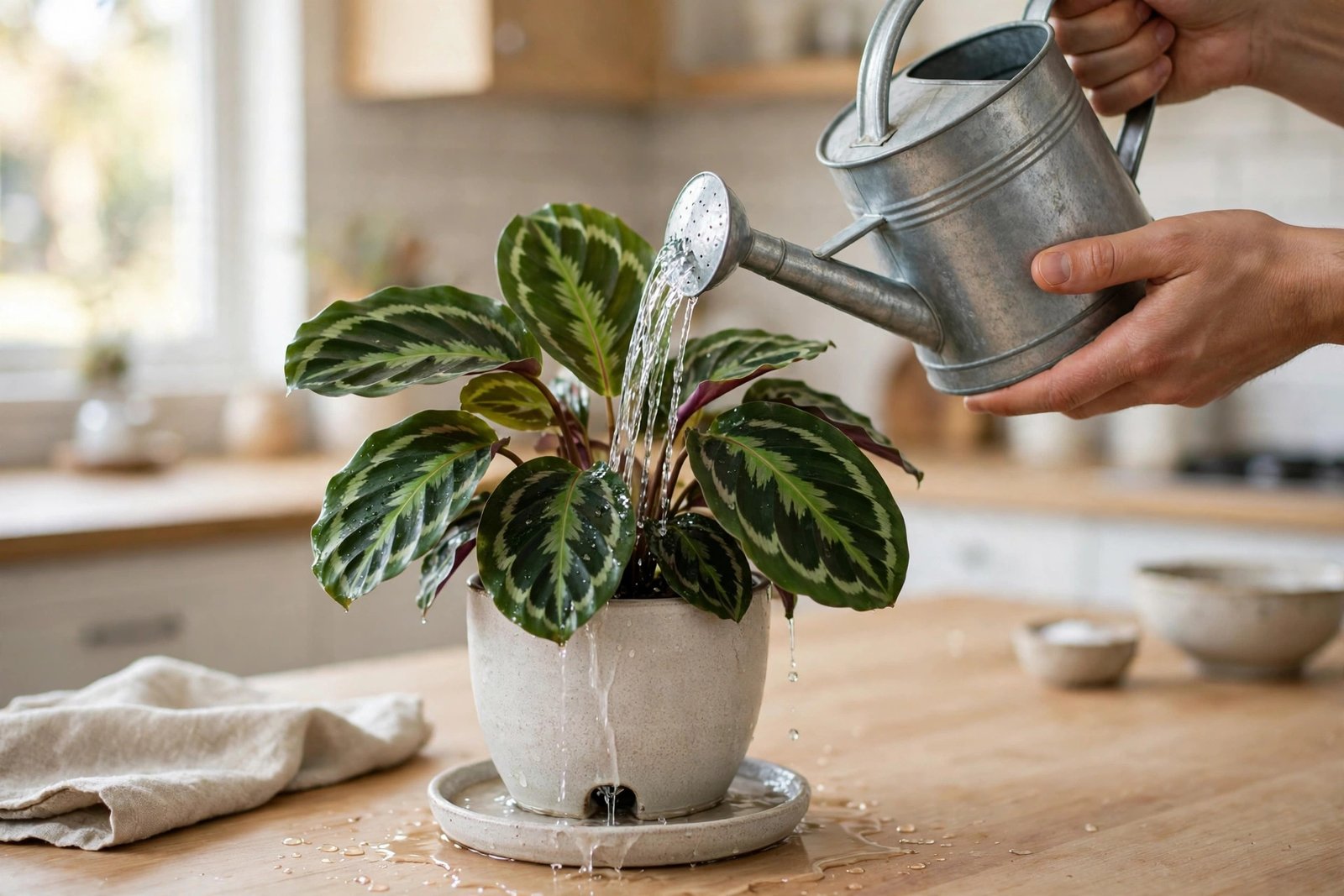
Keep the soil moist but not soggy, watering when the top half inch begins to dry and letting excess water drain away. Calatheas are sensitive to fluoride and mineral salts in tap water, which cause brown leaf tips — use distilled, rain, or filtered water, since sitting tap water out overnight does not remove fluoride. Water more in spring and summer, less in winter.
Are calatheas safe for cats when the soil stays moist? Yes — moist soil is normal; the risk is a cat digging, not the water.
Humidity and Temperature
Calatheas need humidity of at least 50 to 60 percent; low humidity causes brown, crispy leaf edges and curling leaves. A humidifier is the most reliable fix; a pebble tray helps, and grouping plants raises humidity. Misting gives only a brief lift and can spot the leaves.
Keep it warm, ideally 65 to 75°F (18 to 24°C), and avoid cold below about 60°F (16°C), cold drafts, and hot, dry air from heating vents.
Are calatheas safe for cats in a humid bathroom? Yes, and bathrooms often suit them best.
Soil, Feeding, and Repotting
Use a loose, well-draining, slightly acidic mix with perlite and orchid bark, in a pot with drainage holes. Feed monthly in the growing season with balanced liquid fertilizer at half strength, never in winter. Overfeeding causes brown leaf edges and salt buildup. Repot only when necessary, every one to two years in spring.
Are calatheas safe for cats when fertilizer is in the soil? The plant is non-toxic, but fertilizer can be a problem if a cat digs in freshly fed soil. Keep cats away on feeding days.
Common Problems
Brown leaf tips are the most common complaint: fluoride in tap water, low humidity, or overfertilizing. Switch to soft water, raise the humidity, and flush the soil occasionally. Curling leaves usually mean the plant is thirsty, the air is too dry, or it has caught a cold draft.
Fading patterns mean too little light; scorched patches mean too much sun. Yellow lower leaves can be normal aging, but several at once usually mean overwatering. Pests are uncommon, but watch for spider mites and mealybugs in leaf joints. Isolate an infested plant and use only a product labeled for indoor houseplants, keeping cats away until it is dry.
Placement in a Home With Cats
A calathea is non-toxic, so the question is whether your cat will chew the broad leaves, knock over a floor plant, or dig in the moist soil. Good spots: a plant stand in bright, indirect light, a bathroom with a window, or a high shelf. Because calatheas need moist soil, cover it with large, smooth stones too big to swallow if your cat digs.
Are calatheas safe for cats in a bedroom? Yes, with bright indirect light and a stable pot. Keep it away from a cat’s favorite perch, with cat grass nearby.
Are calatheas safe for cats on a low plant stand? The plant is non-toxic, but a low stand invites chewing. For more ideas, see keeping cats out of houseplants and where to place houseplants with cats.
What to Do If Your Cat Chews a Calathea
Most cases are not emergencies, because the plant is listed as non-toxic. Still, take chewing seriously: move the cat away calmly and note what was eaten, how much, and when. Watch the cat for the rest of the day: one episode of vomiting or loose stool can follow, but drinking and returning to normal is reassuring.
Are calatheas safe for cats that have already taken a bite? In most cases, yes — a small nibble is not expected to poison the cat.
Contact your veterinarian or an animal poison control service promptly if your cat eats a large amount, vomits repeatedly, has diarrhea that does not settle, drools, seems lethargic, refuses food or water, or has difficulty breathing. In the United States, call the ASPCA Animal Poison Control Center at (888) 426-4435, or Pet Poison Helpline at (855) 764-7661; a consultation fee may apply. Bring the plant label or a photo to the clinic.
For a fuller emergency guide, see What to Do If Your Cat Eats a Toxic Plant.
Do not try a home remedy, do not try to make your cat vomit, and do not give medication, milk, or oil unless a vet tells you to. If you are unsure whether the plant was really a calathea, treat it as uncertain and call for advice.
Buying Checklist
Check the botanical name first: Calathea spp. or Goeppertia spp. If the label gives no botanical name, ask for it. Look for firm, flat leaves with strong patterns and no brown edges, curling, or webbing.
Avoid limp leaves, yellow lower leaves, or a sour smell from the soil, which suggests root rot. Ask about pesticide treatment, and keep it away from your cat for a few days.
Are calatheas safe for cats straight from the shop? Check the label and ask about sprays first — the listing covers the plant, not what was sprayed on it.
FAQs About Calatheas and Cats
Are calatheas safe for cats?
Yes, in the ASPCA sense: Calathea spp. are listed as non-toxic to cats, dogs, and horses. That does not mean a cat should eat them — a large amount can still cause mild stomach upset.
Are calatheas safe for cats in every home? For most homes, yes — but sprays and fertilizer are separate concerns.
Are calatheas and prayer plants the same thing?
No, but they are close relatives in the prayer plant family, Marantaceae. The true prayer plant is Maranta leuconeura, while calatheas are Calathea spp. or, under the newer classification, Goeppertia spp. Both are non-toxic to cats, and both fold their leaves up at night.
Why is my calathea now labeled Goeppertia?
Botanists have moved most former calatheas into the genus Goeppertia, based on Kew’s Plants of the World Online — the same plant under a newer name. The ASPCA still files them under Calathea, so search for “Calathea” on the ASPCA list.
Are calatheas safe for cats when the label says Goeppertia? Yes — same plant under its newer name.
Why are my calathea’s leaf tips brown?
Fluoride or mineral salts in tap water, low humidity, or overfertilizing. Switch to distilled or rainwater, raise the humidity to 50 to 60 percent, and feed only in the growing season at half strength. Are calatheas safe for cats when the leaves turn brown? Brown tips do not change the toxicity listing.
How often should I water a calathea?
Water when the top half inch of soil begins to dry, keeping the soil moist but never soggy — about once a week in spring and summer, less often in winter. Use distilled, rain, or filtered water, and use the soil as your guide.
What should I do if my cat eats a lot of calathea?
Move the cat away, note how much was eaten and when, and watch for vomiting, diarrhea, or lethargy. Contact your veterinarian or an animal poison control service promptly if the cat eats a lot or seems unwell. Do not try a home remedy or try to make the cat vomit.
Conclusion
Are calatheas safe for cats? For most households, the answer is yes. Calathea spp. are listed by the ASPCA as non-toxic to cats, dogs, and horses, and they bring bold tropical patterns to shaded rooms.
Treat “non-toxic” as a starting point, not a guarantee: confirm the botanical name, watch for look-alikes, discourage chewing, and keep sprays and fertilizer out of reach. Start by checking the label on any calathea you already own: if it says Goeppertia, that is the same plant under its newer name. For more help, see a cat-friendly indoor plant space.
Disclaimer: This article is for general information only and does not replace advice from a veterinarian. Plant safety listings can change, and individual cats can react differently. If your cat eats a plant and seems unwell, contact your veterinarian or an animal poison control service promptly.
Sources and References
- ASPCA Animal Poison Control Center. “Toxic and Non-toxic Plants: Calathea.” Scientific name Calathea spp., family Marantaceae; listed as non-toxic to dogs, cats, and horses, with no toxic principle or clinical signs named. https://www.aspca.org/pet-care/aspca-poison-control/toxic-and-non-toxic-plants/calathea
- ASPCA Animal Poison Control Center. “Toxic and Non-Toxic Plant List — Cats.” The ASPCA database used to check plant toxicity listings for cats, including the Calathea, Caeroba (Calathea insignis), and Prayer Plant (Calathea insignis) entries. https://www.aspca.org/pet-care/animal-poison-control/cats-plant-list
- ASPCA Animal Poison Control Center. “Toxic and Non-Toxic Plants.” https://www.aspca.org/pet-care/animal-poison-control/toxic-and-non-toxic-plants — The ASPCA database used to check plant toxicity listings, including the note that eating any plant material may cause vomiting and stomach upset.
- North Carolina Cooperative Extension, Plant Toolbox. “Goeppertia orbifolia.” Native range, light, water, humidity, temperature, feeding, and common problem guidance for the orbifolia calathea. https://plants.ces.ncsu.edu/plants/goeppertia-orbifolia/
- Indoor Plant Care. “Is Calathea Toxic to Cats and Dogs? No, per the ASPCA.” Quotes the ASPCA Calathea entry directly and documents the Goeppertia reclassification, the Prayer Plant and Peacock Plant naming confusion, and the NC State non-toxic tags for individual Goeppertia species. https://indoorplantcare.com/care/is-calathea-toxic-to-cats
1 thought on “Are Calatheas Safe for Cats? Popular Varieties and Care Tips”