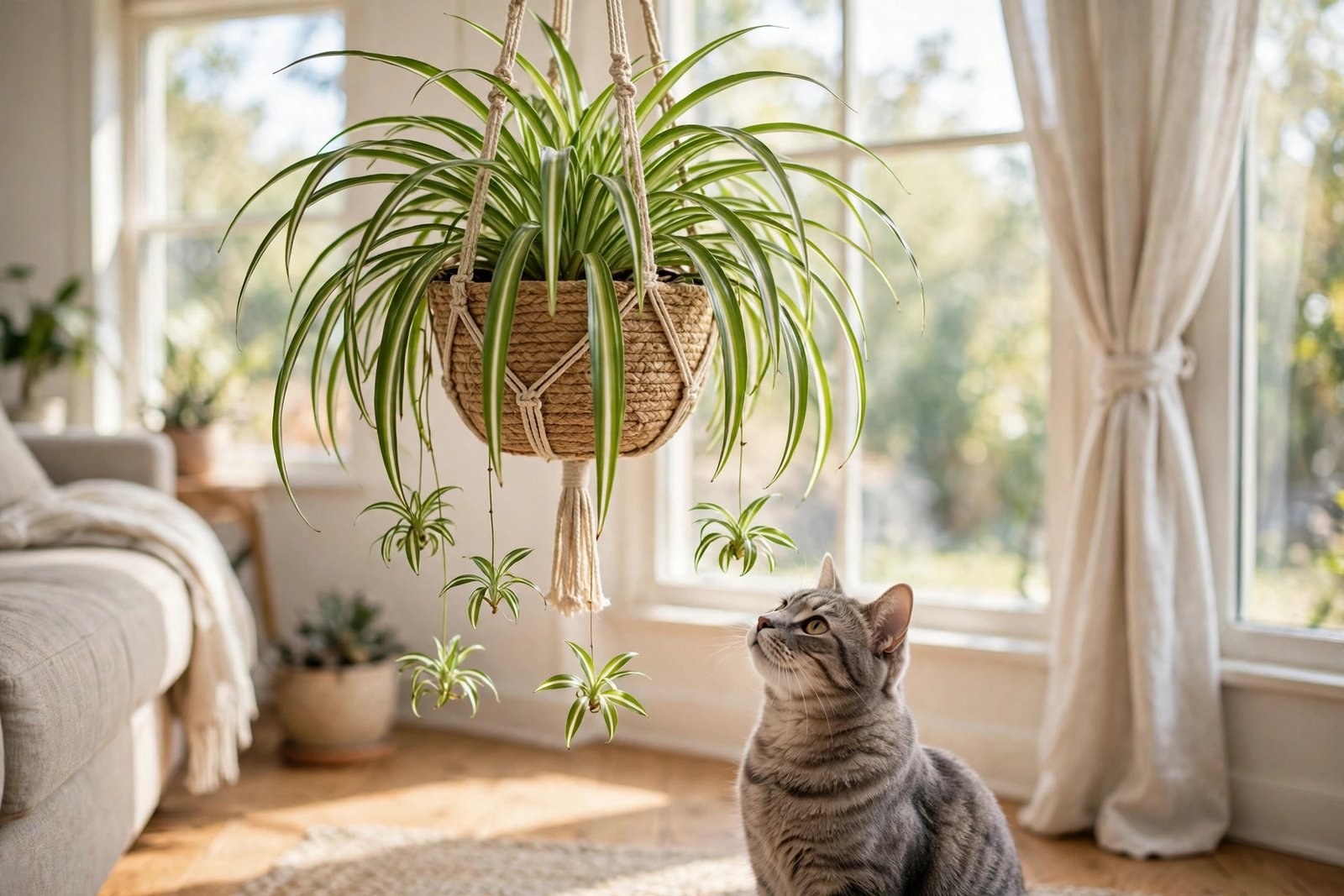
If you are asking are spider plants safe for cats, the short answer is yes — with one honest caveat. The ASPCA Animal Poison Control Center lists the spider plant, Chlorophytum comosum, as non-toxic to cats and dogs. That listing makes it one of the most popular cat-friendly houseplants in the United States: it is forgiving, easy to grow, and looks great in a hanging basket.
Still, “non-toxic” and “safe to eat” are not the same thing. A cat that chews a lot of spider plant leaves can end up with mild stomach upset, even though no poison is involved. So are spider plants safe for cats in every situation? Mostly yes, but the details matter — especially if your cat is a determined chewer.
Are Spider Plants Toxic to Cats?
When people ask are spider plants safe for cats, the ASPCA entry is the first place to check: it lists the spider plant as non-toxic to dogs and cats. The entry gives the scientific name as Chlorophytum comosum, the family as Asparagaceae, and the other common names as ribbon plant, anthericum, and spider ivy — and it lists no toxic principle, so no poison has been identified in the plant.
That is why the answer to are spider plants safe for cats is yes in the toxicology sense. No part of the plant — leaves, stems, flowers, or plantlets — is known to poison a cat. The ASPCA also notes that eating any plant material may cause vomiting and stomach upset in dogs and cats, so a cat that eats a large amount of fibrous leaf can still vomit or have loose stools. That is a stomach reaction to fiber, not poisoning.
The contrast with truly dangerous plants is worth knowing: lilies are in a different league, and even a small exposure can cause kidney failure in cats. For a direct comparison, read our guide to common houseplants that are toxic to cats and our guide to whether lilies are toxic to cats. The short version is simple: are spider plants safe for cats has a reassuring answer, while the same question about lilies has a frightening one.
How to Identify a Spider Plant
A spider plant is a perennial houseplant in the asparagus family, Asparagaceae, native to tropical and southern Africa. It has arching, strap-like leaves and long, thin stems, each tipped with a small plantlet that looks like a tiny spider on a thread. Those plantlets are often called spiderettes or babies, and they are the plant’s most recognizable feature. Once you can spot those plantlets, are spider plants safe for cats is a question you can answer about the right plant.
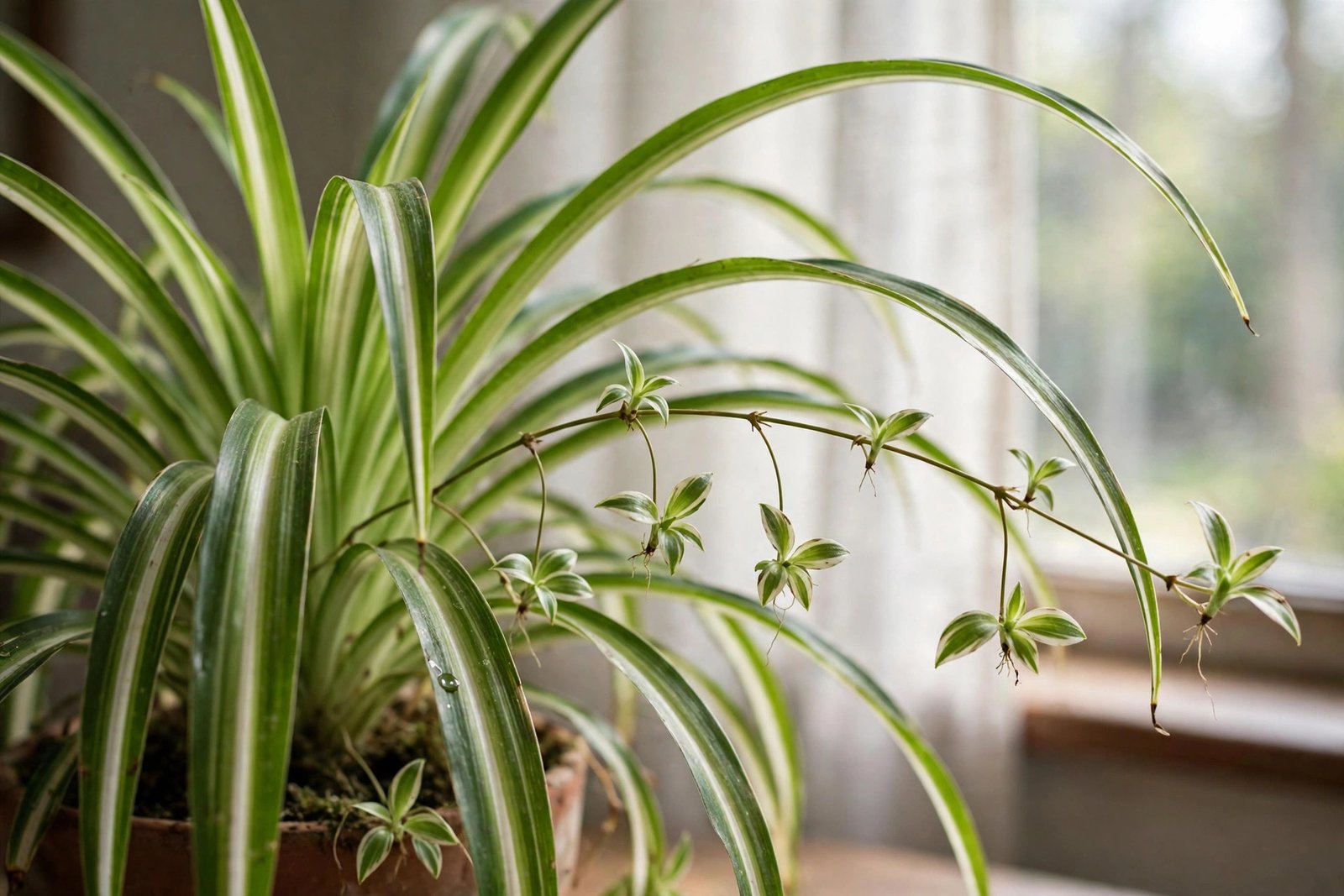
Look for long, narrow leaves in a rosette, green or green with a white or cream stripe, plus wiry stems carrying plantlets and small white flowers in good light. Common varieties are ‘Vittatum’ with a cream stripe, ‘Variegatum’ with white edges, and curly-leaved ‘Bonnie’ — all forms of Chlorophytum comosum, so the answer to are spider plants safe for cats covers every variety you are likely to find in a shop.
Check the botanical name before you buy: a plant may be sold as a spider plant, ribbon plant, spider ivy, or airplane plant, and those names all point to Chlorophytum comosum. Other plants can share a similar nickname, though, and a nickname alone is not a safety check — look for Chlorophytum comosum on the label. Once the label matches, are spider plants safe for cats is a question you can stop worrying about, and if your cat ever chews the plant, the botanical name is the first thing a veterinarian will ask for.
Why Cats Love Spider Plants
Cats are drawn to the long leaves, which move in a draught and are easy to bat, and to the plantlets, which dangle at paw height in a hanging basket. The plant looks and feels like grass, and many cats chew grass-like leaves out of curiosity or boredom — part of why the question are spider plants safe for cats matters so much.
That attraction is also the main practical problem. The risk is usually to the plant, not to the cat: a determined cat can strip leaves, break stems, and knock a basket sideways. The plant often recovers, but it will look ragged. Some cats never touch it, while others return daily — watch your cat for a week, and move the plant if chewing becomes a habit.
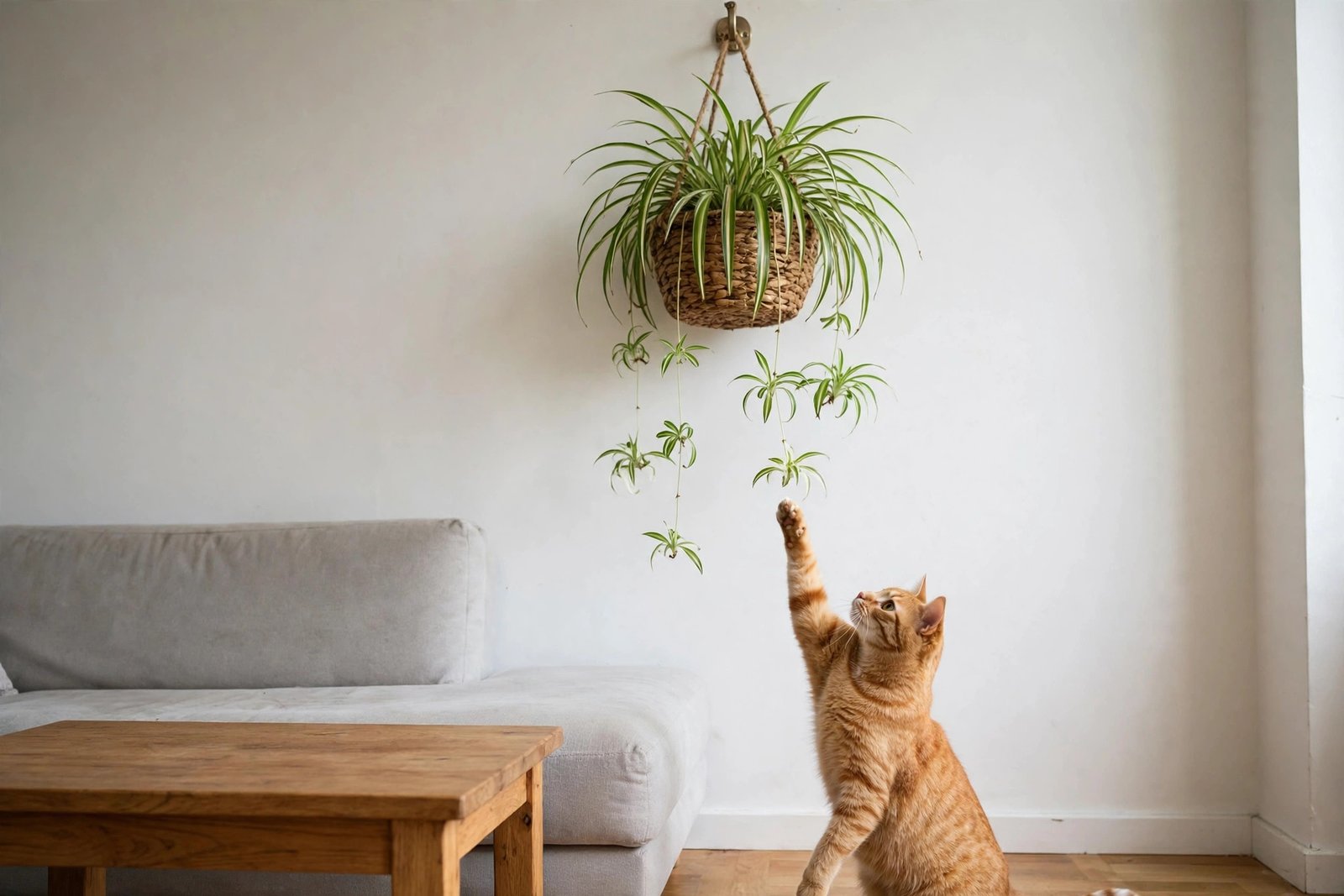
If your cat keeps coming back to the leaves, the question are spider plants safe for cats stops being abstract and becomes a daily concern. The good news is that the plant itself is not the danger — give your cat something better to chew, such as indoor cat grass, and see our guide on how to stop cats chewing houseplant leaves.
Benefits for Cat Owners
Spider plants are forgiving: they tolerate a missed watering, average humidity, and light that is less than perfect, which is a real benefit for a first-time plant owner. They are also easy to replace, since a mature plant produces plantlets that root in water or potting mix, and they fit many homes — a hanging basket, a high shelf, or a table pot all work. And because are spider plants safe for cats has a clear yes from the ASPCA, you can stop worrying about the safety question and focus on the care side instead.
A spot near a window and a weekly watering check is enough for most homes, which is why the plant tops so many lists of cat-safe houseplants for beginners.
Risks: What Non-Toxic Does Not Mean
The most likely effect of eating spider plant leaves is mild digestive upset: vomiting, loose stools, or a short loss of appetite, most likely after a cat eats a large amount at once. In most cases the upset passes on its own, but “most cases” is not a guarantee for your cat, and any cat that seems unwell deserves a call to the vet. The short version of are spider plants safe for cats is a yes with a chewing limit.
Watch for repeated vomiting, ongoing diarrhea, lethargy, hiding, or refusal to eat or drink. If you see those signs, or your cat has eaten a very large amount, contact your veterinarian or an animal poison control service promptly — do not wait to see if symptoms get worse, and do not try a home remedy. Never try to make a cat vomit unless a veterinarian tells you to, and remember kittens, elderly cats, and cats with a known digestive condition need extra caution.
The honest answer to are spider plants safe for cats is yes, with limits — chewing can damage the plant itself, since torn leaves do not heal and broken stems will not grow new plantlets. A cat that chews the same plant every day can strip it bare over a few weeks, even though the cat is in no danger from the plant.
The ASPCA listing covers the plant itself, not sprays, soil additives, or fertilizer. A treated plant can expose a cat to chemicals that are not part of the plant, so ask whether a new plant has been treated and rinse it before bringing it inside.
Spider Plant Care
Give the plant medium to bright indirect light. It tolerates deep shade, but grows more slowly there, and it cannot handle direct sunlight — especially hot afternoon sun, which can scorch the leaves. A spot near an east-facing window, or a few feet from a south- or west-facing window, usually works well.
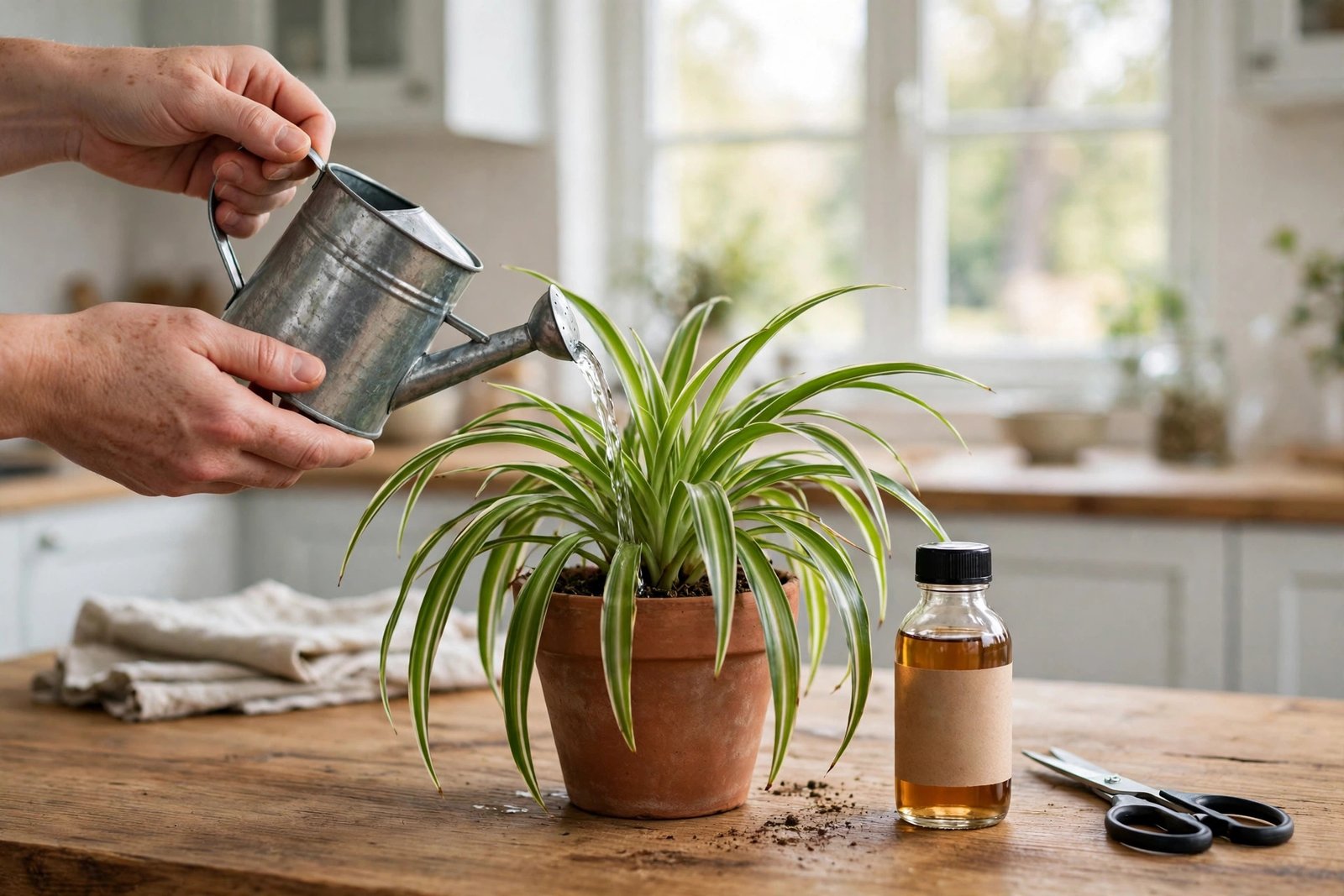
Water when the top inch of soil feels dry, and let excess water drain away. Do not let the plant sit in water. The thick roots store water, so a missed watering is less harmful than soggy soil, which can cause root rot. Water less in winter, when growth slows and the soil stays damp longer.
Brown leaf tips are the most common problem, and tap water is often part of the cause. The North Carolina State Extension warns that chlorine and fluoride in tap water can burn the tips. If brown tips keep appearing, try rainwater, distilled water, or filtered water, and trim brown tips with clean scissors, following the leaf shape so the cut looks natural. The brown tips do not change the answer to are spider plants safe for cats — the plant stays non-toxic even when the tips brown.
Use a loose, well-draining potting mix — NC State Extension records a soil pH of roughly 6.0 to 8.0 as comfortable, which is the neutral range most houseplant mixes provide. Feed sparingly, with a balanced liquid fertilizer at half strength once a month in spring and summer; too much fertilizer reduces plantlet formation and can cause brown tips.
Keep the plant at normal indoor temperatures, roughly 60 to 75°F (15 to 24°C) and above 45°F (7°C), away from cold draughts. Repot every one to two years, going up only one pot size at a time — spring is best. A healthy plant in the right spot is the goal, and are spider plants safe for cats stays a yes as long as the species is Chlorophytum comosum.
Propagation and Placement
New plantlets raise the same question in a smaller form: are spider plants safe for cats when the babies are involved? The plantlets are part of the same plant, Chlorophytum comosum, so the same ASPCA listing applies. They are not more toxic than the leaves, but they are small, light, and easy for a cat to pull off — keep new plantlets out of reach until they are established.
To propagate, leave a plantlet on its stem, set a small pot of moist mix beside the parent plant, and pin the plantlet lightly into the mix. Roots form in a few weeks, and then you can cut the stem close to the plantlet. Or stand a cut plantlet in room-temperature water, change the water every few days, and pot it up once roots are 1 to 2 inches long, usually in two to three weeks.

A hanging basket is the classic placement. Hang it high enough that a cat cannot reach it from furniture, and use a secure hook. Check the hook and cord regularly, because a falling basket can injure a cat and scatter soil.
A high shelf can work only if the pot cannot be knocked off and the cat cannot jump to it from nearby furniture. Keep the plant away from food and water bowls, the litter area, and sleeping spots, and remember kittens are more curious and more likely to climb.
Placement is also where the question are spider plants safe for cats meets a determined chewer. A hanging basket solves most of the problem in one move, and it shows off the trailing plantlets at their best — for more ideas, see our guide on where to place plants with cats.
Common Problems and What to Do If Your Cat Chews It
Brown tips usually mean tap-water minerals, overfeeding, low humidity, or uneven watering. Try filtered or rainwater and feed less.
Pale leaves often mean too much direct sun or too little light. A few yellow leaves at the base are normal with age; many at once can mean overwatering or crowded roots. It is also worth checking leaf undersides for spider mites, aphids, whiteflies, and scale, and isolating a plant with pests from cats while you treat it.
Stay calm if your cat chews a spider plant. A small nibble is not an emergency in the way a lily exposure would be, but do not ignore it. Remove the plant, check how much leaf is missing, offer fresh water, and watch your cat for a few hours.
If your cat chews a large amount, the question are spider plants safe for cats comes up again — and the answer stays yes for the plant itself, but your cat still needs watching, so contact your veterinarian or an animal poison control service promptly if your cat vomits repeatedly, has diarrhea that does not stop, refuses food or water, becomes lethargic, or seems in pain.
The ASPCA Animal Poison Control Center is at (888) 426-4435, and the Pet Poison Helpline at (855) 764-7661. Describe the plant as Chlorophytum comosum, say how much was eaten, and say when it happened. Do not give milk, oil, or any home remedy, and do not give medicine meant for people. Our guide on what to do if your cat eats a toxic plant walks through the first steps, and most of them apply here too.
Frequently Asked Questions
Are spider plants safe for cats?
Yes. The ASPCA lists Chlorophytum comosum as non-toxic to cats, so no toxic principle has been identified. A cat that eats a large amount can still have mild stomach upset from the fiber, so non-toxic does not mean unlimited chewing is harmless.
Are spider plants toxic if a cat eats the leaves?
No, in the toxicology sense. Eating leaves can still cause vomiting or loose stools if a cat eats a lot, because any plant material can upset a cat’s stomach. That is why are spider plants safe for cats is a yes even when a cat eats a few leaves — the risk is stomach upset, not poisoning.
Why does my cat love eating my spider plant?
Cats are drawn to the long, dangling leaves and plantlets, which move and are easy to bat and chew. The plant looks and feels like grass, and many cats chew grass-like leaves out of curiosity or boredom. That is one reason are spider plants safe for cats is asked so often — cats rarely leave this plant alone.
Are spider plant babies safe for cats?
The plantlets are part of the same plant, Chlorophytum comosum, so the same ASPCA listing applies. In short, are spider plants safe for cats covers the babies too. They are not more toxic than the leaves, but they are small and easy for a cat to pull off, so keep new plantlets out of reach until they are established.
Can I keep a spider plant in a hanging basket with cats?
Yes, a hanging basket is often the best option, as long as it is high enough that a cat cannot reach it from furniture, and the hook and cord are secure. Check the basket regularly for wear.
What should I do if my cat eats a lot of spider plant?
Remove the plant and watch your cat. Contact your veterinarian or an animal poison control service promptly if your cat vomits repeatedly, has ongoing diarrhea, refuses food or water, becomes lethargic, or seems in pain. Do not try a home remedy.
Conclusion
So, are spider plants safe for cats? Yes — the ASPCA lists Chlorophytum comosum as non-toxic to cats and dogs, and no poison has been identified in any part of the plant. That makes the spider plant one of the lowest-risk houseplants you can bring into a home with cats, and one of the easiest to keep alive.
Before you buy, confirm the botanical name, Chlorophytum comosum, and place the plant where your cat cannot easily reach it but where it still gets bright indirect light. Water when the top inch of soil is dry, feed sparingly, and use filtered or rainwater if brown tips keep appearing.
If a friend asks are spider plants safe for cats, you can now answer yes — and explain the chewing caveat. To build a wider collection, continue with our list of 15 cat-safe houseplants.
Disclaimer: This article is for general information only and does not replace advice from a veterinarian. Plant safety can depend on the exact species, the amount eaten, and the individual cat. If your cat is unwell after chewing or eating any plant, contact your veterinarian or an animal poison control service promptly.
Sources and References
- ASPCA, Toxic and Non-toxic Plants: Spider Plant — Chlorophytum comosum, non-toxic to dogs and cats. https://www.aspca.org/pet-care/aspca-poison-control/toxic-and-non-toxic-plants/spider-plant
- ASPCA, Toxic and Non-toxic Plant List — Cats. https://www.aspca.org/pet-care/animal-poison-control/cats-plant-list
- ASPCA, Do You Know Which Flowers and Plants Are Toxic to Pets? Our Experts Explain! https://www.aspca.org/news/do-you-know-which-flowers-and-plants-are-toxic-pets-our-experts-explain
- North Carolina State Extension, Gardener Plant Toolbox: Spiderplant — Chlorophytum comosum. https://plants.ces.ncsu.edu/plants/chlorophytum-comosum/common-name/spiderplant/
- North Carolina State Extension, Gardener Plant Toolbox: Variegated Spider Plant — Chlorophytum comosum ‘Variegatum’. https://plants.ces.ncsu.edu/plants/chlorophytum-comosum-variegatum/common-name/variegated-spider-plant/
14 thoughts on “Are Spider Plants Safe for Cats? Benefits, Risks, and Care Tips”