
You water your plant, tidy the soil, turn around — and your cat has scattered potting mix across the floor. Again. If you want to stop cats digging in houseplant soil, you are dealing with one of the most common complaints from cat owners, and also one of the most fixable.
In most cases, the cat is not being naughty. The soil feels like a litter box, digging is a normal cat behavior, and the pot is sitting right there at paw height.
The Short Answer
To stop cats digging in houseplant soil, cover the soil with large, smooth stones too big to swallow, or a mesh grid cut to fit the pot. Move the plant out of reach, offer a dig box or cat grass, and keep the litter box clean.
Do not punish the cat, and do not use essential oils, mothballs, or sprays on the soil. Before you start, check the plant itself — digging in the pot of a toxic plant is doubly dangerous, because a digging cat may also chew a leaf. If you are not sure the plant is safe, check the ASPCA plant list first — see houseplants toxic to cats.
Why Cats Dig in Houseplant Soil
Digging is not a flaw in your cat: it is normal behavior, and knowing which cause applies helps you pick the right fix to stop cats digging in houseplant soil at home.
It Feels Like a Litter Box
Loose, soft potting soil feels like litter under a cat’s paws, and an open pot of damp soil is an inviting second bathroom. When a cat chooses the pot over the box, the box is usually the problem: check it first when you want to stop cats digging in houseplant soil.
Digging Is Instinct
Wild cats dig to bury waste and make a resting spot, and indoor cats keep the same instincts — a cat may dig simply because it feels good. A cover alone rarely finishes the job when you want to stop cats digging in houseplant soil for good.
Boredom, Attention, and Stress
A bored, underplayed cat left alone all day will find its own entertainment — and a plant pot is an excellent toy. Digging that starts suddenly is worth taking seriously — and so is your reaction: a big reaction teaches the cat that digging gets attention, which works against any plan to stop cats digging in houseplant soil.
First, Check the Plant and the Soil
Before you buy a single soil cover, answer two safety questions. First, is the plant safe for cats? A cat that digs will almost certainly chew, and a cat that chews a toxic plant can become seriously ill.
True lilies (Lilium species) and daylilies (Hemerocallis species) are especially dangerous — even pollen or vase water can cause kidney failure in cats — and they should not be in a home with a cat at all. Learn the exact types in Are Lilies Toxic to Cats?.
If a plant is toxic, the safest answer is to rehome it or move it to a room the cat cannot enter. No soil cover makes a toxic plant safe.
Learning how to stop cats digging in houseplant soil is wasted effort if the plant is one your cat should never chew. Check it by its botanical name, and treat it as unsafe if its identity is uncertain or sources disagree. Non-toxic does not mean safe to chew without limit.
Second, what is in the soil? Potting mix often contains fertilizer, perlite, and vermiculite, none of which are meant to be eaten. A cat that grooms soil off its paws swallows some of it — one more reason to stop cats digging in houseplant soil.
Cat-Safe Soil Covers That Work
A soil cover is the single most effective fix for most cats: make the soil surface impossible to dig, while still letting water through. For many owners, a good cover is the fastest way to stop cats digging in houseplant soil.
Large, Smooth Stones
The most popular cover is large, smooth river stones over the soil. Choose stones too big for your cat to pick up or swallow, and too heavy to flick aside — stones are the first thing most owners try when they need to stop cats digging in houseplant soil quickly. Fist-sized stones work better than small gravel, which a determined cat can dig through and swallow.

Mesh and Grid Covers
Wire mesh, plastic grid, or hardware cloth is the strongest option for persistent diggers. Cut it slightly larger than the pot opening, with a slit and a small hole in the center for the stem, and press the edges under the rim.
Keep the edges smooth or tucked under the rim, and choose a mesh that lets water through. Mesh is the most dig-proof option — the one to choose when nothing else has worked and you need to stop cats digging in houseplant soil in a pot the cat uses as a second litter box.
Bark chips, sphagnum moss, and coconut fiber discs can cover soil too, but bark can be swallowed, moss must be untreated, and fiber can be shredded by a determined cat — which is why stones or mesh are the simplest way to stop cats digging in houseplant soil for good.
Soil Covers Compared
| Cover | Dig-proof? | Watch out for |
|---|---|---|
| Large smooth stones | Good | Heavy; lift a stone to check moisture |
| Mesh or grid cover | Best | Sharp edges; cut a hole for the stem |
| Coconut fiber disc | Good | Can be shredded by a persistent cat |
| Bark chips | Fair | May be chewed or swallowed |
| Sphagnum moss | Fair | Replace if moldy; use untreated moss only |
Pot Barriers and Moving the Plant
A soil cover stops digging, and a barrier stops the cat from reaching the pot at all. If you repot, choose a heavy ceramic pot with a wide base.
A plant on a high shelf, in a hanging planter, or in a room the cat cannot enter is out of reach. Hanging does not make a toxic plant safe — a falling leaf can still land where a cat finds it.
For hanging setup details, see hanging planters safe for cats. The only fully reliable barrier is a closed door — not a taller shelf, because cats climb — and moving the plant is a useful part of any plan to stop cats digging in houseplant soil.

Give Your Cat a Better Place to Dig
Blocking the pot works best when the cat has an approved alternative. Cornell University’s Feline Health Center notes that destructive behavior is usually normal investigation and play — redirect it, do not punish it.
Make a Dig Box
A dig box is a shallow tray of clean play sand, plain potting soil with no fertilizer, or shredded paper. Place it where the cat already likes to dig, and reward the cat for using it.
Keep it clean — scoop daily and replace the filling regularly. A fresh dig box near the plant the cat was using is often what makes a plan to stop cats digging in houseplant soil last.

Offer Cat Grass
Many cats that dig in pots also chew the plant — often what they really want is greens. A pot of cat grass — wheatgrass, oat grass, or barley grass — gives them something safe to nibble. Grow it in a heavy, wide pot so it cannot be tipped over, and keep a fresh pot going. Place it near the plant the cat was digging in — that alone can help you stop cats digging in houseplant soil in the pots the cat used to target.
Play and Enrichment
A cat that digs out of boredom needs more to do, not more barriers. Add a daily wand-toy play session, rotate toys, and add a scratching post or puzzle feeder. A tired, busy cat digs less — and play is the fix owners overlook most when they try to stop cats digging in houseplant soil with covers alone. For a fuller plan, see keeping cats out of houseplants.
Fix the Litter Box First
If your cat is using plant pots as a toilet, the litter box is the first place to look: scoop daily, and change the litter regularly.
Provide one box per cat, plus one extra, in quiet, easy-to-reach spots. Use unscented litter unless your cat prefers scented, and avoid sudden changes of litter type.
A cat that avoids the litter box, strains to urinate, or goes outside the box should be seen by a veterinarian promptly. Do not try to diagnose the cause yourself.
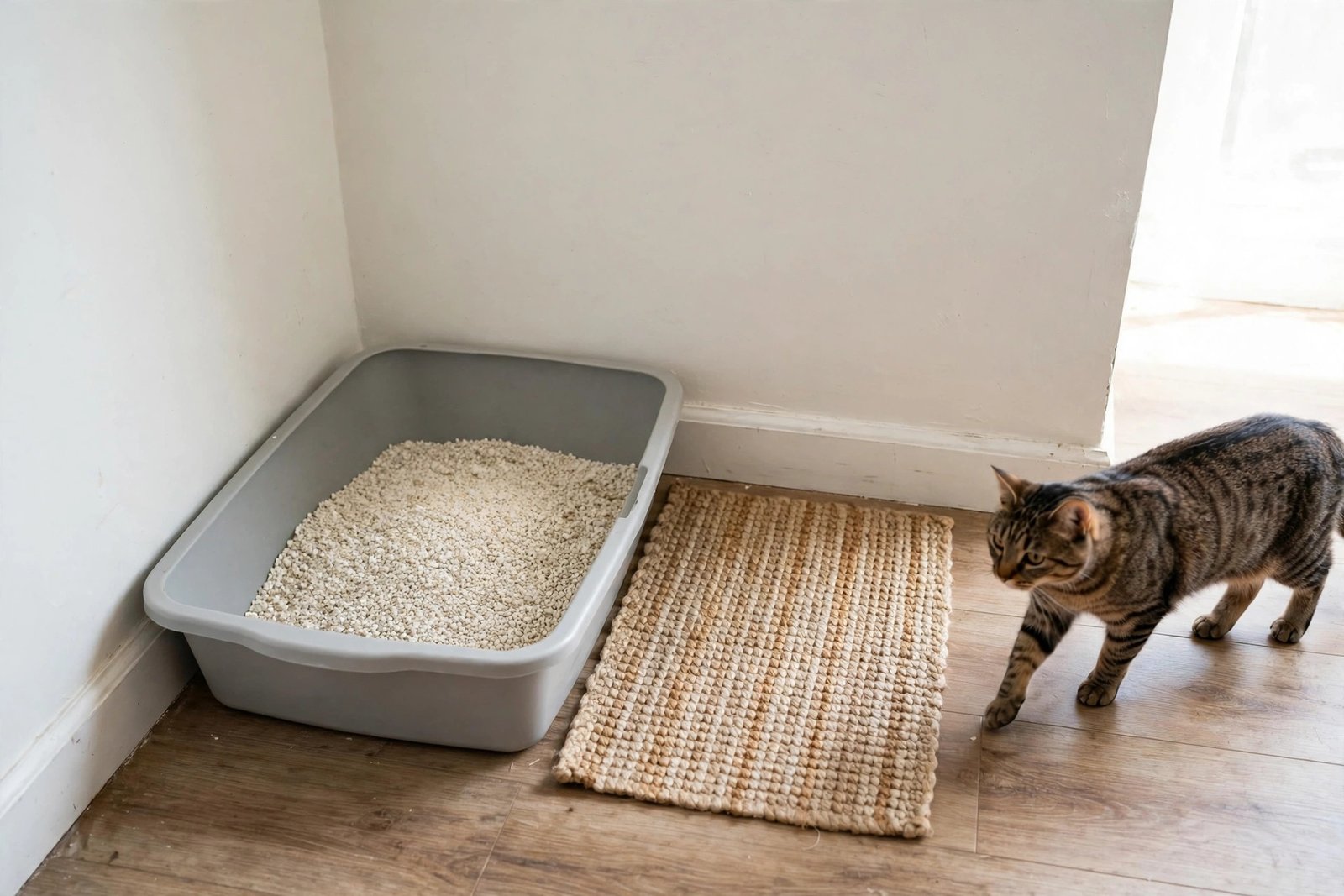
Many owners who fix the litter box find they no longer need to stop cats digging in houseplant soil at all.
What NOT to Do
Some popular deterrents are unsafe for cats. Do not punish the cat: Cornell University’s Feline Health Center is clear that cats do not respond well to punishment, because they see no link between it and the behavior.
Yelling, squirting water, or startling the cat teaches it to fear you — and to dig when you are not watching. Punishment has no place in advice on how to stop cats digging in houseplant soil.
Do not use essential oils on or around the soil. Pet Poison Helpline warns that essential oils can poison cats: cats lack a liver enzyme needed to clear them. Oils known to cause poisoning in cats include wintergreen, sweet birch, citrus oil, pine oils, ylang ylang, peppermint, cinnamon, pennyroyal, clove, eucalyptus, and tea tree oil. Never apply concentrated oils to a cat — “natural” does not mean safe, and scent deterrents have no place in a plan to stop cats digging in houseplant soil.
Do not use mothballs in the soil: they contain chemicals toxic to cats if chewed or inhaled. Skip chili powder, cayenne pepper, and hot sauce too — they irritate a cat’s nose, eyes, and mouth, and a cat that grooms the powder off its paws swallows it. Read the label on any “pet repellent” spray, and if unsure, ask your veterinarian first.
When Digging Signals a Bigger Problem
Most plant-pot digging is a habit — but a sudden change deserves attention. Call your veterinarian if the digging starts abruptly with other changes: the cat stops using the litter box, strains or cries when urinating, eats less, drinks much more, hides, vomits repeatedly, or seems lethargic or in pain.
A cat that eats soil, litter, or other non-food items may be showing pica, which can have medical causes. Do not diagnose or treat this yourself. Call the vet before you try to stop cats digging in houseplant soil with a cover.
If your cat has eaten soil from a toxic plant’s pot, or you are unsure what the plant was, contact your veterinarian or animal poison control promptly: the ASPCA Animal Poison Control Center at (888) 426-4435, or Pet Poison Helpline at (855) 764-7661. A consultation fee may apply. Do not wait for symptoms, try a home remedy, or try to make your cat vomit.
Frequently Asked Questions
How do I stop my cat digging in plant soil?
Cover the soil with large, smooth stones or a mesh grid, move the plant out of reach, and offer a dig box or cat grass. Keep the litter box clean. Most cats stop within a week or two — the full routine is the reliable way to stop cats digging in houseplant soil, rather than any single trick.
Are stones on top of soil safe for cats?
Yes, if the stones are large, smooth, and too big to swallow. Choose stones too heavy to flick aside and too large to fit in your cat’s mouth, and avoid small gravel and sharp stones. A stone-covered pot is also one of the easiest ways to stop cats digging in houseplant soil in a home with kittens.
Can I use cayenne pepper or citrus peels?
It is better not to. Cayenne pepper and chili powder irritate a cat’s nose, eyes, and mouth. Citrus oils are among the essential oils Pet Poison Helpline lists as toxic to cats. Choose a physical cover instead when you need to stop cats digging in houseplant soil without risking your cat’s health.
Why is my cat suddenly digging in my plants?
A sudden change often points to a cause outside the plant: a dirty or moved litter box, a new pet, a change in routine, or stress. If it comes with litter box avoidance, appetite changes, hiding, or vomiting, contact your veterinarian. Let the vet decide before you try to stop cats digging in houseplant soil with barriers alone.
Is potting soil dangerous if my cat eats it?
Potting soil is not usually highly toxic, but it is not safe to eat: it often contains fertilizer, perlite, and vermiculite, which can cause stomach upset, and soil can carry bacteria. A cat that eats soil regularly should be seen by a veterinarian. The bigger danger is soil from a toxic plant’s pot — no attempt to stop cats digging in houseplant soil can make it safe.
How long until my cat stops digging in plant pots?
Most cats lose interest within one to two weeks once the soil is covered and a dig box or cat grass is nearby. Determined diggers take longer, and a cat using the pot as a toilet may need the litter box fixed first. If digging continues after three or four weeks, ask your veterinarian — and keep using the covers.
Conclusion
Stopping a cat from digging in houseplant soil is a practical problem with a practical fix: cover the soil, move the plant, give your cat something better to dig in, and keep the litter box clean. Start with stones or a mesh cover on the worst pot, plus a dig box or cat grass nearby.
Check the plant’s safety first, and never use a deterrent that could harm your cat: no essential oils, no mothballs, no chili powder, and no punishment. If the digging starts suddenly or comes with other changes, call your veterinarian. The routine above is the complete, cat-safe way to stop cats digging in houseplant soil.
Disclaimer: This article is for general information only and does not replace advice from a veterinarian. If your cat eats soil or plant material and seems unwell, or stops using the litter box, contact your veterinarian or an animal poison control service promptly.
Sources and References
- Cornell University College of Veterinary Medicine, Cornell Feline Health Center. “Feline Behavior Problems: Destructive Behavior.” Destructive behavior is usually normal investigation and play; punishment teaches fear, not better behavior; redirect to acceptable alternatives. https://www.vet.cornell.edu/departments-centers-and-institutes/cornell-feline-health-center/health-information/feline-health-topics/feline-behavior-problems-destructive-behavior
- Pet Poison Helpline. “Essential Oils and Cats.” Essential oils can pose a toxic risk to cats, which lack a liver enzyme needed to clear them; lists wintergreen, citrus, pine, peppermint, cinnamon, clove, eucalyptus, and tea tree oils as known to cause poisoning in cats. https://www.petpoisonhelpline.com/uncategorized/essential-oils-cats/
- ASPCA Animal Poison Control Center. “Toxic and Non-Toxic Plants.” The ASPCA database used to check plant toxicity listings for cats. https://www.aspca.org/pet-care/animal-poison-control/toxic-and-non-toxic-plants
- ASPCA. “Which Lilies Are Toxic to Pets?” True lilies and daylilies can be lethal to cats, including through pollen and vase water exposure. https://www.aspca.org/news/which-lilies-are-toxic-pets
3 thoughts on “How to Stop Cats From Digging in Houseplant Soil”