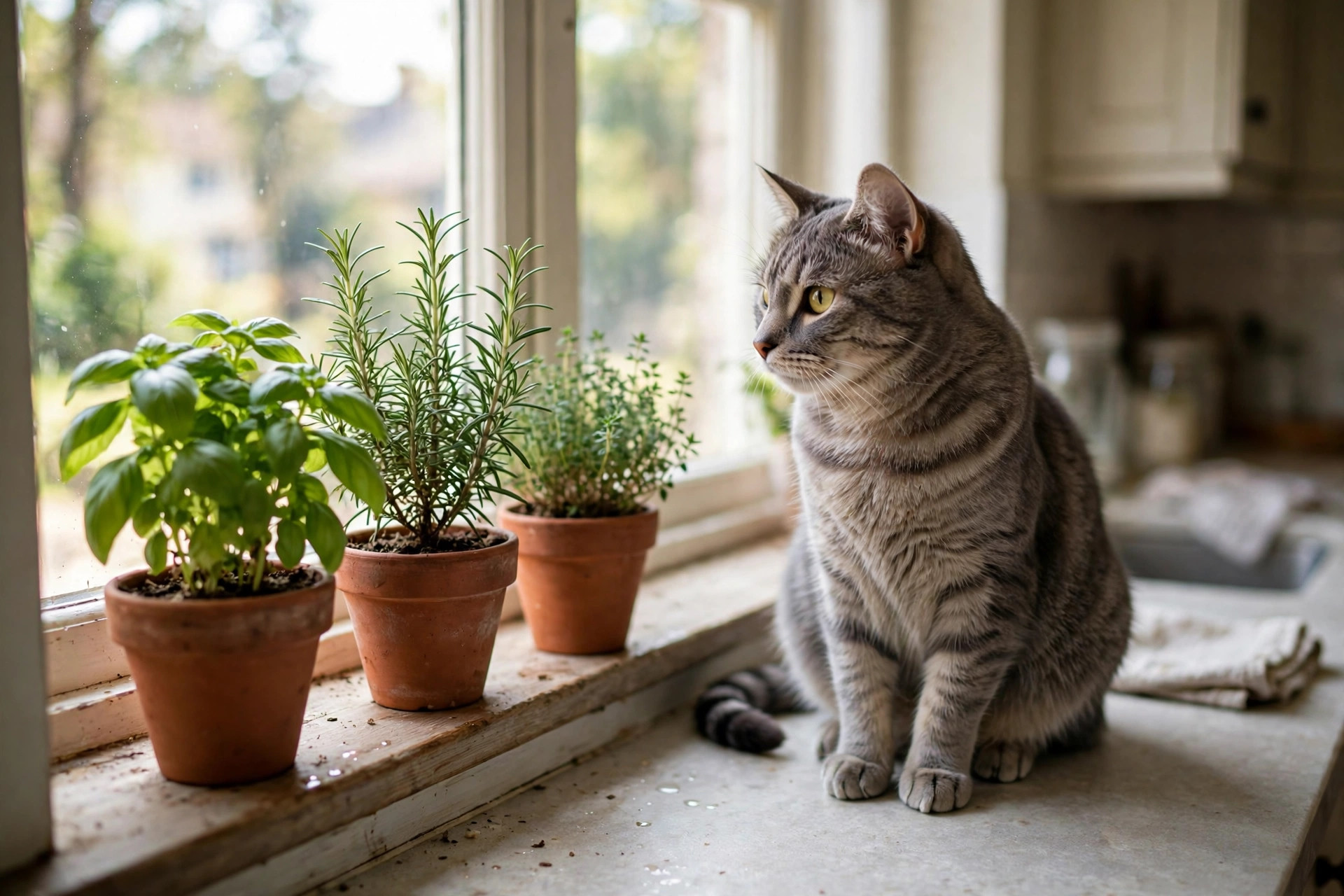
If you love cooking with fresh herbs and you share your home with a cat, you have probably wondered which plants are safe to keep on the windowsill. The good news is that many of the most popular kitchen herbs are also cat safe herbs to grow indoors — basil, rosemary, thyme, parsley, dill, cilantro, and sage all appear on the ASPCA’s non-toxic list, which means a curious cat that takes a nibble is not in danger from the plant itself.
That does not mean every herb is safe. Chives, mint, and lavender are all listed as toxic to cats, and they sit on the same supermarket shelf as the safe ones — so cat safe herbs to grow indoors are only safe when you pick the right species.
This guide covers the seven best cat safe herbs to grow indoors, the herbs to keep out of your kitchen, and how to grow them in pots your cat cannot destroy. Every safety claim below is checked against the ASPCA’s plant lists, so you can plant with confidence.
What Makes an Herb Cat-Safe?
An herb is cat-safe when the ASPCA lists its exact species as non-toxic to cats. That listing is based on veterinary toxicology reports, and it is the standard this site uses for every plant recommendation, including cat safe herbs to grow indoors. A plant earns a non-toxic listing when cats that eat it do not develop symptoms beyond, at most, mild stomach upset from eating any plant material.
The common name alone is not enough. “Mint” covers dozens of species, and “sage” covers hundreds, so always check the botanical name on the plant tag. For cat safe herbs to grow indoors, the safe species are the ordinary culinary ones: sweet basil (Ocimum basilicum), rosemary (Salvia rosmarinus), common thyme (Thymus vulgaris), flat-leaf parsley (Petroselinum crispum), dill (Anethum graveolens), cilantro (Coriandrum sativum), and garden sage (Salvia officinalis).
Two cautions still apply. First, “non-toxic” does not mean “unlimited snacks” — a cat that eats a large amount of any plant can vomit from the roughage alone. Second, the safety rating covers the plant itself, not what you put on it: pesticides and scented sprays can turn a safe herb into a hazard, so grow your herbs organically.
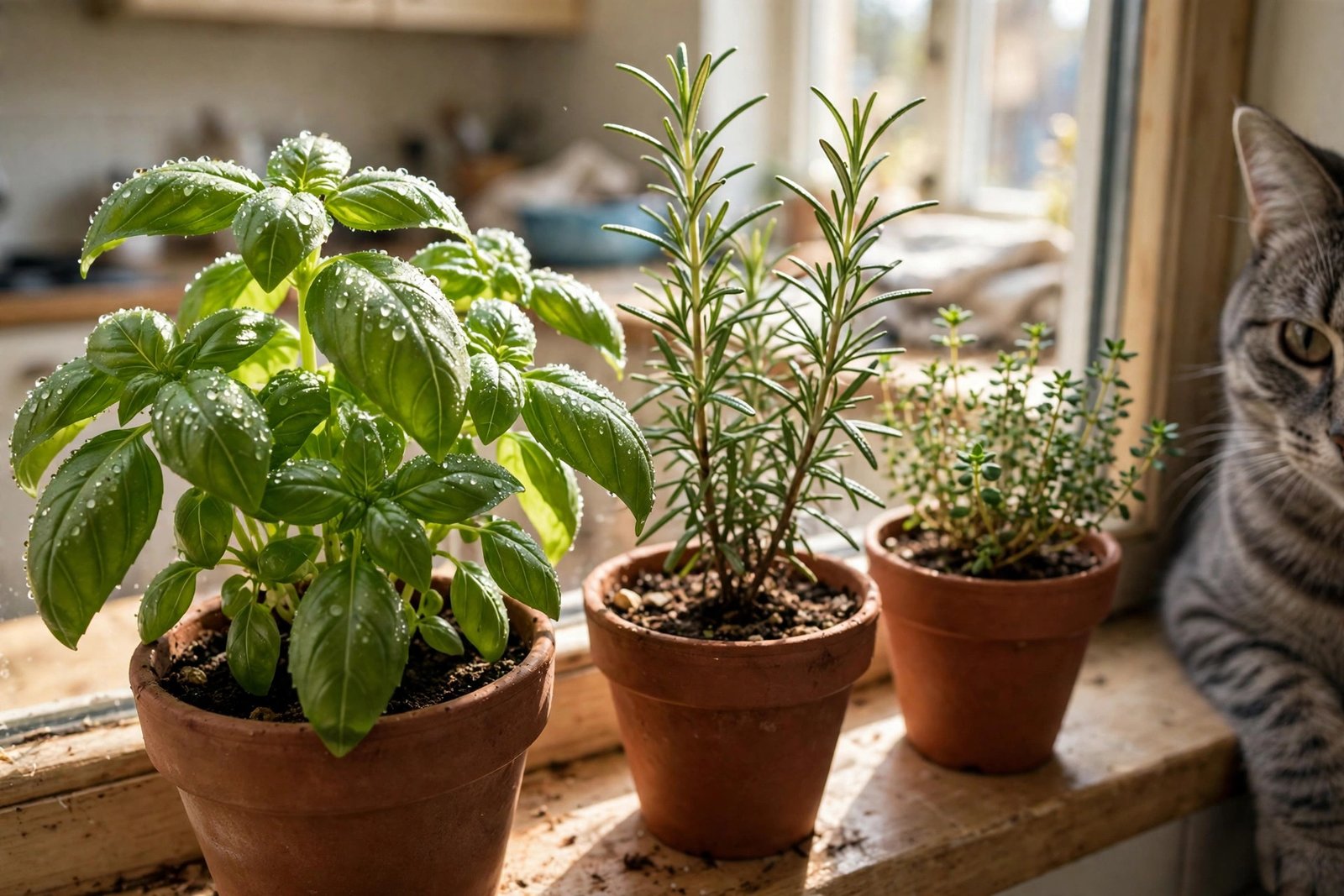
The 7 Best Cat Safe Herbs to Grow Indoors
These seven herbs are the best cat safe herbs to grow indoors because they combine three things: an ASPCA non-toxic listing, a flavour you will actually cook with, and a plant that survives on a kitchen windowsill. All seven grow well in pots.
| Herb | ASPCA listing | Light | Water | Cat appeal |
|---|---|---|---|---|
| Basil | Non-toxic | Bright sun, 6+ hours | Keep soil moist | High — cats love the soft leaves |
| Rosemary | Non-toxic | Bright sun, 6+ hours | Let soil dry between waterings | Low — woody and strongly scented |
| Thyme | Non-toxic | Bright sun, 4–6 hours | Let soil dry between waterings | Low — tiny leaves, strong scent |
| Parsley | Non-toxic | Bright light, 4–6 hours | Keep soil moist | Medium — flat leaves invite nibbles |
| Dill | Non-toxic | Bright sun, 6+ hours | Keep soil moist | Medium — feathery and fun to bat |
| Cilantro | Non-toxic | Bright light, 4–6 hours | Keep soil moist | Medium — soft leaves, mild scent |
| Sage | Non-toxic | Bright sun, 6+ hours | Let soil dry between waterings | Low — fuzzy leaves put cats off |
Basil
Basil is the easiest place to start with cat safe herbs to grow indoors. Sweet basil is listed as non-toxic by the ASPCA, it grows fast from seed or from a supermarket pot, and it gives you fresh leaves for pasta, salads, and pesto within weeks. Pinch the top leaves regularly to keep it bushy.
Cats are often drawn to basil because the leaves are soft and easy to bite. A few nibbled leaves are harmless, but a determined cat can strip a young plant in a day, so grow two pots — one for the kitchen and one the cat is allowed to visit. Basil needs warmth above 50°F, at least six hours of sun, and soil that stays evenly moist.
Rosemary
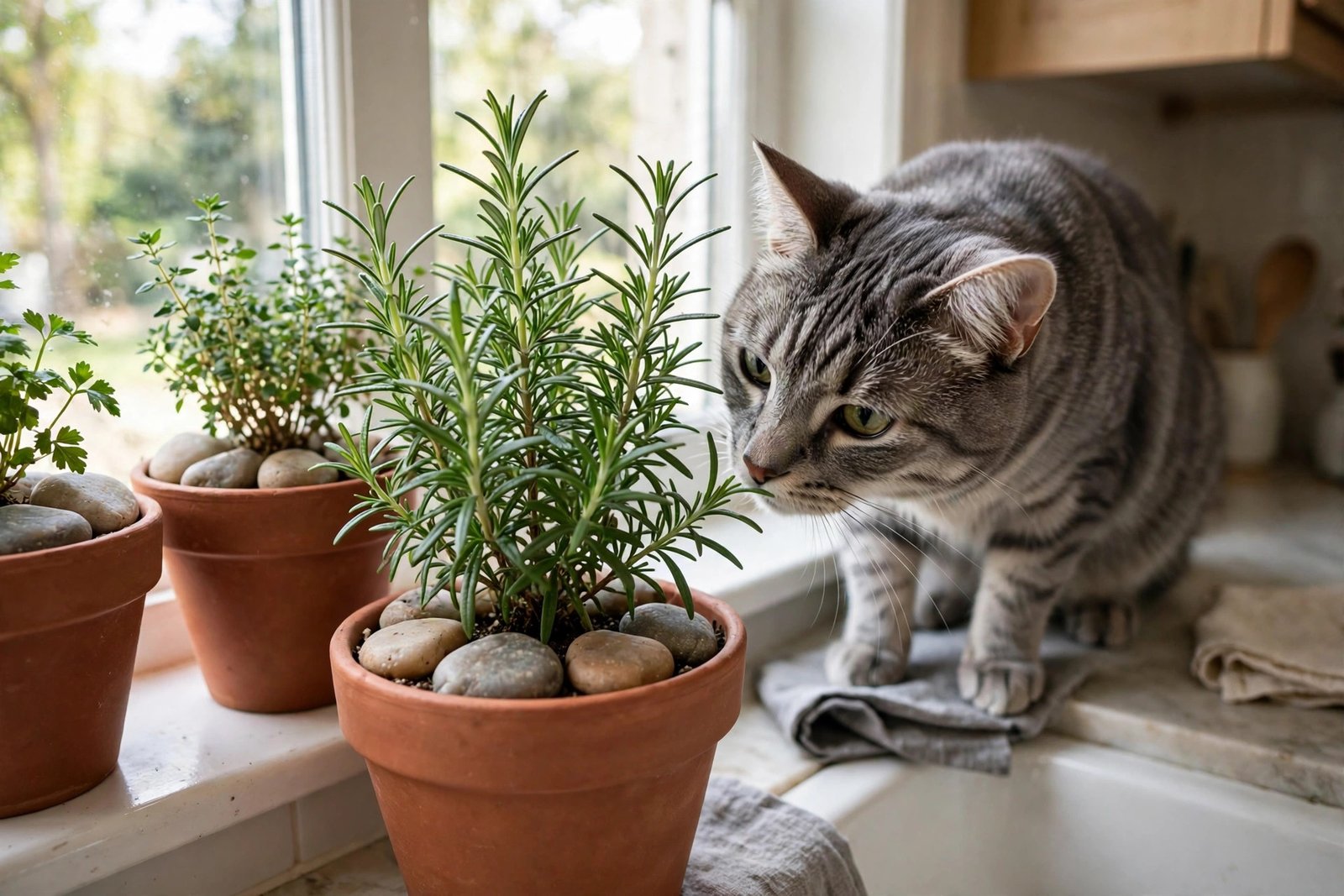
Rosemary is one of the toughest cat safe herbs to grow indoors, and one of the least interesting to cats. Its needle-like leaves are woody and strongly scented, so most cats sniff it once and walk away. The ASPCA lists rosemary as non-toxic to cats, and the plant is a small evergreen shrub that lives for years in a pot.
Give rosemary the sunniest spot you have — six or more hours of direct sun — and water only when the top inch of soil is dry. Rosemary hates wet feet, so use a pot with drainage holes and a light, gritty potting mix. Snip sprigs for roast chicken, potatoes, and focaccia, and the plant will keep branching.
Thyme
Thyme is a low, spreading herb that suits a small pot on a sunny sill, and it is listed as non-toxic by the ASPCA. Common thyme has tiny leaves packed with flavour, and the plant asks for very little: bright sun, a light watering when the soil dries out, and an occasional trim. It is one of the best cat safe herbs to grow indoors for a beginner who forgets to water, because thyme prefers to be a little dry.
Cats rarely bother thyme. The leaves are small, the scent is strong, and the plant grows close to the soil, so there is nothing dangling to bat at. Use it fresh or dried in soups, roasts, and marinades.
Parsley
Parsley is a kitchen workhorse — flat-leaf parsley goes into almost everything — and the ASPCA lists it as non-toxic to cats. A pot started in spring gives you leaves through summer and into autumn. Parsley likes bright light, four to six hours a day, and soil that stays moist, so it pairs well with basil on the same watering routine.
The flat, soft leaves do attract nibbling cats, and a small parsley plant can be eaten down to the stems. If your cat likes it, treat parsley as a shared plant: grow a second pot out of reach and let the cat have the first. A few leaves are harmless, though parsley should never replace a balanced cat diet.
Dill
Dill is a feathery annual that grows fast and tall, with soft, thread-like leaves and a mild anise scent. The ASPCA lists dill as non-toxic to cats, and its delicate fronds are entertaining for a cat to investigate — they move in the breeze and invite a gentle paw. Dill needs a deep pot for its long taproot, and at least six hours of sun.
Start dill from seed directly in its final pot, since it dislikes being transplanted. Keep the soil moist while it establishes, then water when the top inch dries. Harvest the fronds for fish, pickles, and salads.
Cilantro
Cilantro, also sold as coriander leaf, is listed as non-toxic by the ASPCA and is one of the fastest herbs to grow from seed — you can be snipping leaves within three to four weeks of sowing. It likes cool weather and bright light, so it does best on a windowsill that gets morning sun and stays below 75°F. In a hot kitchen it bolts quickly, so sow a small pot every two or three weeks for a steady supply.
Cats tend to sniff cilantro and move on; the scent is strong and the leaves are thin. If your cat does take a bite, there is nothing to worry about beyond the usual rule that too much of any plant can upset a stomach. Use the leaves fresh in salsa and tacos.
Sage
Garden sage is a woody perennial with soft, grey-green leaves, and the ASPCA lists it as non-toxic to cats. It is one of the hardiest cat safe herbs to grow indoors: it tolerates dry soil, bright sun, and a cool windowsill, and a single plant can live for years. The fuzzy leaves are unappealing to most cats, so sage usually survives untouched.
Sage needs the sunniest spot you can offer and soil that dries out between waterings — wet soil is the fastest way to kill it. A terracotta pot helps, because it wicks moisture away from the roots. Snip leaves for stuffing, brown butter, and roast squash.
Herbs to Avoid Around Cats
Not every kitchen herb is safe, and some of the dangerous ones sit on the same shelf as the cat safe herbs to grow indoors. The table below lists the common herbs to keep out of a home with cats. If you already grow one of these, move it to a room your cat cannot enter, or give it away.
| Herb to avoid | Why it is unsafe | ASPCA listing |
|---|---|---|
| Chives (and garlic, onion, leeks) | Alliums damage red blood cells and can cause anaemia | Toxic |
| Mint (all Mentha species) | Causes vomiting, diarrhoea, and weakness | Toxic |
| Lavender | Contains linalool and linalyl acetate, toxic to cats | Toxic |
| Tarragon | Listed as toxic; causes vomiting and diarrhoea | Toxic |
| Oregano | Listed as toxic; causes gastrointestinal upset | Toxic |
| Chamomile | Listed as toxic to cats despite its calming reputation | Toxic |
| Bay leaf (bay laurel) | Listed as toxic; can cause vomiting and diarrhoea | Toxic |
| Pennyroyal | Highly toxic; can cause liver failure | Toxic |
Chives deserve special attention because they look harmless, but they belong to the Allium family with garlic and onions, and all Alliums can damage a cat’s red blood cells. Even a small amount eaten regularly can cause anaemia, so chives should never be within a cat’s reach. Mint is another surprise: although mint tea is a human staple, the ASPCA lists mint as toxic to cats. Catnip is the exception — a different plant, Nepeta cataria, listed as non-toxic. For the full toxic list, see our guide to common houseplants that are toxic to cats.
Can Cats Eat Fresh Herbs?
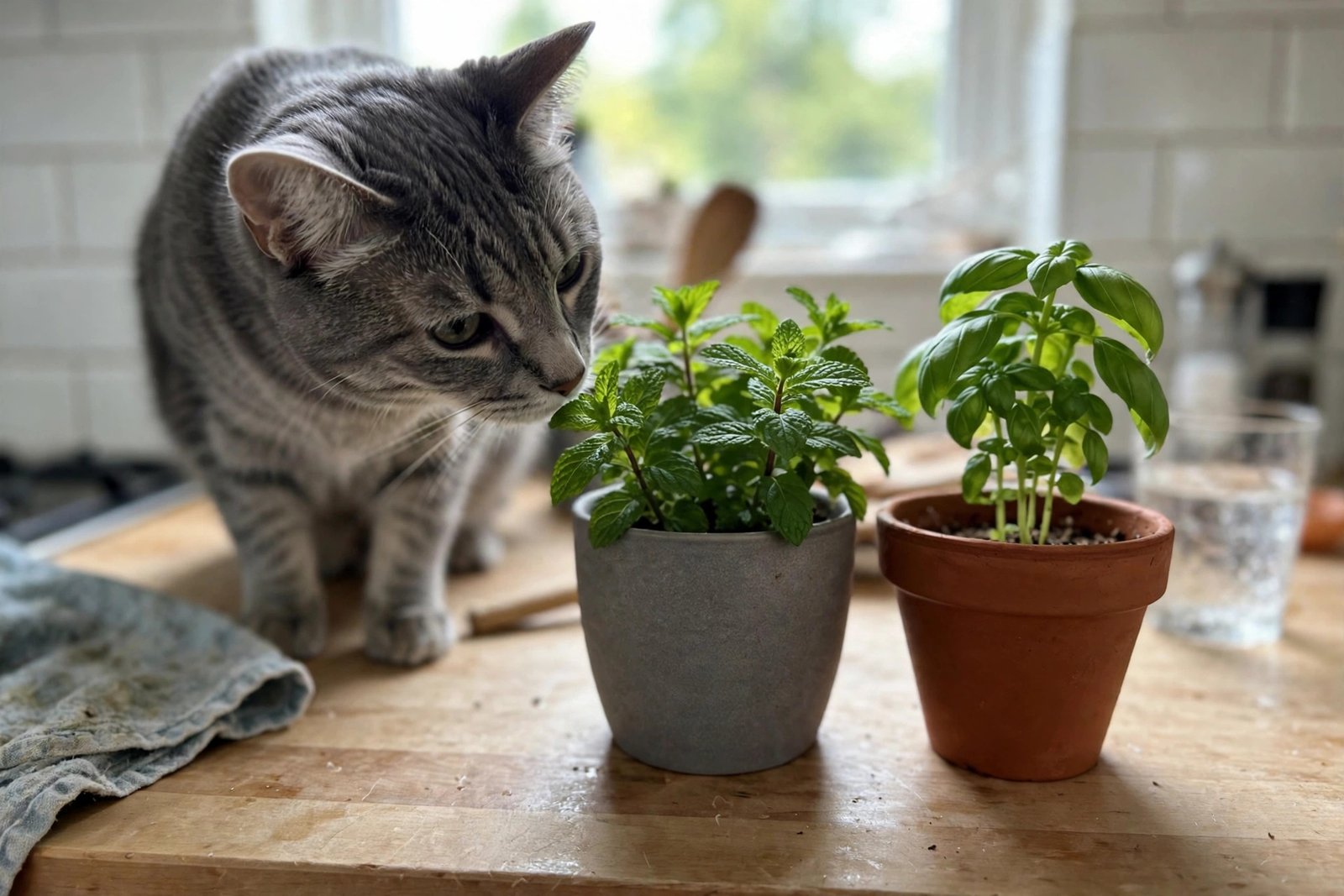
Yes, in small amounts. A cat that nibbles a few basil or parsley leaves is eating a plant the ASPCA lists as non-toxic, and the only likely result is nothing at all — or a small vomit if the cat ate a lot of roughage at once. Cats are obligate carnivores, so herbs offer them no nutrition they need.
That said, three rules keep herb-nibbling safe. First, only the safe species on this page — never let a cat chew an herb you have not checked. Second, keep the amounts small; if your cat is eating whole plants, move the pots out of reach and offer cat grass instead. See our comparison of cat grass versus houseplants for why a dedicated grass pot works better than a shared herb pot.
Third, grow cat safe herbs to grow indoors without chemicals. No pesticide, no scented leaf shine, and no fertilizer that is not labelled safe around pets. If you buy a supermarket herb pot, repot it in fresh, untreated potting mix and wait a week before letting your cat near it, because shop plants are often sprayed. Our guide to cat-safe potting materials covers soils and pots in more detail.
How to Grow Cat Safe Herbs to Grow Indoors Step by Step
Growing cat safe herbs to grow indoors is simple once you set up the pots properly. Start with terracotta or ceramic pots with drainage holes, one herb per pot, because basil wants moist soil while rosemary wants to dry out. A pot 15 to 20 centimetres across suits most herbs.
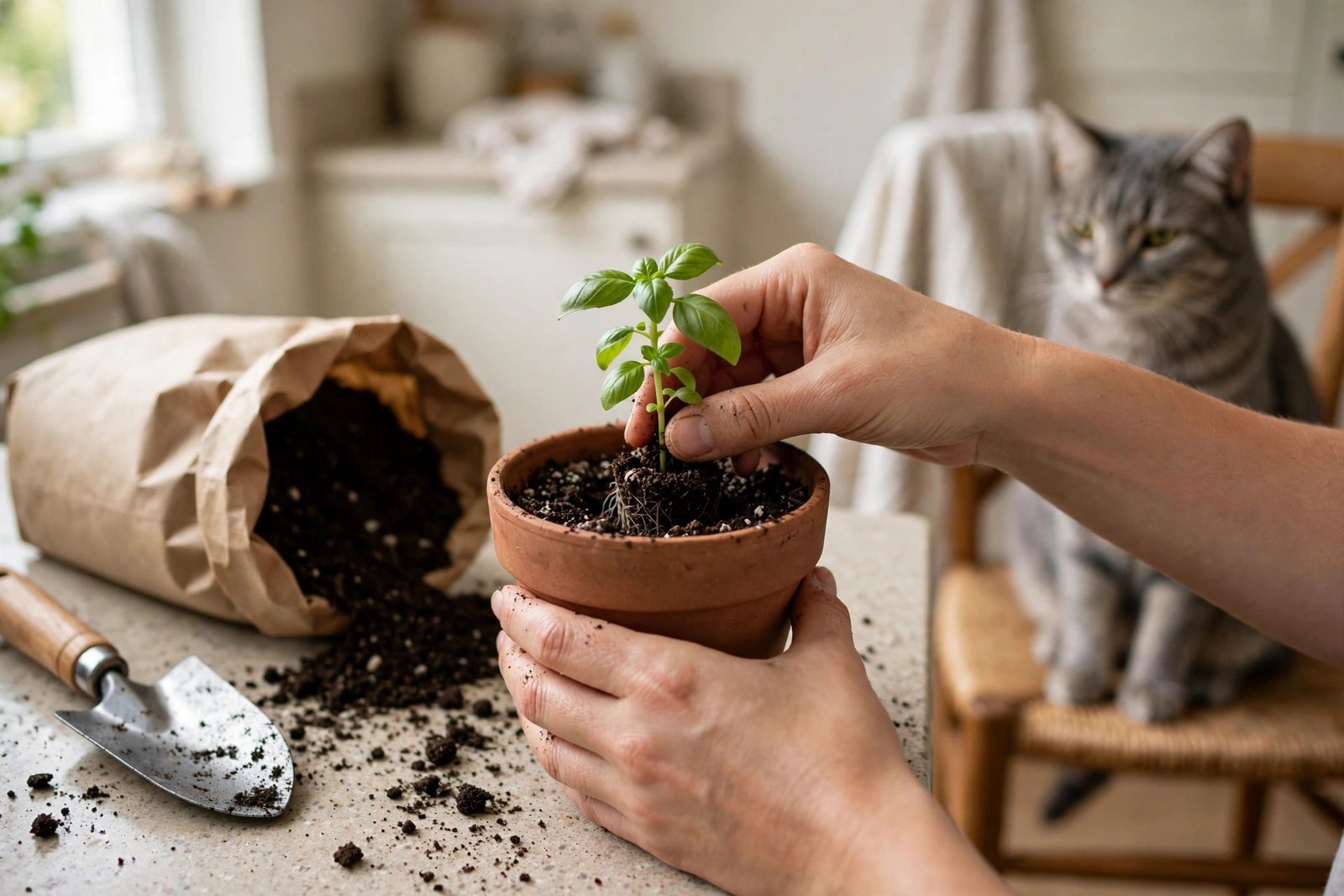
Fill each pot with a light, peat-free potting mix and a handful of perlite for drainage, then plant at the same depth the herb grew in its nursery pot. Water thoroughly until it drains from the bottom, then empty the saucer. Place the pots on your sunniest windowsill — south- or west-facing is best, and close to where you cook — and turn them a quarter-turn every few days so they grow straight.
Feed lightly. A half-strength liquid seaweed feed once a month in spring and summer is enough; too much fertilizer makes soft, weak growth that cats strip in minutes. Harvest by pinching the top few centimetres of each stem, which encourages branching. For more placement ideas, see our guides to where to place houseplants in a home with cats and cat-safe plants for low light, and our cat-friendly plant care guide for beginners.
Keeping Cats From Digging in Your Herb Pots
Fresh potting mix is irresistible to many cats, and a dug-up herb pot is the most common complaint from cat owners who grow cat safe herbs to grow indoors. The fix is to make the soil surface unappealing without making it unsafe. A layer of large, smooth pebbles over the soil stops digging and still lets water through, and most cats lose interest once they cannot reach the dirt.
Other options work too: crumpled aluminium foil around the stem, mesh cut to fit the pot, or a top dressing of pine cones. Avoid cocoa shell mulch, which is toxic to cats. If your cat keeps digging despite the pebbles, move the pots to a shelf the cat cannot reach. Our guide to stopping cats digging in houseplant soil has more ideas, and our guide to keeping cats out of houseplants covers placement tricks.
Frequently Asked Questions
Are cat safe herbs to grow indoors really safe if my cat eats them every day?
Yes, for the seven herbs on this page. Cat safe herbs to grow indoors like basil, rosemary, and thyme are listed as non-toxic by the ASPCA, so daily nibbling is not dangerous. The practical problem is your plant, not your cat — a cat that eats herbs every day will strip a small pot bare. Grow a spare pot out of reach and offer cat grass instead.
Is basil safe for cats?
Yes. Sweet basil (Ocimum basilicum) is listed as non-toxic to cats by the ASPCA. Cats often like the soft leaves, and a few nibbles are harmless. Grow a second pot if your cat eats the first one down.
Is rosemary safe for cats?
Yes. Rosemary is listed as non-toxic to cats by the ASPCA. Most cats ignore it because the needle-like leaves are woody and strongly scented, which makes it one of the easiest herbs to keep intact.
Is mint safe for cats?
No — mint is the common exception. The ASPCA lists mint (Mentha species) as toxic to cats, and cats that eat it can develop vomiting and weakness. Catnip is a different plant and is safe, but ordinary culinary mint, peppermint, and spearmint should stay out of a home with cats.
Which herbs are toxic to cats?
The main ones to avoid are chives and other Alliums (garlic, onion, leeks), mint, lavender, tarragon, oregano, chamomile, bay leaf, and pennyroyal. All are listed as toxic by the ASPCA. If you are unsure about any herb, check the ASPCA’s toxic and non-toxic plant list by botanical name before you buy it — and see our guide on how to choose cat-safe plants for the full checklist.
Conclusion
So, are cat safe herbs to grow indoors a good idea? Yes — basil, rosemary, thyme, parsley, dill, cilantro, and sage are all listed as non-toxic by the ASPCA, they grow well in pots on a sunny windowsill, and they put fresh flavour within arm’s reach while you cook. The key is choosing the right species: chives, mint, and lavender are the traps to avoid.
Start with basil and rosemary, one pot each, on your sunniest sill. Grow them organically, cover the soil with pebbles so your cat cannot dig, and keep a pot of cat grass nearby. To build a wider collection, continue with our list of 15 cat-safe houseplants.
Disclaimer: This article is for general information only and does not replace advice from a veterinarian. Plant safety can depend on the exact species, the amount eaten, and the individual cat. If your cat is unwell after chewing or eating any plant, contact your veterinarian or an animal poison control service promptly.
Sources and References
- ASPCA — Basil, Toxic and Non-Toxic Plants
- ASPCA — Rosemary, Toxic and Non-Toxic Plants
- ASPCA — Thyme, Toxic and Non-Toxic Plants
- ASPCA — Parsley, Toxic and Non-Toxic Plants
- ASPCA — Dill, Toxic and Non-Toxic Plants
- ASPCA — Sage, Toxic and Non-Toxic Plants
- ASPCA — Cilantro, Toxic and Non-Toxic Plants
- ASPCA — Mint, Toxic and Non-Toxic Plants
- ASPCA — Lavender, Toxic and Non-Toxic Plants
- ASPCA — Chives, Toxic and Non-Toxic Plants
- ASPCA — Catnip, Toxic and Non-Toxic Plants
- ASPCA — Toxic and Non-toxic Plant List: Cats