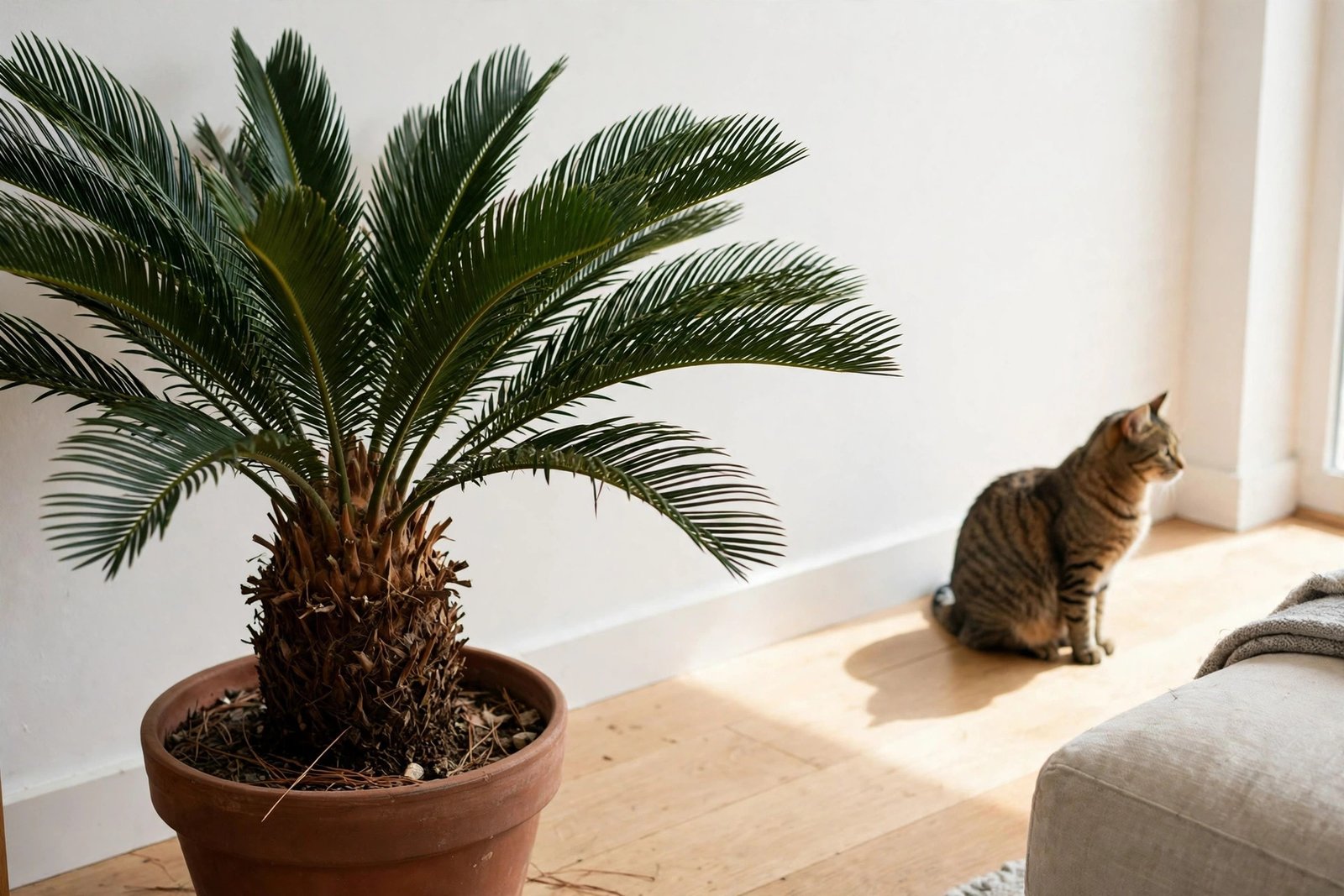
Yes — sago palms are toxic to cats, and they are among the most dangerous plants a cat can eat. The sago palm, Cycas revoluta, is listed by the ASPCA as toxic to cats, dogs, and horses. Every part contains the toxin cycasin, and even a small amount can cause vomiting, bloody diarrhea, and liver damage — and, in severe cases, liver failure and death.
This is not a plant to manage with a high shelf. If a cat has chewed or swallowed any part of a sago palm — especially a seed — call for veterinary help at once. Liver damage can develop over days. If you are wondering are sago palms toxic to cats, the answer is one of the most serious yeses on the toxic plant list.
The Short Answer
If your cat has just chewed or eaten any part of a sago palm — leaf, stem, root, or seed — do not wait for symptoms. Move the plant out of reach and call your veterinarian or poison control promptly: the ASPCA Animal Poison Control Center at (888) 426-4435 or Pet Poison Helpline at (855) 764-7661. The answer to are sago palms toxic to cats is yes, and with this plant the answer means act now.
The ASPCA lists the toxic principle as cycasin and the clinical signs as vomiting, melena (dark, tarry stools), icterus (yellowing of the gums and skin), liver damage, liver failure, and death. Pet Poison Helpline adds that eating any part, especially the seed, may cause severe gut distress, weakness, seizures, and liver failure. For a fuller emergency guide, see What to Do If Your Cat Eats a Toxic Plant.
What Is a Sago Palm?
A sago palm is a slow-growing plant with a short, thick, woody trunk and a crown of stiff, dark green, feather-shaped fronds. It is sold as a small potted houseplant, a patio plant, and a landscape plant. Indoors it usually sits in a pot on the floor — exactly where a cat can reach it. That low, reachable spot is one reason are sago palms toxic to cats is such a common question.
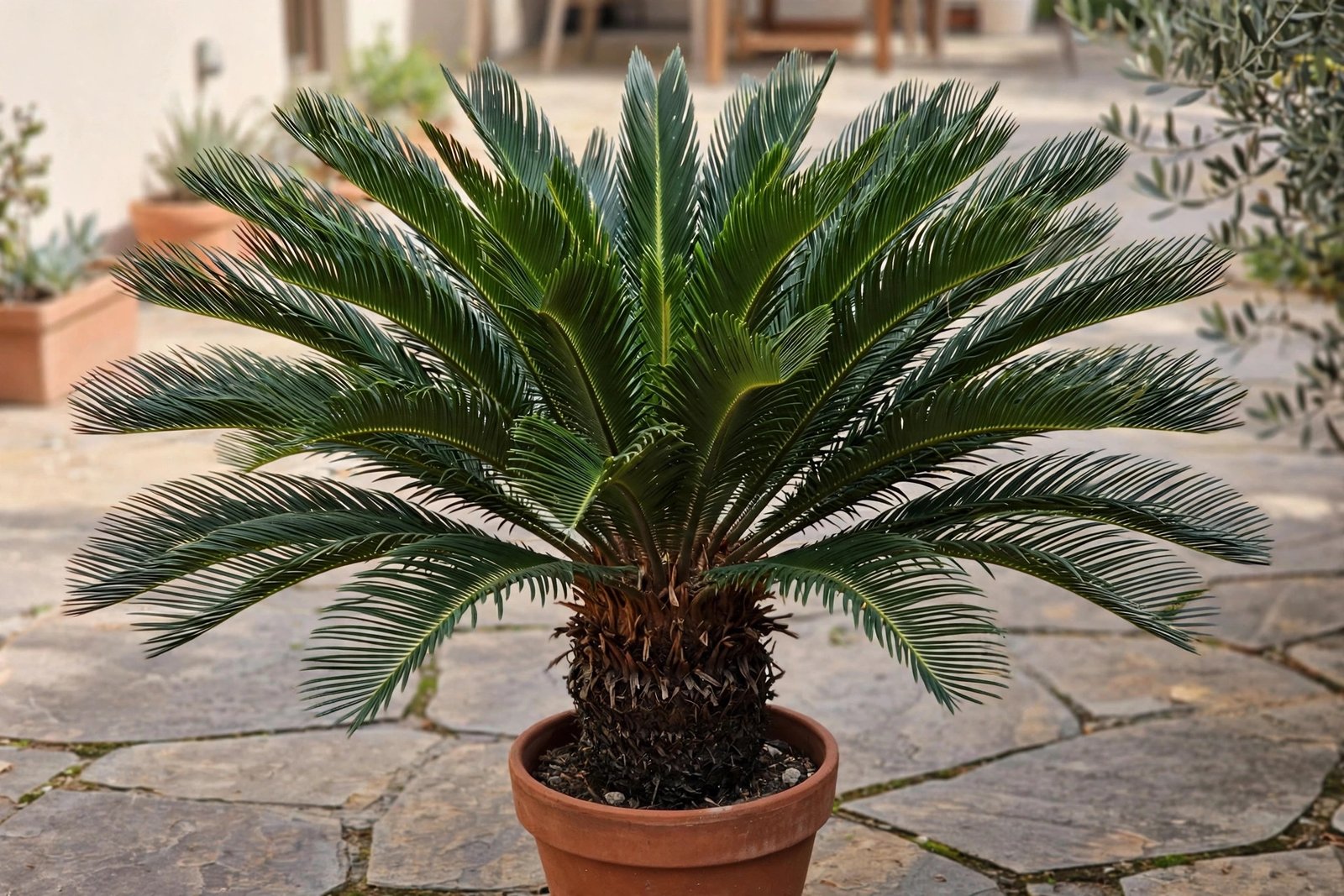
Despite the name, a sago palm is not a palm at all. It is a cycad, an ancient group of plants that predates true palms by millions of years. Its scientific name is Cycas revoluta, family Cycadaceae. The ASPCA entry also covers zamia species, including Coontie Palm and Cardboard Palm.
That distinction matters. So when you ask are sago palms toxic to cats, remember the answer covers the whole cycad family.
How to Identify a Sago Palm
Look for a short, thick, shaggy trunk topped by a rosette of stiff, dark green fronds. Each frond is long and narrow, with pointed leaflets that curl slightly downward at the edges — that curled edge is part of what revoluta means.
Female plants produce large, round, orange-red seeds (sometimes called nuts) in a cone in the center of the crown — the most dangerous part of the plant. If you see orange-red, golf-ball-sized seeds on a palm-like plant, treat it as a sago palm, and assume are sago palms toxic to cats applies.
Why Sago Palms Are Toxic
Sago palms contain cycasin, a highly toxic plant chemical, in all parts of the plant — fronds, trunk, roots, and seeds — but it is most concentrated in the seeds. Pet Poison Helpline states that eating any part, especially the seed, may result in severe poisoning. That is why are sago palms toxic to cats is answered the same way for every part of the plant.
Cycasin attacks in more than one way. It irritates the stomach and gut, so vomiting and diarrhea usually come first. It can also damage the liver: a cat can seem to recover from the vomiting and then develop liver failure days later. It can also affect the nervous system and blood clotting. That is one more reason are sago palms toxic to cats is not a question to brush off.
There is no safe part and no safe amount — any chewing of a sago palm deserves an immediate call to a veterinarian or poison control.
Which Part Is Most Dangerous?
Not every sago palm exposure is equal, but every part is toxic. That is why are sago palms toxic to cats is only the first question.
The Seeds: The Most Dangerous Part
The seeds (also called nuts) hold the highest concentration of cycasin by a wide margin. A cat that chews or swallows a seed faces the most severe poisoning: prolonged vomiting, bloody diarrhea, and a high risk of liver failure.
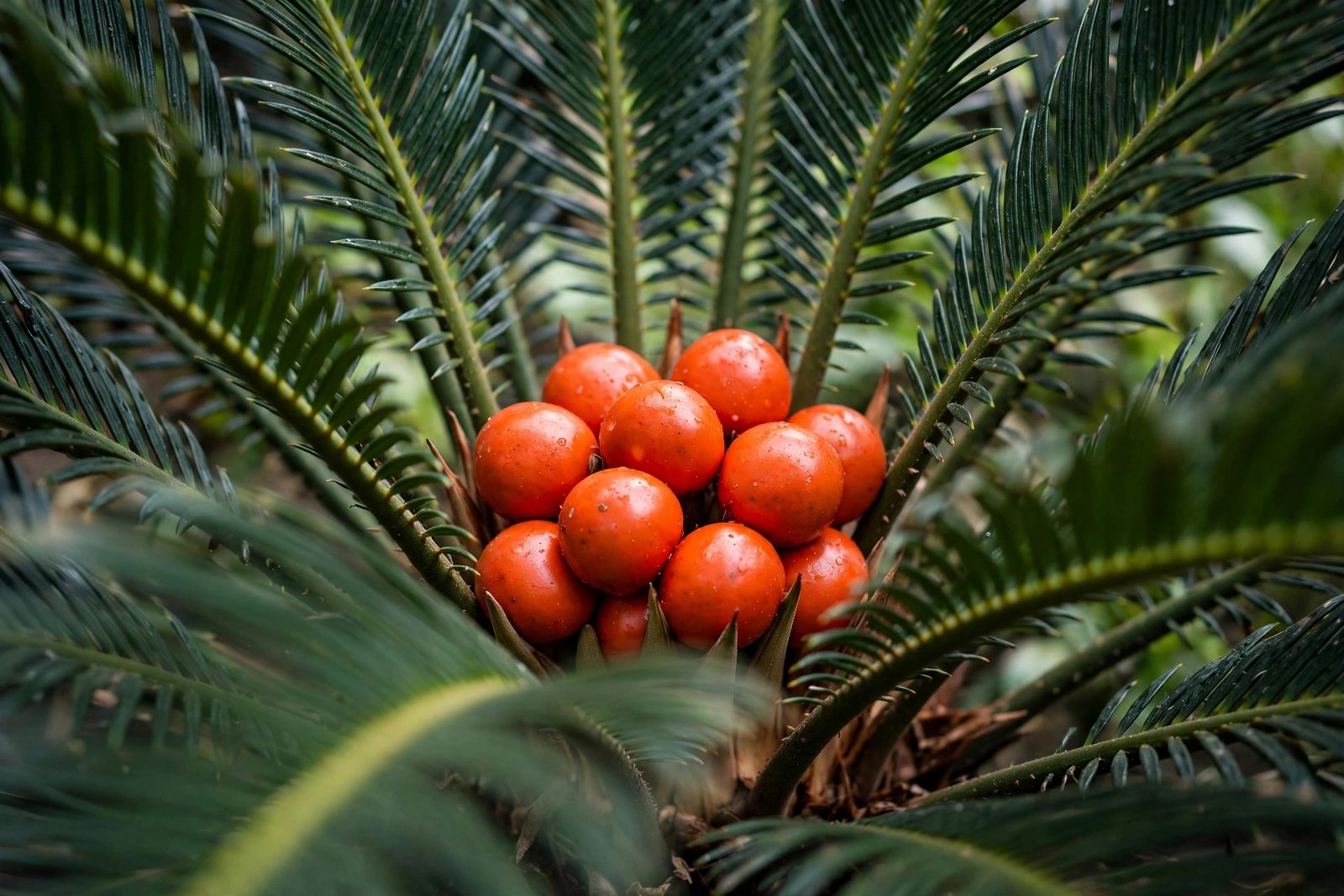
Cats reach seeds when they fall onto the ground, when a cat bats at the bright orange-red seeds in the crown, or when one drops onto the floor. Seeds are round, smooth, and about the size of a golf ball. Treat any seed chewing as an emergency — a single seed is enough for are sago palms toxic to cats to become a veterinary emergency.
Leaves and Fronds
The fronds hold less cycasin than the seeds, but they are still toxic. A cat that chews a frond develops vomiting, drooling, and diarrhea. Even a leaf nibble counts when you ask are sago palms toxic to cats.
Trunk, Roots, and Potting Soil
The trunk and roots are also toxic. A cat that digs in the pot can reach the roots, and a cat that chews the trunk of a small plant can ingest cycasin that way. Soil from a sago palm pot is also contaminated — another reason are sago palms toxic to cats worries outdoor plant owners as well.
| Plant part | Toxin level | Typical signs after eating |
|---|---|---|
| Seeds (nuts) | Highest by far | Severe vomiting, bloody diarrhea, weakness, seizures |
| Leaves and fronds | High, still toxic | Vomiting, drooling, diarrhea |
| Trunk and roots | High, still toxic | Vomiting, diarrhea, lethargy |
| Potting soil | Contaminated | Stomach upset if eaten |
Symptoms to Watch For
Signs often begin within a few hours, usually with vomiting and diarrhea. But sago palm poisoning has a cruel second phase: the liver damage caused by cycasin can take days to show, so a cat that seems better after the first day may still be developing liver failure. That is why the advice is always to call promptly — the delayed liver damage is what makes are sago palms toxic to cats a harder question than it looks.
The ASPCA lists vomiting, melena, icterus, bruising, liver damage, liver failure, and death. Pet Poison Helpline describes the same pattern: severe gut distress, weakness, seizures, liver failure, and death. Knowing are sago palms toxic to cats means knowing this full list, not just the vomiting.
Early signs include vomiting, diarrhea, drooling, loss of appetite, and unusual tiredness or weakness. A cat may hide or refuse food and water. Dark, tarry stools (melena) mean bleeding in the gut. If you notice any of these and you have been asking are sago palms toxic to cats, call now rather than watching and waiting.
Later signs are more alarming: yellowing of the gums, eyes, or skin (icterus), increased thirst, bruising or bleeding that does not stop, a wobbly or stumbling walk, tremors, or seizures. Any of these needs a veterinarian immediately. If you find chewed fronds or a missing seed, treat it as an exposure and call for advice.
How Serious Is Sago Palm Poisoning?
Sago palm poisoning is one of the most serious plant poisonings a cat can suffer. Most toxic houseplants cause vomiting and diarrhea and then the cat recovers. Sago palms are different: the cycasin can destroy the liver, and liver failure can be fatal. That liver risk is the heart of are sago palms toxic to cats.
That does not mean every exposure is fatal, but because there is no published safe amount, and because liver damage can develop silently over days, no sago palm bite can be called harmless in advance.
Kittens, older cats, and cats with existing liver or other health problems are more vulnerable. A small body means a smaller amount of toxin does more damage. For them, are sago palms toxic to cats is an even more urgent question.
What to Do If Your Cat Chews or Eats a Sago Palm
Act immediately, even if your cat seems normal at first. With this plant, are sago palms toxic to cats is not a question to research first and act on later.
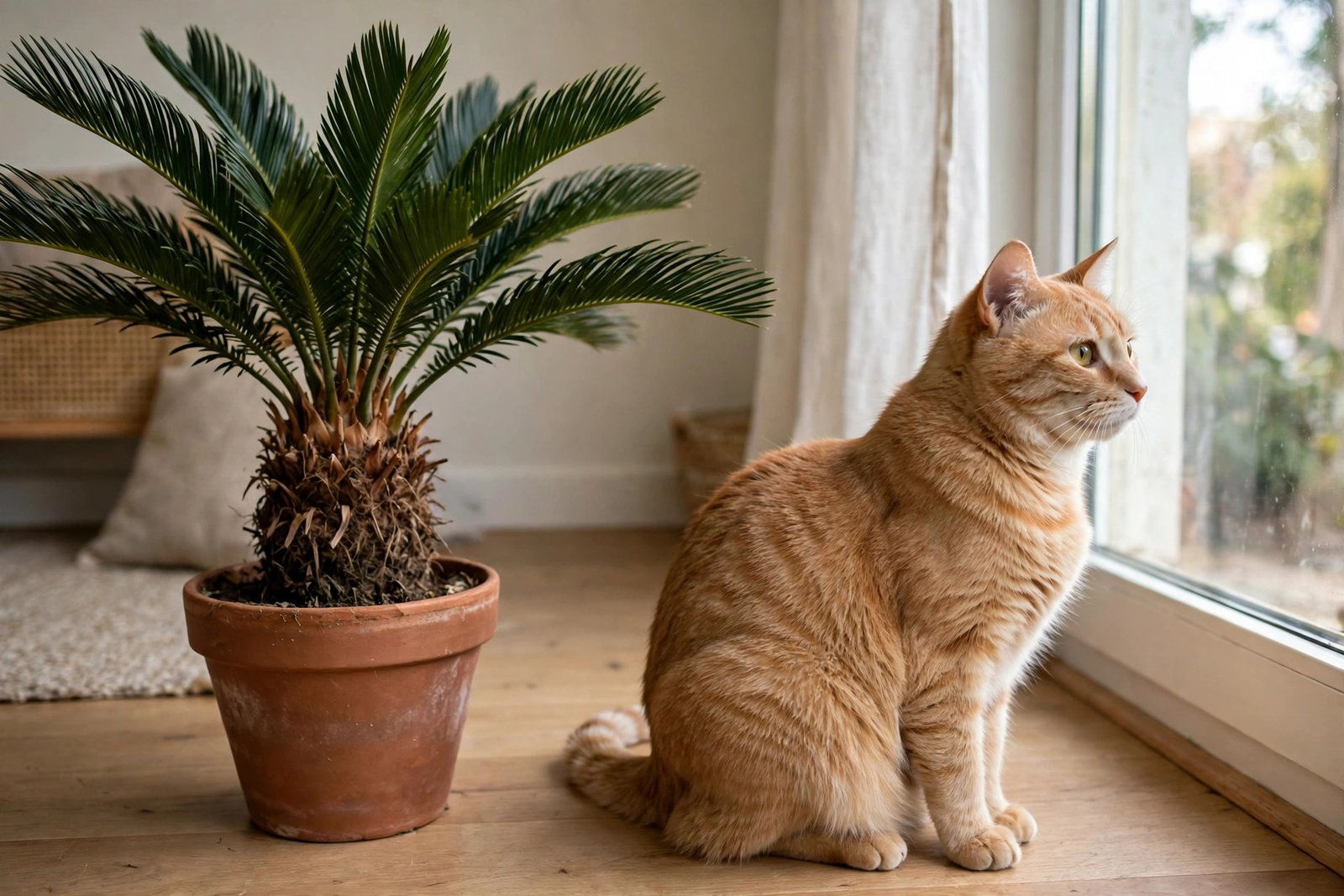
First, remove the plant and prevent more chewing. Pick up the sago palm, any fallen fronds or seeds, and put them out of your cat’s reach. Check the floor for fallen seeds.
Second, call your veterinarian or poison control promptly — the ASPCA Animal Poison Control Center at (888) 426-4435, or Pet Poison Helpline at (855) 764-7661. Be ready to share the plant name or a photo and which part your cat ate. Say at once if it was a seed, because are sago palms toxic to cats is most urgent when a seed was swallowed.
Third, watch your cat closely for the next several days, not just the next few hours. Keep the cat indoors, in a quiet room, with fresh water available. If the cat vomits repeatedly, has diarrhea or bloody stool, or seems weak or wobbly, contact a veterinarian again immediately.
What NOT to Do
Do not induce vomiting. Never try to make your cat vomit at home unless a veterinarian specifically tells you to — vomiting can cause more harm with some substances, and a cat that is already nauseous can choke. Cornell University’s Feline Health Center gives the same warning for suspected poisonings generally.
Do not give home remedies such as milk, oil, food, or activated charcoal. None of these treat cycasin poisoning, and some can cause vomiting or other harm. Do not rinse your cat’s mouth forcefully, because that can cause choking. Waiting to see whether are sago palms toxic to cats applies to your cat wastes the time that matters most.
Can You Keep a Sago Palm With a Cat?
The honest answer is no — not safely. Sago palms are not made safe by a high shelf or a hanging planter: cats climb, fronds fall, and a single fallen seed on the floor can be fatal. No shelf or barrier changes the fact that are sago palms toxic to cats is a confirmed yes.
If you have a sago palm and a cat, the safest choice is to remove the plant from the home and garden. Give it away to a household without cats or other pets, and pick up any fallen seeds.
For more ideas, see How to Keep Cats Out of Houseplants Without Harming Them and Where to Place Houseplants in a Home With Cats.
Sago Palm vs. True Palms: Do Not Confuse Them
The name causes real mistakes. A sago palm is a cycad, not a palm. True palms are a different family of plants, and several are listed as non-toxic to cats. Learning are sago palms toxic to cats often starts with this confusion.
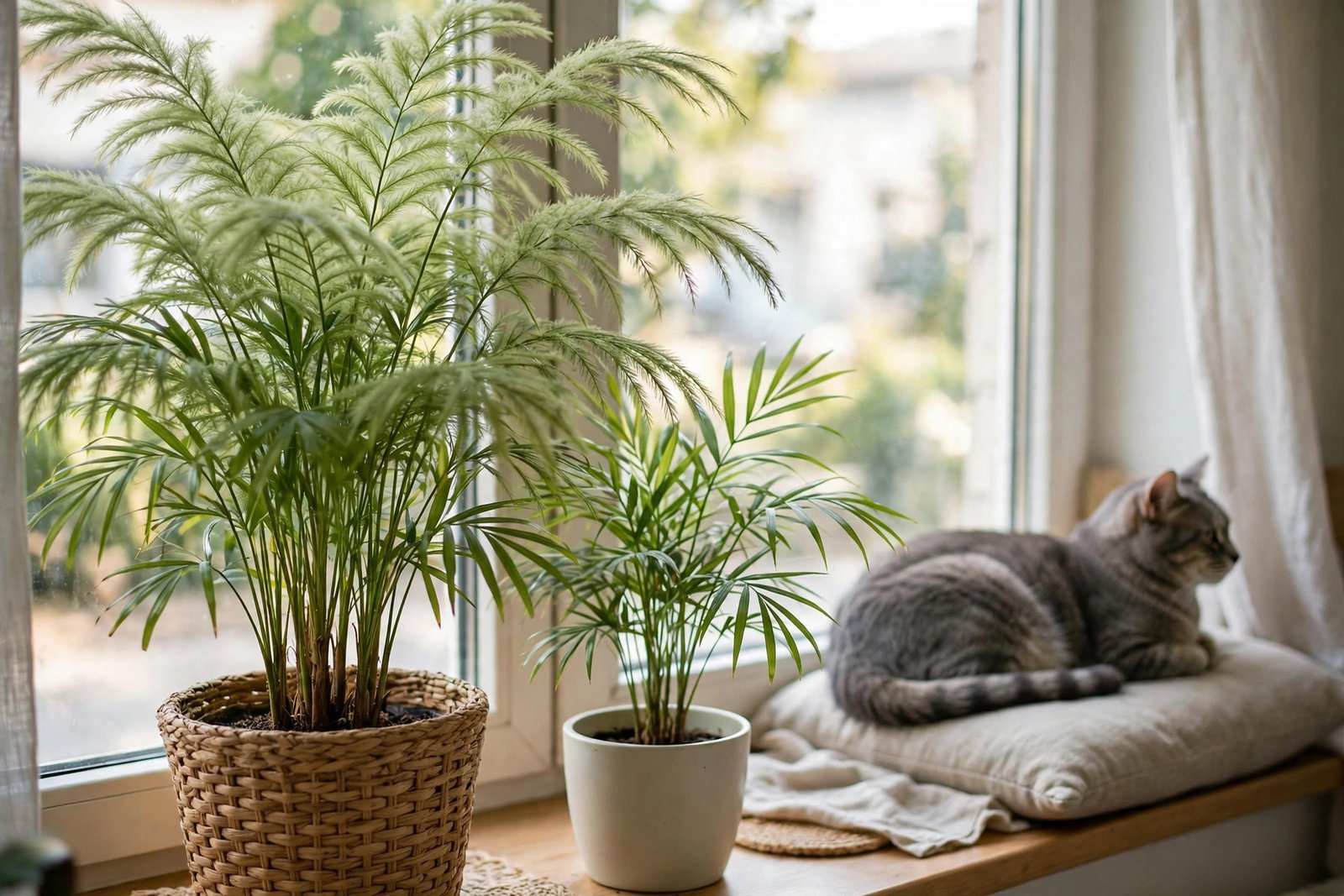
The parlor palm (Chamaedorea elegans) is a small, soft-leaved true palm listed by the ASPCA as non-toxic to cats — see Are Parlor Palms Safe for Cats?. The areca palm (Dypsis lutescens) is a taller, feathery true palm, also listed as non-toxic — see Are Areca Palms Safe for Cats?.
Before you buy any plant sold as a “palm,” check the botanical name against the ASPCA list. If it says Cycas revoluta or Zamia, it is not a safe palm. If it says Chamaedorea elegans or Dypsis lutescens, it is one of the safe ones. For more safe options, see 15 Cat-Safe Houseplants.
Frequently Asked Questions
Are sago palms toxic to cats?
Yes — highly toxic. Sago palms (Cycas revoluta) are listed by the ASPCA as toxic to cats, dogs, and horses. The toxin is cycasin, and the listed signs include vomiting, bloody diarrhea, and liver failure. That is why are sago palms toxic to cats is a question with a life-or-death answer.
Are sago palm seeds toxic to cats?
Yes — the seeds are the most toxic part by far. Pet Poison Helpline states that eating any part, especially the seed, may cause severe poisoning, including liver failure. A cat that chews a seed needs veterinary help.
How much sago palm is dangerous for a cat?
There is no published safe amount. Call your veterinarian or poison control promptly. That is why are sago palms toxic to cats has no “safe amount” answer.
What are the symptoms of sago palm poisoning in cats?
Early signs are vomiting, diarrhea, drooling, loss of appetite, and weakness. Later signs can include dark, tarry stools, blood in the vomit or stool, yellowing of the gums or skin, bruising, tremors, or seizures.
Is a sago palm the same as a real palm?
No. A sago palm is a cycad (Cycas revoluta), not a true palm. True palms such as the parlor palm and the areca palm are listed by the ASPCA as non-toxic. Always check the botanical name first — that is why are sago palms toxic to cats is worth asking.
Can I keep a sago palm outdoors if my cat is indoors?
It is still a risk. Seeds fall from outdoor plants onto the ground, and an indoor cat can reach them through an open door or a patio. The safest choice is to remove the sago palm entirely — outdoor plants still matter when you ask are sago palms toxic to cats.
Conclusion
Sago palms are toxic to cats. Cycas revoluta contains cycasin in every part, with the seeds holding the highest concentration. A cat that eats a sago palm can develop vomiting, bloody diarrhea, and liver failure days after the first bite.
If your cat has chewed or eaten any part of a sago palm, move the plant out of reach and call your veterinarian or poison control now — and say at once if it was a seed. Watch the cat closely for several days. If you have a sago palm in a home with a cat, the safest step is to remove it and replace it with a true palm.
Disclaimer: This article is for general information only and does not replace advice from a veterinarian. If your cat has chewed or eaten a sago palm, contact your veterinarian or an animal poison control service promptly. Do not use home remedies, induce vomiting, or give medication without veterinary advice.
Sources
- ASPCA — Sago Palm (Cycas revoluta, zamia species). Lists the plant as toxic to cats, dogs, and horses.
- Pet Poison Helpline — Sago Palm. States that sago palm contains cycasin, and that eating any part, especially the seed, may cause severe poisoning and liver failure.
- ASPCA — Toxic and Non-Toxic Plant List, Cats. The searchable list used to confirm the sago palm listing.
- Cornell Feline Health Center — Common Cat Hazards. Advises calling a veterinarian immediately after a suspected toxic ingestion.
2 thoughts on “Are Sago Palms Toxic to Cats? A Serious Plant Safety Warning”