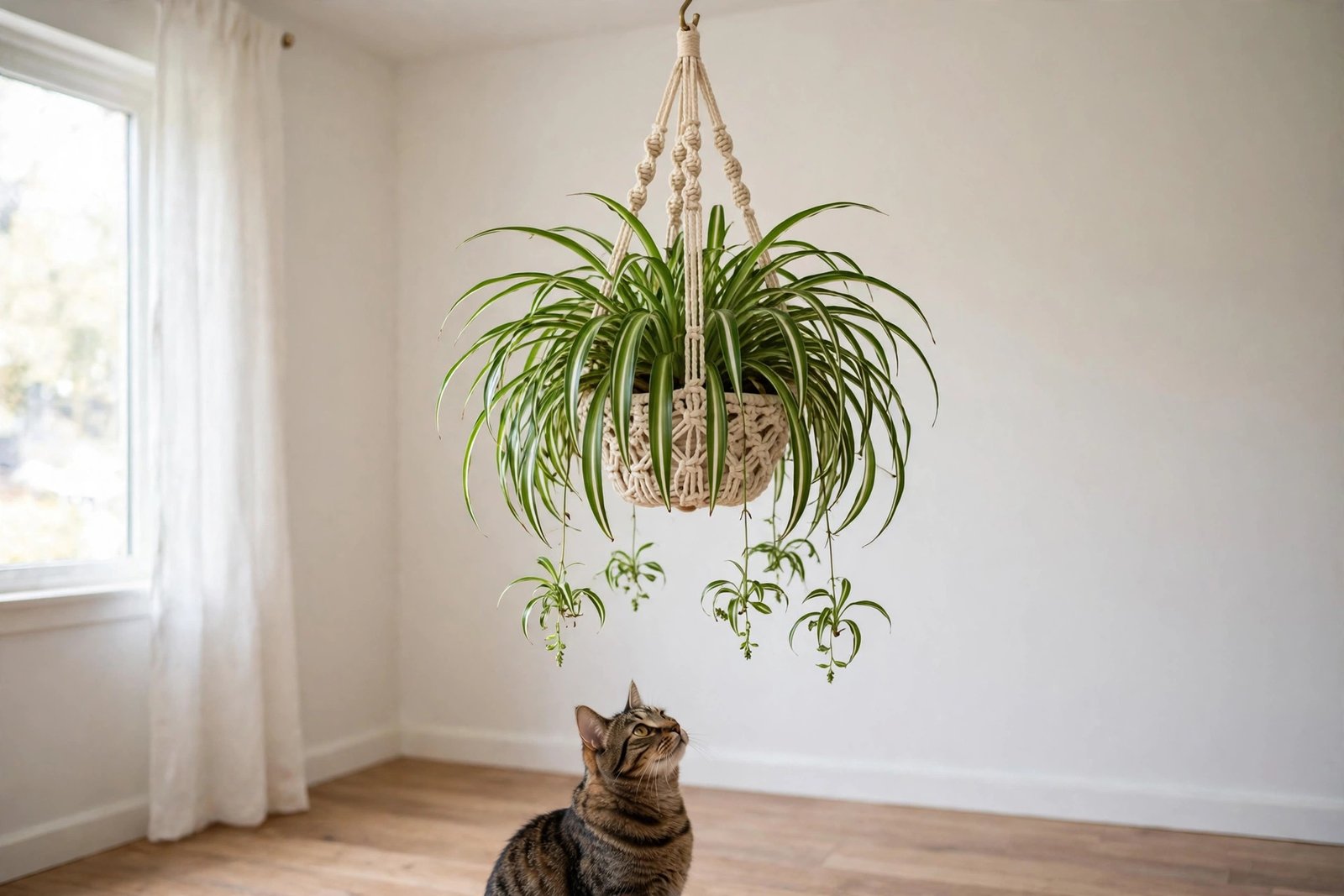
Yes — a hanging planter can work in a house with cats, but only when three things are right at the same time. The plant must be listed as non-toxic to cats, the hook must be fixed into solid timber or a heavy-duty anchor, and the planter must hang over empty floor out of reach from furniture. What makes hanging planters safe for cats is not height alone.
A planter hanging from the ceiling feels out of reach, and that feeling is the trap. Cats jump from sofas, climb curtains, and use a bookshelf as a staircase, while leaves fall and pollen drifts onto the floor where a cat grooms it off its fur. Keeping hanging planters safe for cats takes three decisions: the right plant, the right fixing, and the right spot.
The Short Answer
For hanging planters safe for cats, start with a plant the ASPCA Animal Poison Control Center lists as non-toxic to cats. Fix the hook into a ceiling joist, or use a heavy-duty toggle bolt or ceiling anchor rated for the full wet weight. Hang it over empty floor, never over a sofa, bed, or bookshelf your cat uses as a launch pad.
Trim trailing stems out of reach, and check the hook, cord, and chains every month. If you cannot make hanging planters safe for cats in a spot, or the plant you want is toxic, choose a different plant or a different spot.
What “Safe” Means for a Hanging Planter
A hanging planter has two safety questions, and both must be answered yes. The first question behind hanging planters safe for cats is the plant itself: is it listed as non-toxic to cats by the ASPCA Animal Poison Control Center? The second is the hardware: will it stay up when a cat bats at it?
“Non-toxic” does not mean “safe to chew without limit.” The ASPCA notes that eating any plant material may cause vomiting and stomach upset in cats, even when the plant is listed as non-toxic. It means the plant is not expected to poison your cat. It does not make the leaves food, and it does not cover fertilizer or pesticides.
Check every plant by its botanical name, not just its common name: two plants sold as “palm,” “fern,” or “lily” can have very different safety profiles. If its identity is uncertain, or sources disagree, treat it as unsafe until you can confirm it.
Never Hang Lilies
True lilies (Lilium species) and daylilies (Hemerocallis species) do not belong in a home with a cat, hanging or anywhere else: the ASPCA states they can be lethal, and even small exposures to pollen can cause kidney failure or death. True lilies can never be part of hanging planters safe for cats.
Pollen drifts down from a hanging basket and a cat swallows it while grooming, and leaves, petals, stems, and vase water are dangerous too. Hanging a lily higher does not help. Keep true lilies and daylilies out of the home entirely. Learn the exact types in Are Lilies Toxic to Cats? Types, Exposure Risks, and Urgent Steps.
Hanging Planter Types for a Cat Home
The best hanging planters safe for cats use simple, strong hangers you can inspect at a glance. A complicated hanger hides wear, and wear is what fails. Choose a hanger you can check in seconds each month.
Macramé hangers are the classic choice for hanging planters safe for cats: a woven net of cotton cord that cradles the pot, hung from a single ring. They suit light to medium pots and trailing plants. Check the cords for fraying every few weeks, because cotton weakens with sun and moisture, and choose a closed, knotted bottom so the pot cannot slip through.
A ceiling hook is a metal hook screwed into the ceiling, from which a planter hangs directly. A wall bracket is an arm fixed to the wall; both are strong when fixed properly, and both fail badly when fixed into plasterboard with no anchor.
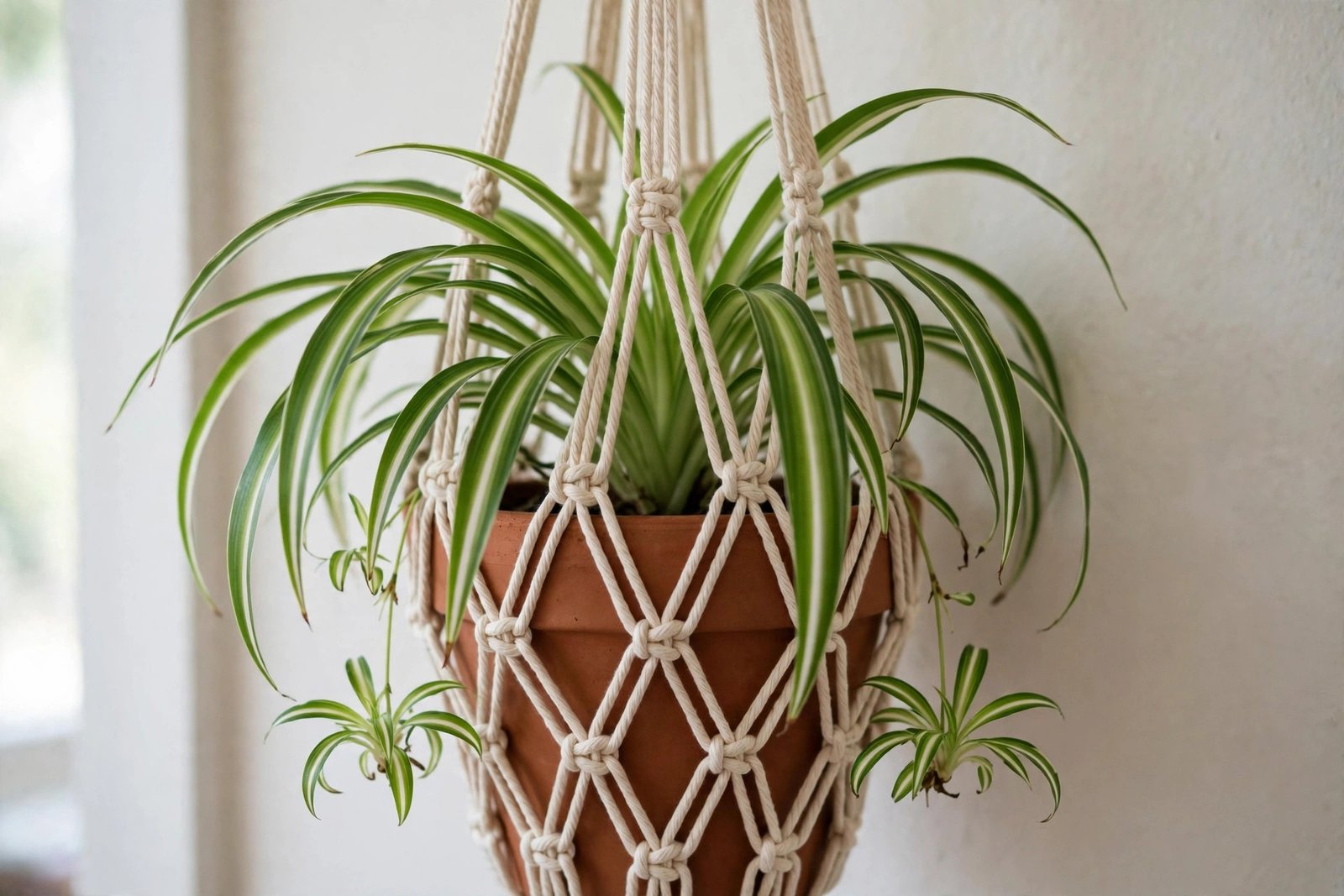
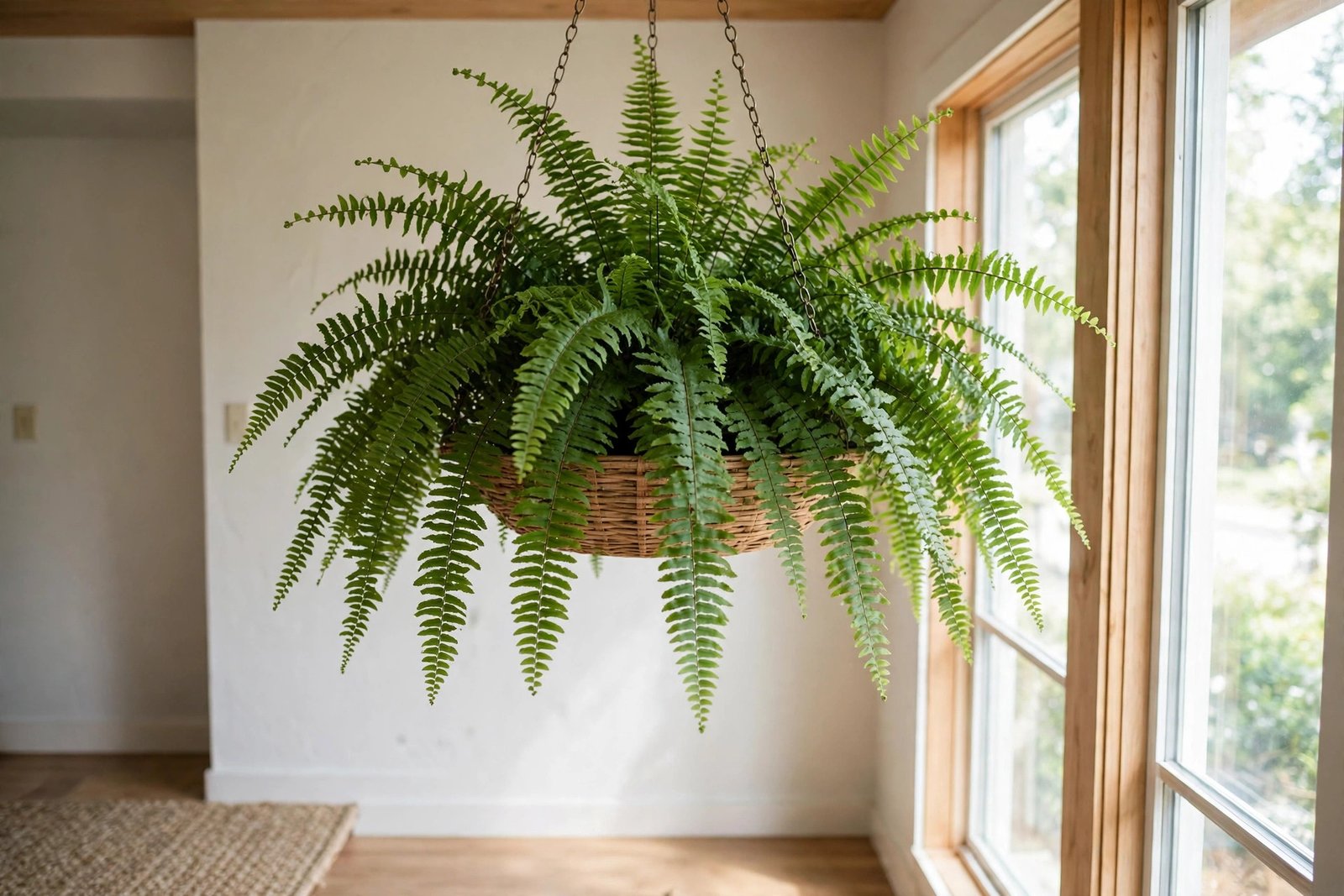
A hanging basket is a wide, shallow container, often with a built-in chain or rope hanger. Baskets suit ferns and trailing plants that spread sideways, and they hold more soil, so they dry out more slowly. The downside is weight: a watered basket is heavy. Baskets can be hanging planters safe for cats if the chains are rated for the full wet weight and every link is checked.
A pulley system lets you lower a planter for watering and pruning, then raise it back up out of reach — the most practical option for high ceilings. Choose a pulley rated for the full wet weight, fix it into a joist, and tie off the rope so it cannot slip. Keep the loose rope short and out of reach, because long cords are a chewing and tangling hazard for cats.
Ceiling Plant Hooks Safety: Installation That Holds
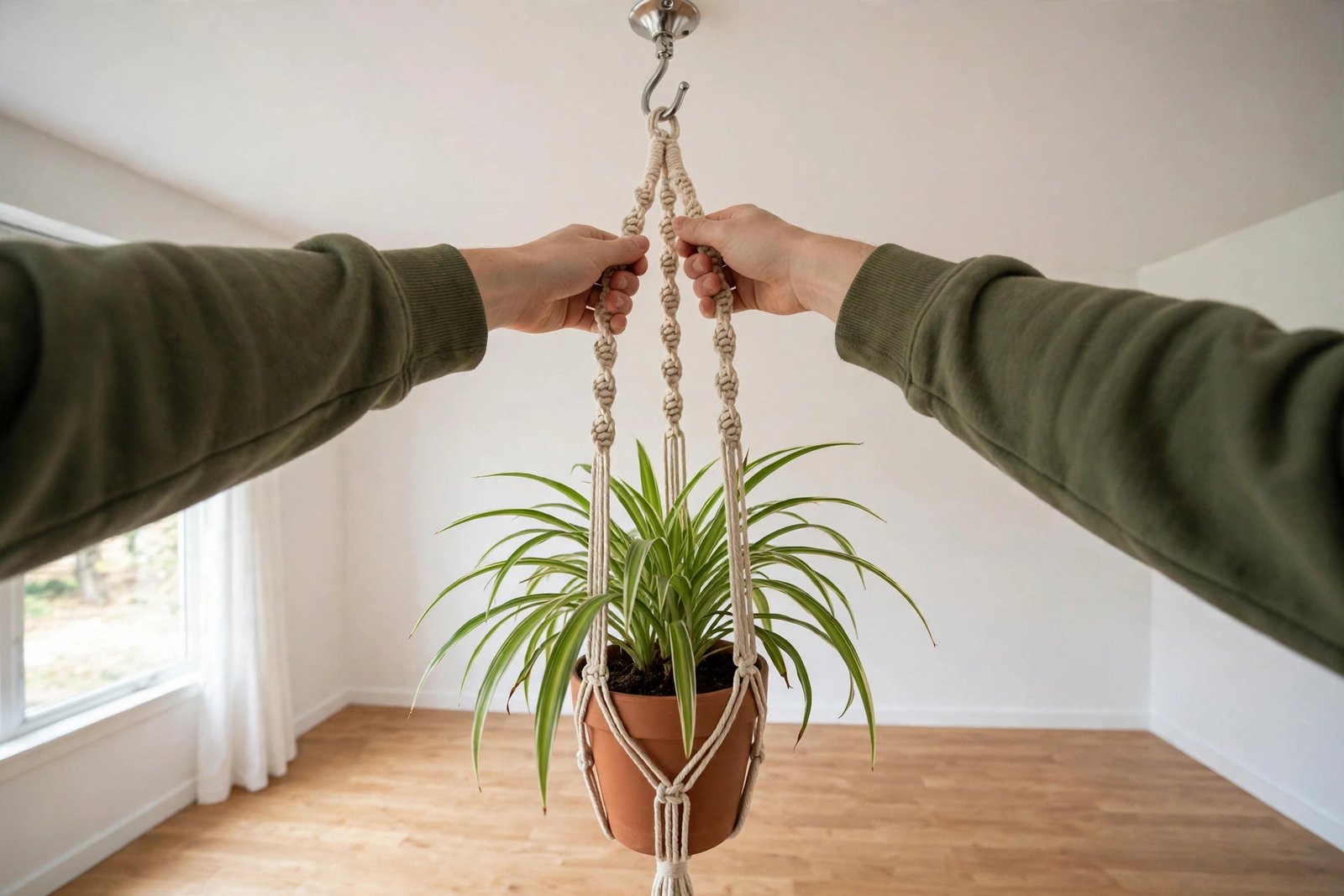
A hanging planter is only as safe as its fixing: a falling planter can injure a cat, break a pot, and scatter soil. Good fixings are what keep hanging planters safe for cats overhead.
Find a joist first — the solid timber behind the plasterboard — using a stud finder before you drill.
If you cannot hit a joist, use a proper toggle bolt or heavy-duty ceiling anchor made for the job, not a light plastic plug. Never hang a planter from a picture-frame or curtain hook, and never use an adhesive hook, which can fail without warning in a warm, humid room.
Check the weight rating before you load the planter: add up the planter, pot, soil, and plant when wet — a watered pot is much heavier than a dry one. As a rough guide, a small hanging planter needs fixings rated for at least 10 kg (22 lb). Use the lower of the hook and anchor ratings as your limit.
Test before you trust it: hang the planter, add the pot, and water it, then pull gently downward and sideways. If the hook moves or the ceiling cracks around it, take it down and refix it. A monthly pull test keeps hanging planters safe for cats over time.
Height and Trailing Stems
Height alone never makes hanging planters safe for cats. Cats jump from nearby furniture, climb curtains, and use a bookshelf as a staircase, so what matters is the distance from the nearest launch pad, not the height from the floor.
Hang planters over empty floor, with no sofa, bed, bookshelf, radiator, or cat tree below or beside them. If the only good light is above a sofa, accept that the planter is within reach and hang only non-toxic plants in it.
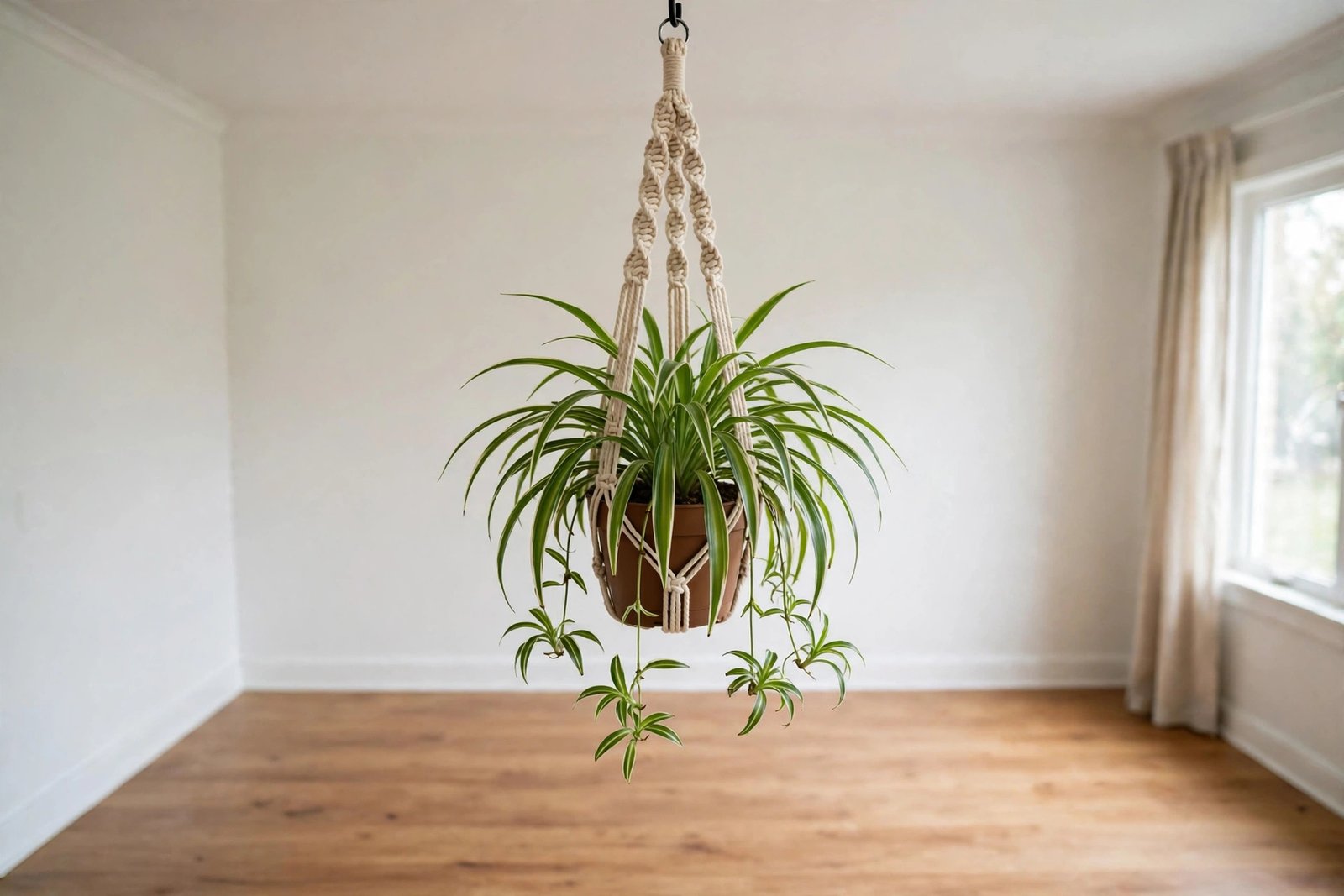
Trailing stems are the part of a hanging plant that cats reach first: a spider plant’s dangling plantlets, a hoya’s long vines, and a Boston fern’s arching fronds all hang down where a cat can bat at them. Trim the longest trails so the lowest leaf ends well above anything a cat can stand on. Short trails are part of what keeps hanging planters safe for cats, even when a cat bats at the planter and makes it swing.
Put cuttings straight into a sealed bag or bin, because a fallen cutting is still something a cat can chew. Keep the hanger short so the swing stays small.
Best Plants for Hanging Planters With Cats
Small and medium trailing plants suit hanging planters best; large, heavy plants belong on the floor or a sturdy stand, not hanging over a room. The plant list is the heart of hanging planters safe for cats, so choose plants the ASPCA lists as non-toxic.
Spider plants (Chlorophytum comosum) are the classic choice for hanging planters safe for cats: ASPCA-listed as non-toxic, with arching striped leaves and dangling plantlets cats love to bat at. They tolerate a range of light and forgive missed waterings. See Are Spider Plants Safe for Cats? Benefits, Risks, and Care Tips.
Boston ferns (Nephrolepis exaltata) give a full, lush look in a hanging basket and are listed as non-toxic, though they need humidity and regular watering. See Are Boston Ferns Safe for Cats? A Complete Plant Guide.
Hoyas (Hoya carnosa), peperomia, calathea, and African violets are also compact, hang well in smaller planters, and are listed as non-toxic. Hoyas trail slowly and flower with age. For more ideas, see our list of 15 Cat-Safe Houseplants for a Greener, Pet-Friendly Home.
Do not hang pothos, monstera, philodendron, snake plants, or aloe vera in a cat home: all are listed as toxic to cats, and hanging does not change that. Pothos, monstera, and the rest can never be hanging planters safe for cats, no matter how high they hang. See Are Pothos Plants Toxic to Cats? Symptoms and Safer Alternatives and Are Monstera Plants Toxic to Cats? Risks and What to Do.
Light and Watering at Height
Light decides where a hanging planter can go: a plant in the wrong light weakens and drops leaves, and falling leaves tempt a cat that bats at anything moving. Hang plants near a bright window, not in a dark corner. East windows give gentle morning sun, and north windows give steady indirect light.
Watering is the hardest part of hanging plants, because the planter is above your head. Water slowly, a little at a time, and let the soil absorb it before you add more. Use a drip tray or saucer and empty it after watering: a drip tray matters for hanging planters safe for cats because standing water is a drinking bowl for a cat, and a full tray makes the planter heavier than its fixing was rated for.
Never leave a ladder out in a room with a cat. Give your cat a perch of its own, too: if you fill the only sunny window with hanging plants, your cat will push through them to reach the sun. For more ideas, see How to Create a Cat-Friendly Indoor Plant Space and How to Keep Cats Out of Houseplants Without Harming Them.
What NOT to Do With Hanging Planters
The fastest way to ruin hanging planters safe for cats is to hang a toxic plant high and hope the height protects your cat. Cats climb, leaves fall, and pollen drifts down, so height is not a safety plan.
Do not use a weak hook, a picture hook, or an adhesive hook for a planter, and do not hang one over a bed, a sofa, or a cat’s food and water bowls.
Do not use essential oils or scented sprays to keep a cat away from a hanging plant: many essential oils are not safe for cats, and they have no place near hanging planters safe for cats. Do not punish a cat for batting at a hanging plant — move the plant or remove the launch pad instead.
What to Do If Your Cat Chews a Hanging Plant
Even the best hanging planters safe for cats cannot stop a determined cat from chewing a leaf. Stay calm and move your cat away gently, removing plant material from its mouth only if you can do so safely. Note the plant’s name, how much was eaten, and when.
Then call your veterinarian or an animal poison control service promptly. In the United States, the ASPCA Animal Poison Control Center is at (888) 426-4435, and Pet Poison Helpline is at (855) 764-7661, where a consultation fee may apply. Do not wait for symptoms, try home remedies, make your cat vomit, or give milk, oil, or other substances unless a veterinarian tells you to.
If the plant was a true lily or daylily, treat it as an emergency and contact a veterinarian immediately. For a fuller guide, see What to Do If Your Cat Eats a Toxic Plant: A Safety Guide.
Frequently Asked Questions
Are hanging planters safe for cats?
Yes — hanging planters safe for cats are possible with the right setup: a non-toxic plant, a hook fixed into a joist or heavy-duty anchor, and a spot over empty floor.
How high should I hang a plant to keep it away from my cat?
No height guarantees it. What matters is what is below and beside the planter, so move the launch pads first and worry about height second.
Can I hang a pothos plant if I have a cat?
No. Pothos (Epipremnum aureum) is listed as toxic to cats, and hanging does not make it safe. Choose a spider plant or a Boston fern instead.
What is the safest way to hang a heavy plant?
Fix a ceiling hook into a joist, or use a heavy-duty toggle bolt anchor rated for more than the full wet weight of the planter, pot, soil, and plant. Test it by pulling gently downward and sideways after watering.
How do I water a hanging plant safely?
Water slowly with a long-spout watering can, use a drip tray and empty it after watering, or lower the planter with a pulley system.
Which plants are best for hanging planters with cats?
Spider plants, Boston ferns, hoyas, peperomias, calatheas, and African violets are the usual picks for hanging planters safe for cats. All are ASPCA-listed as non-toxic to cats, but non-toxic does not mean safe to chew without limit.
Conclusion
Hanging planters safe for cats are built, not bought. Hang only plants listed as non-toxic to cats, fix the hook into a joist or a proper anchor rated for the full wet weight, hang the planter over empty floor, and trim trailing stems out of reach.
Keep true lilies and daylilies out of the home entirely, because hanging never makes a toxic plant safe. One planter, one non-toxic plant, and one solid hook are all it takes to start hanging planters safe for cats. That slow start is the practical way to keep hanging planters safe for cats in a real home — watch how your cat reacts for a week or two before adding a second planter.
Disclaimer: This article is for general information only and does not replace advice from a veterinarian. Plant safety listings can change, and individual cats can react differently. If your cat has eaten a plant and seems unwell, contact your veterinarian or an animal poison control service promptly.
Sources and References
- ASPCA Animal Poison Control Center. Toxic and Non-Toxic Plants list. https://www.aspca.org/pet-care/animal-poison-control/toxic-and-non-toxic-plants
- ASPCA Animal Poison Control Center. Toxic and Non-Toxic Plant List — Cats. https://www.aspca.org/pet-care/animal-poison-control/cats-plant-list
- ASPCA. Do You Know Which Flowers and Plants Are Toxic to Pets? Our Experts Explain! https://www.aspca.org/news/do-you-know-which-flowers-and-plants-are-toxic-pets-our-experts-explain
- ASPCA. Which Lilies Are Toxic to Pets? https://www.aspca.org/news/which-lilies-are-toxic-pets
- Cornell University College of Veterinary Medicine, Cornell Feline Health Center. Feline Behavior Problems: Destructive Behavior (houseplant chewing). https://www.vet.cornell.edu/departments-centers-and-institutes/cornell-feline-health-center/health-information/feline-health-topics/feline-behavior-problems-destructive-behavior
- Cornell University College of Veterinary Medicine, Cornell Feline Health Center. Common Cat Hazards. https://www.vet.cornell.edu/departments-centers-and-institutes/cornell-feline-health-center/health-information/feline-health-topics/common-cat-hazards
4 thoughts on “Are Hanging Planters Safe in Homes With Cats?”