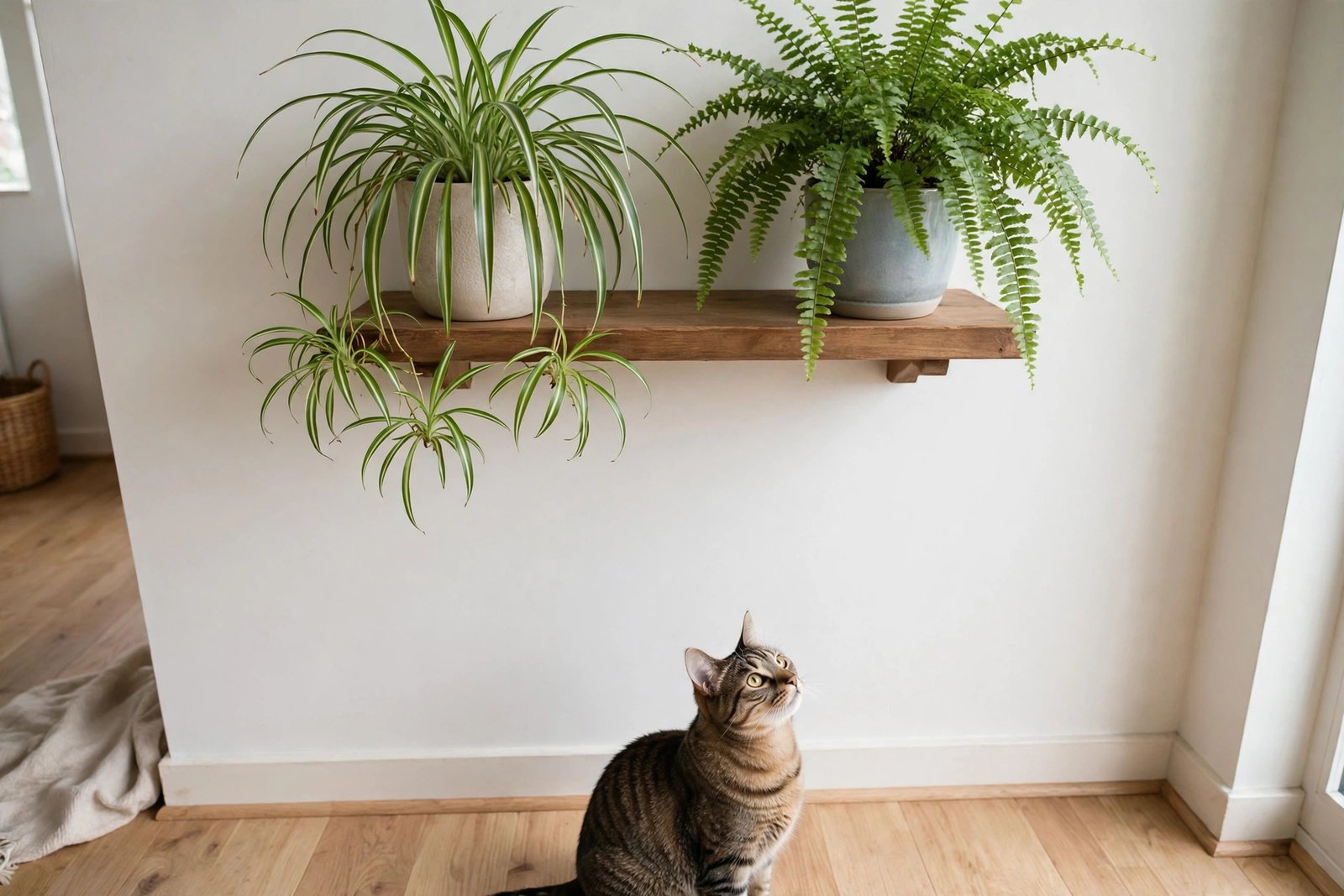
You do not have to choose between your cat and your houseplant collection. You do need a plan that protects the plant and keeps the cat safe. The best way to protect houseplants from cats is to use layers, not a single trick.
A plant out of easy reach, in a heavy pot, with covered soil, is far more likely to survive than one that depends on a single spray or shelf. This guide walks through the ways in the title, one by one, so you can protect houseplants from cats where both can thrive.
Every step here is safe for cats. There is no punishment, no essential oil, no chili, and no chemical spray. Each way below is a layer, and together they protect houseplants from cats without changing how your home looks. If a step feels uncertain, check the botanical name first.
Why Cats Damage Houseplants
Cats chew leaves because leaves move, feel interesting, and smell like the outdoors. Indoor cats with little access to grass may chew houseplants in normal play. Cornell University College of Veterinary Medicine notes this in its guidance on destructive behavior. Understanding the motive is the first step when you want to protect houseplants from cats.
Cats also bat at trailing stems, dig in soft potting soil, and knock over light pots when they jump up to investigate. A dangling plantlet is a toy, and loose, damp soil is a digging box. A plant that survives usually has several layers of defence — the real secret of how to protect houseplants from cats in a busy home.
Start With Safety First
Before you protect a plant, make sure your cat can safely be around it. A barrier can reduce chewing, but none is perfect. A determined cat can still reach a leaf or chew a fallen stem. That is why safety comes before decoration when you protect houseplants from cats: the plant list matters more than the shelf.
Check every plant by its botanical name, not only its shop label. The ASPCA Animal Poison Control Center keeps a searchable toxic and non-toxic plant list. Check it before you bring a plant home, and again before you move a plant into a room your cat uses. A quick check is the least work in the whole plan to protect houseplants from cats, and it prevents the worst mistakes.
Non-toxic does not mean safe to chew without limit. A plant listed as non-toxic is not expected to cause poisoning, but any plant material can cause mild stomach upset if a cat eats a lot of it.
A spider plant (Chlorophytum comosum) and a Boston fern (Nephrolepis exaltata) are listed by the ASPCA as non-toxic to cats, yet they can still be chewed to pieces. Keep a pothos (Epipremnum aureum) out of reach. See Are Pothos Plants Toxic to Cats? Symptoms and Safer Alternatives.
True lilies (Lilium species) and daylilies (Hemerocallis species) can be lethal to cats. The ASPCA notes that even small exposures to pollen can cause kidney failure or death. Do not try to protect a true lily with a barrier.
Keep true lilies and daylilies out of homes with cats. Learn the exact types in Are Lilies Toxic to Cats? Types, Exposure Risks, and Urgent Steps. For other plants to avoid, see Common Houseplants That Are Toxic to Cats: What to Avoid.
1. Place Plants Out of Easy Reach
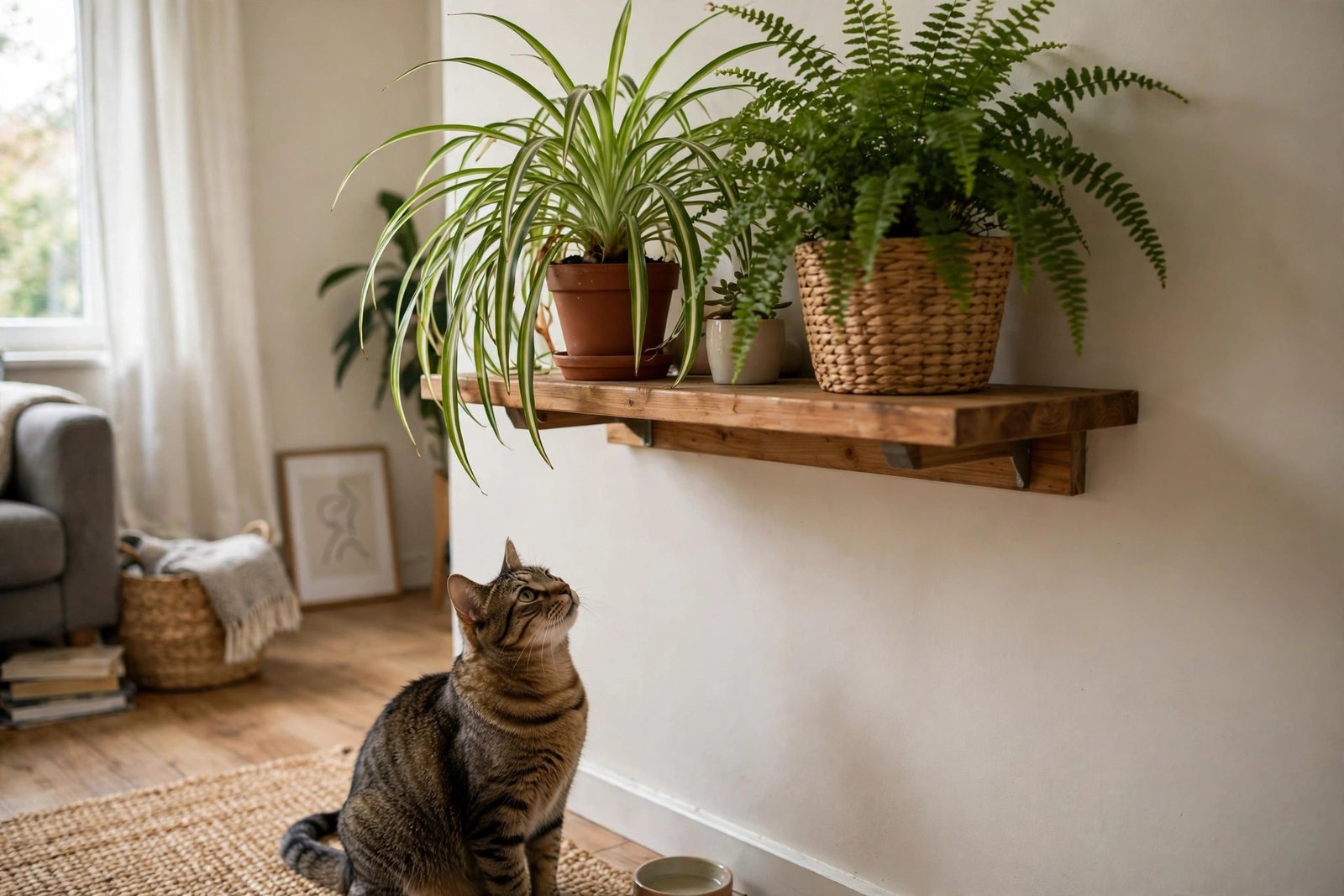
High does not always mean safe. Cats climb and use nearby furniture as a launch pad. Look at the room from your cat’s point of view: can it jump to the plant from the sofa, bed, or bookshelf? Placement is the cheapest way to protect houseplants from cats, and the one people get wrong most often.
A good spot has no easy landing place beside the plant and enough light. A plant moved into a dark corner will weaken and drop leaves. Group plants together when you can: a tight group is harder to walk through. See How to Create a Cat-Friendly Indoor Plant Space.
Check the route, not just the height. A shelf above a radiator cover or a bed is still within reach if your cat can jump from the furniture below. Move the launch pad, not just the plant. Trim trailing stems so they do not dangle down to a surface your cat can stand on.
2. Use Heavy, Stable Pots
A light pot is an invitation to tip. Choose a pot wide at the base and heavy enough that your cat cannot push it over with a paw. Ceramic, stone, and concrete pots are usually more stable than thin plastic. If you like a light outer pot, put a heavier inner pot inside it, and make sure it still drains.
Heavy pots are boring, cheap, and they work — three good reasons they belong in a plan to protect houseplants from cats.
Check the shelf or stand, too. A narrow stand or a shelf that is not fixed to the wall will tip more easily. Use a wide, flat surface, with the heaviest pots at the bottom of a tall stand. For hanging planters, use a ceiling hook rated for the plant, pot, and wet soil.
A stable pot is a quiet part of how you protect houseplants from cats day after day.
3. Use Safe Barriers
A barrier is a physical cover that lets light and air in while keeping paws and teeth away. A glass cloche or open terrarium can work for small plants, but it must have ventilation or the plant can overheat. A wire cage suits larger plants. When you protect houseplants from cats with a cover, airflow is part of the design, not an afterthought.

If the barrier is easy to lift, you will keep using it, and it will protect houseplants from cats for months.
4. Protect the Soil
Cover the soil with large, smooth stones too big for a cat to move or swallow. Wash them first, and water slowly so it can seep through the gaps. A circle of fine mesh cut to fit the pot also works: cut a slit for the stem and tuck the edges under the rim. Soil covers are a simple way to protect houseplants from cats that dig, and they slow how fast the soil dries out.
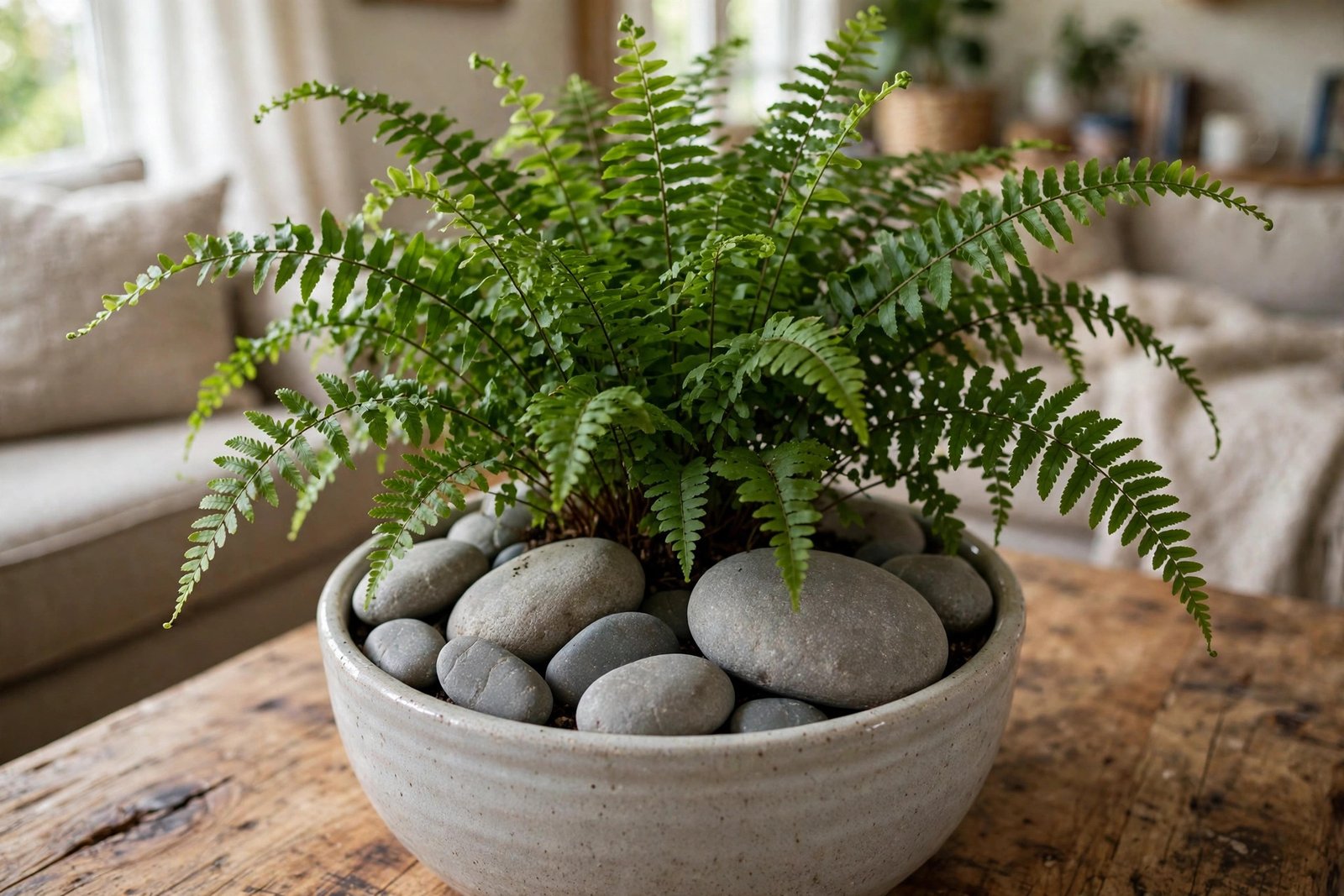
Keep the soil level a little below the rim, because a pot filled to the top is easier to dig in and spill. If a cat has used a pot as a litter box, replace the top layer of soil and move the plant. Skip small bark chips and cocoa shell mulch.
Check the litter box, too. A cat that digs in plants may be telling you the box is dirty or hard to reach. A clean litter box is part of how you protect houseplants from cats, because a cat with a good box has no reason to dig in a pot.
5. Give Your Cat a Better Option
Cat grass, usually sold as wheatgrass, oat grass, or barley grass, is a common option for cats to nibble. Buy it from a source that labels the plant clearly, check the botanical name against the ASPCA list, and ask your veterinarian if unsure. A pot of fresh grass is one of the kindest ways to protect houseplants from cats: the cat gets something safe to chew, and the houseplants stop being the only green thing in reach.
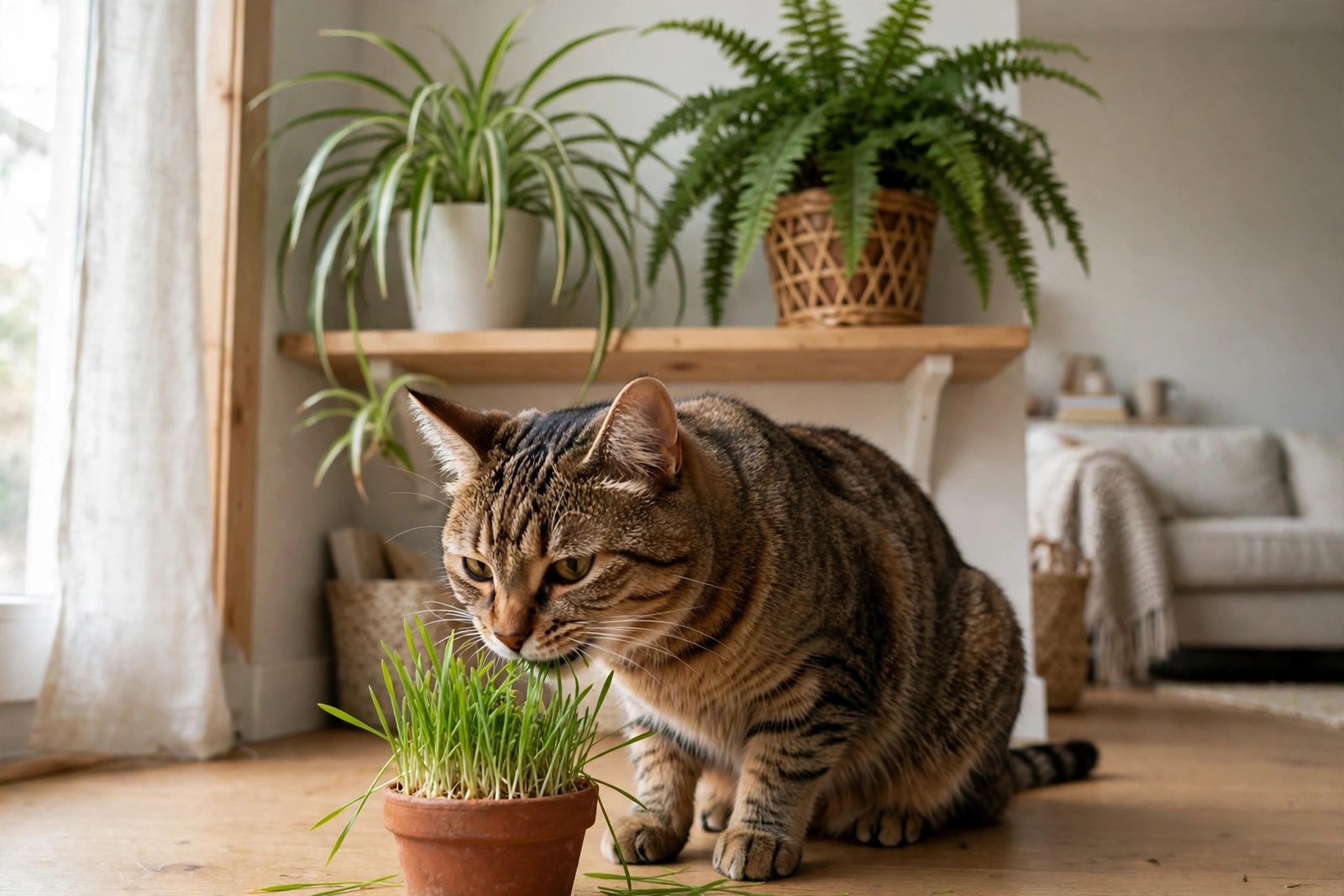
Play matters, too. A short session with a wand toy or puzzle feeder can use up energy that might go into batting a plant. Give your cat a window perch or a tall scratching post to climb. A cat that can climb in its own space is less likely to climb your plant shelf.
A short play session is a small habit, and small habits are what protect houseplants from cats over time.
6. Help Plants Recover After Damage
A chewed plant is not always a lost plant. Prune damaged leaves with sharp, clean scissors, cutting just above a healthy leaf joint. Do not tear leaves off, because tearing can damage the stem.
If the pot is broken, repot into a clean pot the same size. Do not move a stressed plant into a much larger pot, because extra soil can stay wet and rot roots. Clean up fallen leaves right away. Recovery is part of the plan when you protect houseplants from cats: damage happens, and a calm repair keeps the plant alive.
Give a damaged plant steady light and careful watering, with no fertilizer until new growth appears. A calm repair after damage is part of the routine that will protect houseplants from cats through the year.
7. What Not to Do
Do not punish a cat for chewing a plant. Spraying, shouting, or chasing may stop the behavior for a moment, but it does not teach the cat to leave the plant alone. Cornell notes that the only way to guarantee protection for both is to block access to the plants. Punishment does not protect houseplants from cats; it only teaches the cat to chew when you are not watching.
Do not use essential oils, scented sprays, or homemade mixtures unless a veterinarian has advised it. Many essential oils are not safe for cats. Do not use chili, cayenne, hot pepper, mothballs, or chemical pest products.
8. If Your Cat Chews a Plant
Stay calm and remove your cat from the plant gently. Do not chase your cat or pull plant material out of its mouth. Pick up any loose leaves or stems.
Knowing how to protect houseplants from cats also means knowing what to do when the plan fails.
Identify the plant: take a photo of the plant, pot, and label, and note how much was eaten and when. Contact your veterinarian or an animal poison control service promptly.
In the United States, the ASPCA Animal Poison Control Center is at (888) 426-4435, and Pet Poison Helpline is at (855) 764-7661. A consultation fee may apply. Do not wait for symptoms, especially if the plant could be a true lily or daylily.
Do not try home remedies, and do not try to make your cat vomit unless a veterinarian or poison control professional tells you to. See What to Do If Your Cat Eats a Toxic Plant: A Safety Guide and How to Keep Cats Out of Houseplants Without Harming Them.
A Simple One-Week Plan
On day one, list every plant your cat can reach, check each botanical name against the ASPCA list, and move true lilies and daylilies out. On day two, watch which plants are chewed, batted, dug, or knocked over.
On days three and four, fix the worst plant first: move it, repot it into a heavier pot, or cover it. On day five, add cat grass, a scratching post, and a short play session. On day six, prune damaged leaves and check shelves and hooks.
On day seven, review what still needs a higher place, a cover, or a new spot. A week is enough to protect houseplants from cats in most homes, because the fixes are small.
When you bring a new plant home, check its botanical name and its pot before it goes on the shelf. By the end of the week you will know which layers work in your home, and that is the point of any plan to protect houseplants from cats.
Frequently Asked Questions
How can I keep my houseplants safe from my cat without harming my cat?
Use physical protection and good placement: move plants out of reach, use heavy pots, cover the soil, and use a ventilated cloche or cage. Add cat grass, play, and a scratching post. Do not use punishment, essential oils, chili, or chemical sprays unless a veterinarian has advised it. These are the same steps that protect houseplants from cats in this guide, and none of them harms the cat.
What is the best barrier for houseplants with cats?
There is no single best barrier. A ventilated cloche suits a small plant, a wire cage suits a larger plant, and stones or mesh suit digging. The best barrier fits the plant, lets in light and air, and lifts off easily for watering.
How do I stop my cat from digging in plant soil?
Cover the soil with large stones or fine mesh, and keep it below the rim. Check that the litter box is clean and easy to reach. If a cat has used a pot as a litter box, replace the top soil and move the plant. Digging is one of the easier problems to solve, and the fix often shows people how to protect houseplants from cats with a simple change.
My cat chewed a plant. What should I do first?
Remove your cat gently, pick up loose leaves, and identify the plant. Note how much was eaten and when. Contact your veterinarian or poison control promptly, and do not wait for symptoms. Do not induce vomiting or give home remedies unless a veterinarian or poison control professional tells you to.
Are spider plants and Boston ferns safe to leave where my cat can reach them?
The ASPCA lists spider plant (Chlorophytum comosum) and Boston fern (Nephrolepis exaltata) as non-toxic to cats, but non-toxic does not mean safe to chew without limit. A cat that eats a lot may still have mild stomach upset.
See Are Spider Plants Safe for Cats? Benefits, Risks, and Care Tips and Are Boston Ferns Safe for Cats? A Complete Plant Guide.
Conclusion
To protect houseplants from cats, protect the plant in layers. Start with safety: check the botanical name, remove true lilies and daylilies, and keep toxic plants out. Then fix the setup: hard-to-reach placement, heavy pots, covered soil, and a safe barrier where needed.
Pick one plant this week. Check its name, fix its pot and placement, and add one alternative for your cat. The best plans to protect houseplants from cats are the ones you actually finish, so start with the plant your cat bothers most.
Disclaimer: This article is for general information only and does not replace advice from a veterinarian. Plant safety can change as new information becomes available. If your cat has eaten a plant or shows signs of illness, contact your veterinarian or poison control promptly.
Sources and References
- ASPCA Animal Poison Control Center. Toxic and Non-Toxic Plant List — Cats. https://www.aspca.org/pet-care/animal-poison-control/cats-plant-list
- ASPCA. Do You Know Which Flowers and Plants Are Toxic to Pets? Our Experts Explain! https://www.aspca.org/news/do-you-know-which-flowers-and-plants-are-toxic-pets-our-experts-explain
- Cornell University College of Veterinary Medicine, Cornell Feline Health Center. Common Cat Hazards. https://www.vet.cornell.edu/departments-centers-and-institutes/cornell-feline-health-center/health-information/feline-health-topics/common-cat-hazards
- Cornell University College of Veterinary Medicine, Cornell Feline Health Center. Feline Behavior Problems: Destructive Behavior. https://www.vet.cornell.edu/departments-centers-and-institutes/cornell-feline-health-center/health-information/feline-health-topics/feline-behavior-problems-destructive-behavior
- Cornell University College of Veterinary Medicine, Cornell Feline Health Center. Easter Peril: Look Out for Lilies and Other Items. https://vet.cornell.edu/departments-centers-and-institutes/cornell-feline-health-center/health-information/cat-health-news/easter-peril-look-out-lilies-and-other-items
- Cornell University College of Veterinary Medicine, Cornell Feline Health Center. Poisons. https://www.vet.cornell.edu/departments-centers-and-institutes/cornell-feline-health-center/health-information/feline-health-topics/poisons
4 thoughts on “Best Ways to Protect Houseplants from Curious Cats”