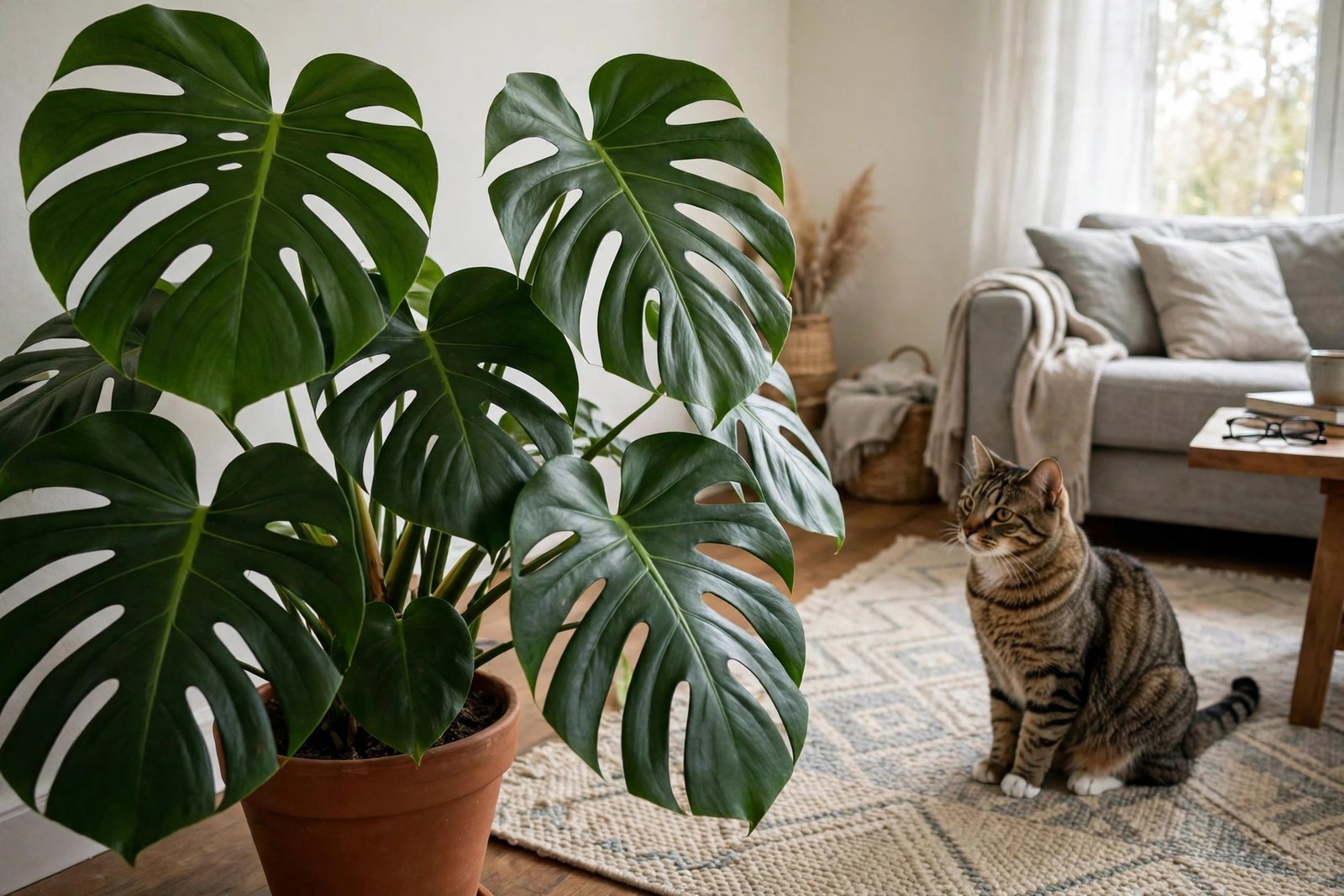
If you are wondering are Monstera plants toxic to cats, the short answer is yes. Monstera deliciosa, also sold as the Swiss cheese plant, is listed by the ASPCA Animal Poison Control Center as toxic to cats and dogs. Its leaves, stems, and sap hold tiny, needle-shaped crystals. When a cat chews, those crystals press into the mouth, tongue, and lips and cause immediate burning, drooling, and pain.
Many cats take one bite and recover, though others vomit or have trouble swallowing. This guide explains the signs, what to do after a bite, and safer plants with the same bold look.
The Short Answer
If your cat has just bitten a Monstera leaf, do not wait to see whether it gets worse. Move the plant out of reach, keep your cat calm, and call your veterinarian or poison control promptly. In the United States, call the ASPCA Animal Poison Control Center at (888) 426-4435 or Pet Poison Helpline at (855) 764-7661. A consultation fee may apply.
The question are Monstera plants toxic to cats comes up most often after a bite has already happened. The ASPCA entry for Monstera deliciosa names the toxic principle as insoluble calcium oxalates, with signs of oral irritation, intense burning of the mouth, tongue, and lips, excessive drooling, vomiting, and difficulty swallowing.
Unlike true lilies, which can cause sudden kidney failure in cats, the risk here is fast, painful, local irritation — the ASPCA entry does not mention kidney failure. Veterinary sources agree: are Monstera plants toxic to cats is a yes — the danger is mouth burning and swelling, not organ damage. More risky houseplants are in our guide to common houseplants that are toxic to cats.
What Is a Monstera?
Monstera is a genus of tropical climbers in the arum family, Araceae, and the best-known houseplant is Monstera deliciosa. A young plant has solid, heart-shaped leaves. As it matures in bright, indirect light, the leaves grow large and leathery and develop deep splits and holes, called fenestrations — the Swiss cheese look.
That is part of why are Monstera plants toxic to cats matters: the plant is usually kept at cat height, with broad leaves that invite a curious bite.

To identify Monstera deliciosa, look for large, glossy, dark green leaves that start heart-shaped and develop splits and holes as they mature. The leaves are thick and leathery, and it climbs with aerial roots. If the tag says only “Swiss cheese plant,” do not assume you know the species — asking are Monstera plants toxic to cats is only useful once you know which species you own.
Which Monstera Species Are Toxic?
When people ask are Monstera plants toxic to cats, the ASPCA entry for Monstera deliciosa is the first place to check: it lists the species as toxic to cats and dogs. Other Monstera species have no separate ASPCA entry, and that gap can mislead: “Not listed” never means safe, so treat every Monstera as toxic to cats. University extension sources list the same crystals for the close relative Monstera adansonii.
Monstera deliciosa is the big Swiss cheese plant, with thick leaves that only split as the plant matures. Monstera adansonii, sold as Swiss cheese vine or monkey mask, is smaller, with thinner leaves that have oval holes even when young. Both are called “Swiss cheese plant” in shops, and both contain calcium oxalate crystals, so the same question — are Monstera plants toxic to cats — gets a yes for Monstera adansonii too. Variegated forms are still Monstera deliciosa.
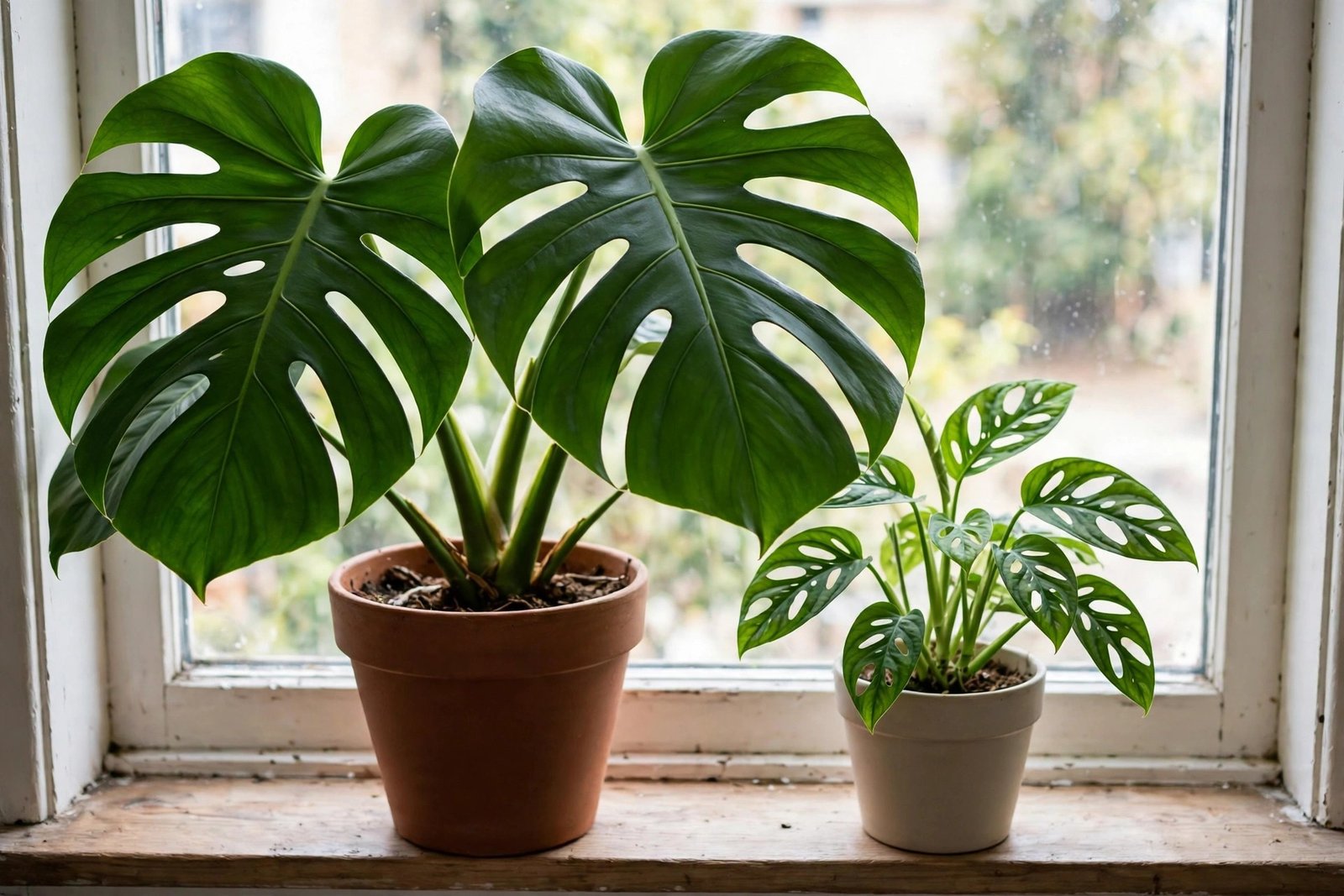
Several look-alikes can cause the same mouth irritation. Philodendrons are also listed as toxic to cats for the same reason. Pothos (Epipremnum aureum) is another calcium oxalate plant — see our guide to are pothos plants toxic to cats.
Peace lily (Spathiphyllum spp.) is not a true lily but still contains insoluble calcium oxalates, and Rhaphidophora tetrasperma, sold as “mini monstera,” is also treated as toxic to cats. If you are not sure which one you own, treat it as toxic and check the botanical name on the label.
Why Monstera Is Toxic
Monstera does not poison a cat the way a drug does. The injury is physical and starts the moment the plant tissue is crushed.
The leaves, stems, and sap hold bundles of needle-shaped crystals called raphides, made of insoluble calcium oxalate. The crystals do not dissolve in the mouth or enter the bloodstream. Instead, chewing fires the tiny needles into the soft lining of the mouth, tongue, and lips.
That is why the pain is immediate. One bite can make a cat paw at its face, shake its head, and drool. That immediate pain is why are Monstera plants toxic to cats has a clear answer: yes, the plant is toxic. Pet Poison Helpline describes the same mechanism for other insoluble oxalate plants.
In some cases, swelling can make breathing or swallowing difficult. Every part of the plant carries the crystals, so there is no nibble-safe part — are Monstera plants toxic to cats is a yes for leaves, stems, and sap alike.
Symptoms to Watch For
The ASPCA lists these clinical signs for Monstera deliciosa: oral irritation, intense burning of the mouth, tongue, and lips, excessive drooling, vomiting, and difficulty swallowing. If you searched are Monstera plants toxic to cats because your cat just chewed a leaf, watch for these signs first.
Early signs, often within minutes, include pawing at the mouth, head shaking, heavy drooling, and refusing food and water.
Later signs include vomiting, gagging, swelling of the lips or tongue, a hoarse meow, and loss of appetite. Most cats that chew a small amount are uncomfortable for a few hours and then improve. Still call a professional first.
Seek emergency veterinary care if you see difficulty breathing, difficulty swallowing, swelling of the tongue, lips, or throat that is getting worse, repeated vomiting, or collapse or extreme weakness. Swelling at the back of the throat turns a painful bite into an emergency — that is what are Monstera plants toxic to cats warnings are really about, and why are Monstera plants toxic to cats is a question to settle before you buy the plant. Do not wait it out.
What to Do If Your Cat Chews Monstera
Once you know are Monstera plants toxic to cats has a yes answer, the next question is what to do. First, remove the plant to prevent more chewing. Pick up the plant and any fallen leaves or trimmed stems, and put them somewhere your cat cannot reach. Check your cat’s mouth only if you can do so safely — a cat in mouth pain may bite.
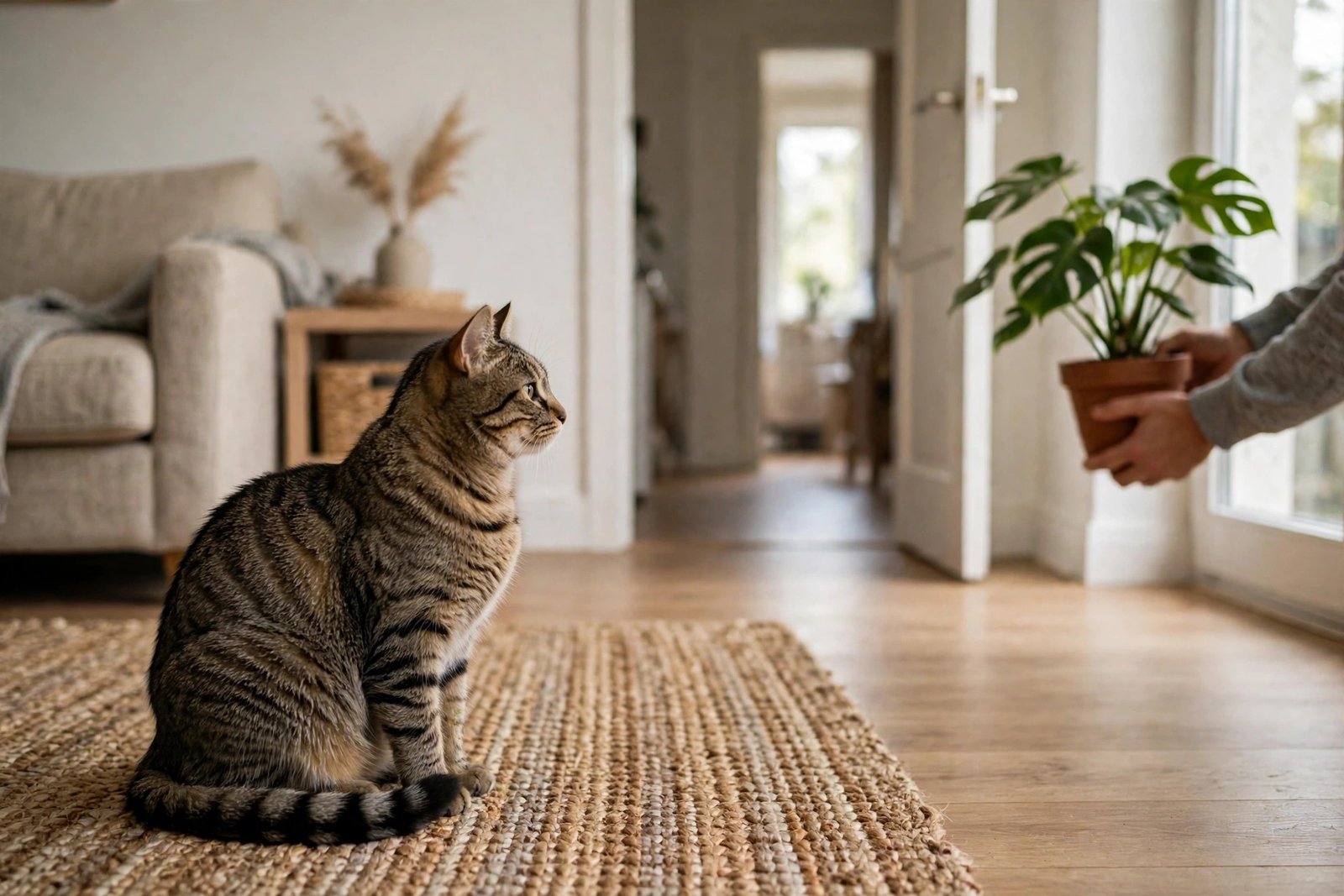
Second, call your veterinarian or poison control promptly, even if your cat seems normal, because signs can develop after the first bite. Be ready to share the plant name, what your cat chewed, how much and when, and your cat’s age, weight, health, and signs. For a fuller guide, see what to do if your cat eats a toxic plant.
Third, watch your cat closely. If a professional advises monitoring at home, watch for at least the next few hours. Note when the drooling starts and stops, whether your cat drinks water or vomits, and whether its breathing or swallowing changes.
Keep the cat indoors with fresh water. If signs return or your cat becomes quiet, hides, or refuses water, call your veterinarian again.
What NOT to Do
A quick search for are Monstera plants toxic to cats will turn up home-remedy advice. Ignore it. Do not induce vomiting.
Never try to make your cat vomit unless a veterinarian specifically tells you to. Do not give home remedies such as milk, oil, food, or activated charcoal. None of these treat calcium oxalate irritation, and some can cause more harm.
Do not wait for symptoms, and do not rinse the mouth forcefully or squirt water into your cat’s mouth, because that can cause choking. If a professional advises offering water, offer it in a bowl and let the cat drink on its own. Finally, do not assume a small bite is always safe — the ASPCA does not publish a safe bite size. When in doubt, make the call.
Can You Keep a Monstera With a Cat?
It depends on your cat, your home, and how much risk you will manage every day. So are Monstera plants toxic to cats the only question, or does placement change the answer? Placement does not change the toxicity — it only changes how likely a bite is.
A high shelf does not make a Monstera safe: cats climb, aerial roots dangle, and a fallen leaf can land on the floor.
If your cat has ever chewed a houseplant, can reach the plant from nearby furniture, or can enter the room when you are not home, the safest choice is to rehome the Monstera. If your cat has never shown interest in plants and the plant is in a room you can keep shut, some owners choose to keep it. That is a personal decision, not a safety guarantee.
Our guide to how to keep cats out of houseplants without harming them covers barriers and placement.
If you do keep one, use a closed room where possible, check below it daily for fallen leaves, and wear gloves when you prune — Monstera sap can irritate human skin. Even then, are Monstera plants toxic to cats remains a yes — you are managing risk, not removing it.
Safer Alternatives With a Large-Leaf Look
You do not have to give up a bold, tropical look. If are Monstera plants toxic to cats has put you off the plant, the alternatives below — all listed by the ASPCA as non-toxic to cats — give you the same full, leafy feel.
“Non-toxic” means the ASPCA knows of no poisoning from the plant. It does not mean the plant is food — eating any plant material may cause vomiting and stomach upset, so “non-toxic” is not the same as “safe to chew or eat.” Check the botanical name on the label.
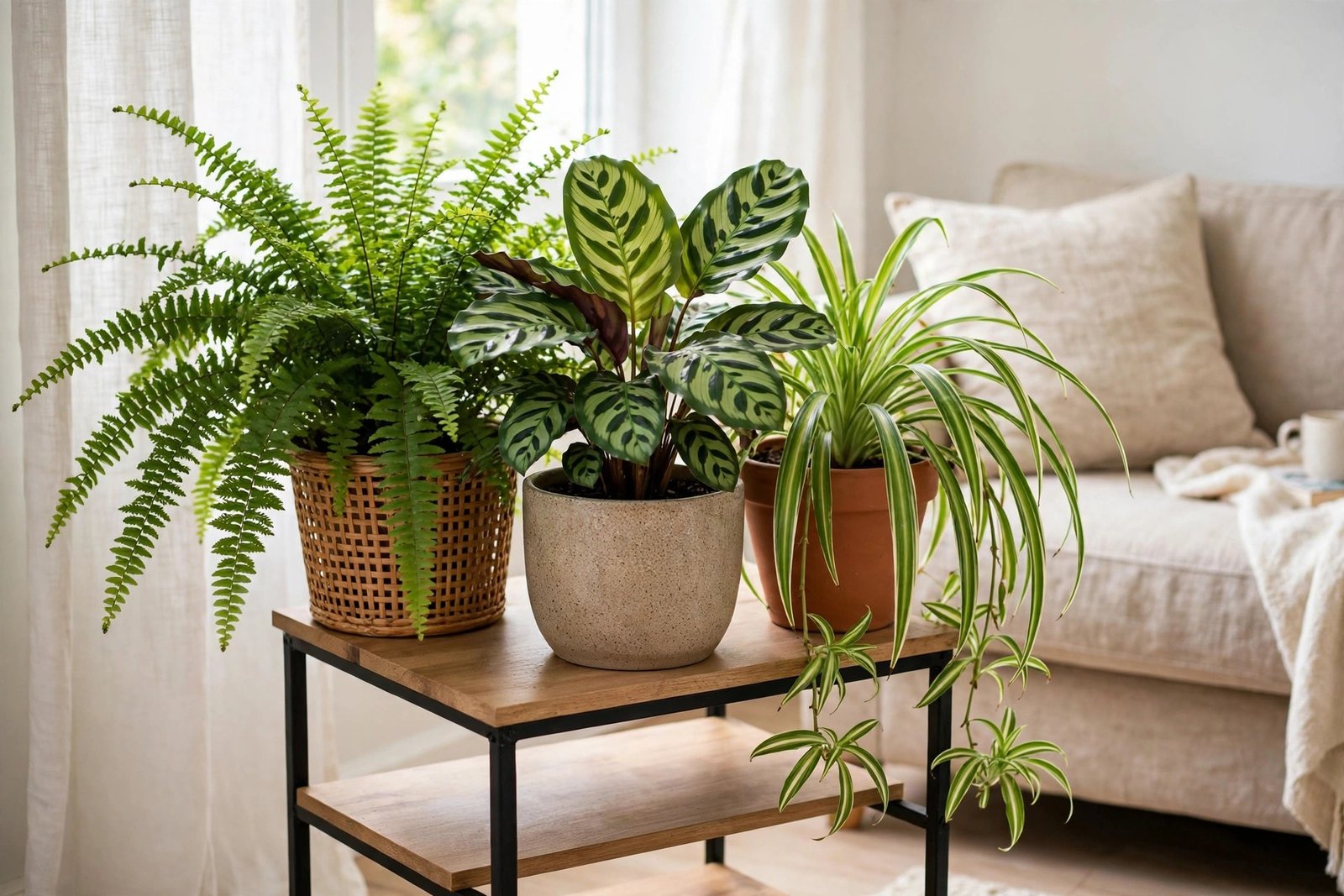
Boston fern (Nephrolepis exaltata) gives you full, arching fronds and a lush, tropical feel — see are Boston ferns safe for cats. Calathea (Calathea spp.) has large, patterned leaves that fold up at night.
Spider plant (Chlorophytum comosum) gives you arching, striped foliage and is listed as non-toxic to cats and dogs — see are spider plants safe for cats. A parlor palm (Chamaedorea elegans) or areca palm (Dypsis lutescens) can fill a corner the way a Monstera does. For more ideas, see our list of 15 cat-safe houseplants and our guide to a cat-friendly indoor plant space.
Frequently Asked Questions
Are Monstera plants toxic to cats?
Yes. Monstera deliciosa, the Swiss cheese plant, is listed by the ASPCA as toxic to cats and dogs. Chewing can cause mouth burning, excessive drooling, vomiting, and difficulty swallowing.
That is the short answer to are Monstera plants toxic to cats, and it applies to the whole plant — leaves, stems, and sap.
Is a small bite of Monstera dangerous for a cat?
A small bite often causes only brief mouth pain and drooling, and many cats recover with no lasting harm. That is not a guarantee: the ASPCA does not publish a safe bite size. Even a small bite is why are Monstera plants toxic to cats is worth asking before you buy the plant.
Is Monstera adansonii also toxic to cats?
Treat it as toxic. The ASPCA has no separate entry for it, but university extension sources list calcium oxalate crystals in all parts of the plant. So are Monstera plants toxic to cats still gets a yes for this species — it carries the same crystals.
What should I do if my cat ate Monstera and is drooling?
Move the plant out of reach, keep your cat calm, and call your veterinarian or poison control promptly. If you found this page by searching are Monstera plants toxic to cats after a bite, do not wait for symptoms to get worse. Do not induce vomiting, give home remedies, or force water into your cat’s mouth. If breathing or swallowing is difficult, go to a vet clinic right away.
Can I keep my Monstera if my cat never chews plants?
You can, but only if you can keep the plant reliably out of reach. A closed room is the most reliable option — a high shelf is not a guarantee, because cats climb and leaves fall. The question are Monstera plants toxic to cats does not stop being true because your cat ignores the plant. If you cannot keep the plant separate from your cat, rehoming it is the safer choice.
What is a safe large-leaf alternative to Monstera?
Boston fern, Calathea, parlor palm, and areca palm are all listed by the ASPCA as non-toxic to cats. Once are Monstera plants toxic to cats is settled, these are the replacements to look at first. Remember that “non-toxic” does not mean edible.
Conclusion
So, are Monstera plants toxic to cats? Yes — the ASPCA lists Monstera deliciosa as toxic, and the plant holds needle-shaped calcium oxalate crystals in its leaves, stems, and sap. Chewing releases those crystals, and the result is immediate burning, drooling, and pain. Most cats recover after a small bite, but there is no safe bite size, and swelling that affects breathing is an emergency.
If you keep a Monstera, keep it in a space your cat cannot enter, check for fallen leaves, and save your veterinarian’s and poison control numbers before you need them. If you cannot do that reliably, choose a non-toxic alternative such as a Boston fern, a Calathea, or a palm. If a friend asks are Monstera plants toxic to cats, you can now answer yes — and explain that the crystals are the problem. If your cat has already chewed it, call your veterinarian or poison control now.
Disclaimer: This article is for general information only and does not replace advice from a veterinarian. If your cat has chewed or eaten a Monstera plant, contact your veterinarian or an animal poison control service promptly. Do not use home remedies, induce vomiting, or give medication without veterinary advice.
Sources
- ASPCA Animal Poison Control Center — Toxic and Non-Toxic Plants: Mexican Breadfruit (Monstera deliciosa). Lists the plant as toxic to cats and dogs, names insoluble calcium oxalates as the toxic principle, and lists oral irritation, intense burning of the mouth, tongue, and lips, excessive drooling, vomiting, and difficulty swallowing. https://www.aspca.org/pet-care/aspca-poison-control/toxic-and-non-toxic-plants/mexican-breadfruit
- ASPCA Animal Poison Control Center — Toxic and Non-Toxic Plant List, Cats. The searchable list used to confirm Monstera deliciosa and to check non-toxic alternatives by botanical name. https://www.aspca.org/pet-care/animal-poison-control/cats-plant-list
- ASPCA Animal Poison Control Center — Toxic and Non-Toxic Plants: Spider Plant (Chlorophytum comosum). Lists spider plant as non-toxic to cats and dogs. https://www.aspca.org/pet-care/aspca-poison-control/toxic-and-non-toxic-plants/spider-plant
- Pet Poison Helpline — Top 11 Poisonous Plants. Explains that pothos, philodendron, and peace lily contain insoluble calcium oxalate crystals that irritate the mouth and gastrointestinal tract, with signs limited to mouth pain and stomach upset in most cases. https://www.petpoisonhelpline.com/pet-owner-blog/top-11-poisonous-plants/
- Pet Poison Helpline — Top 10 Plants Poisonous to Pets. Describes insoluble calcium oxalate crystals in Dieffenbachia and related plants, with immediate signs including pawing at the face, drooling, foaming, and vomiting, and possible swelling that can make breathing or swallowing difficult. https://www.petpoisonhelpline.com/pet-owners/basics/top-10-plants-poisonous-to-pets/
2 thoughts on “Are Monstera Plants Toxic to Cats? Risks and What to Do”