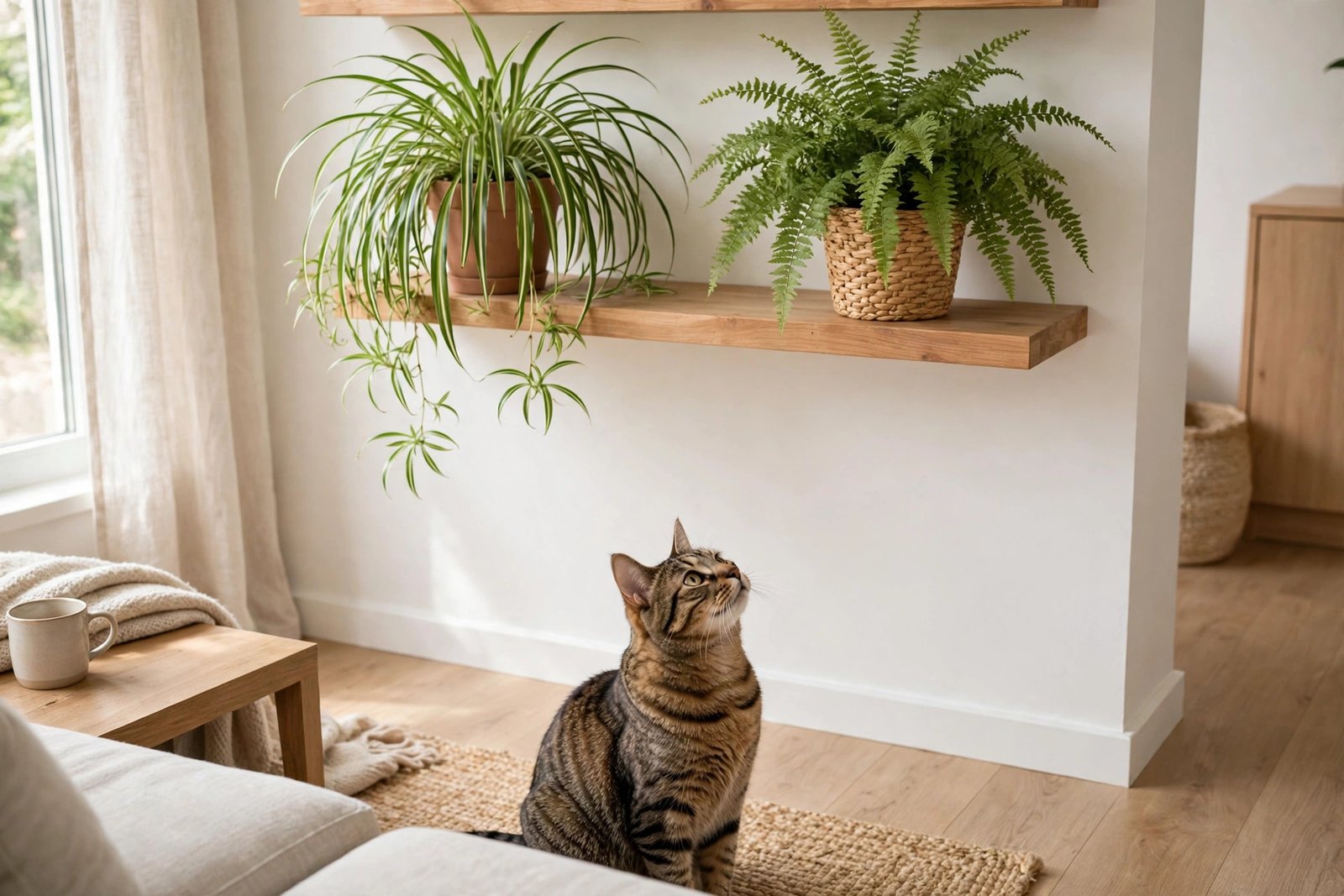
When you are deciding where to place houseplants with cats, the best spot is one where the plant gets the light it needs, the pot cannot be knocked over, and your cat cannot easily reach the leaves — with a sunny place of its own nearby for your cat.
Most placement mistakes come from thinking about only one side of that balance: a plant on the sunniest windowsill is perfect for the plant and irresistible to a cat, while a plant on the highest shelf is safe from chewing but may sit in the dark and weaken. Good answers to where to place houseplants with cats match the plant, the light, and your cat’s habits together.
The Short Answer
Put non-toxic plants where they get the right light, in heavy, stable pots, on wide shelves or stands that are fixed or hard to tip, away from your cat’s favourite perches. Keep toxic plants out of the home entirely, or in a room your cat cannot enter — a high shelf is not enough.
Give your cat its own sunny window spot and something safe to chew, such as cat grass. That is the whole idea of where to place houseplants with cats in one sentence: safe plants, right light, stable pots, and no easy path for the cat.
Before you move a single plant, check every plant by its botanical name in the ASPCA list — placement cannot make a toxic plant safe.
Start With Safety: Check the Plant Before Choosing a Spot
Placement decisions start with the plant, not the room: a non-toxic plant in the wrong spot is a care problem, while a toxic plant in a “safe” spot is a safety problem, because cats climb, jump, and knock things down. Every guide to where to place houseplants with cats should start here, because a toxic plant has no safe spot.
Knowing where to place houseplants with cats starts with the plant list, not the furniture. Check the label for the botanical name, not just the common name: two plants sold as “palm,” “fern,” or “lily” can have very different safety profiles.
The ASPCA notes that any plant can cause mild stomach upset when eaten — “non-toxic” means not expected to poison, not safe to chew without limit.
Spider plant (Chlorophytum comosum), Boston fern (Nephrolepis exaltata), parlor palm (Chamaedorea elegans), and areca palm (Dypsis lutescens) are listed by the ASPCA as non-toxic to cats. For more ideas, see our list of 15 cat-safe houseplants. For plants to avoid, see common houseplants that are toxic to cats.
Plants That Should Not Be in a Cat Home at All
True lilies (Lilium species) and daylilies (Hemerocallis species): the ASPCA states they can be lethal to cats, and even small exposures to pollen can cause kidney failure or even death — leaves, stems, petals, pollen, and vase water included.
Do not try to solve a lily problem with a high shelf or a closed terrarium. A fallen petal, pollen on fur, or a drink from vase water is enough to be dangerous.
Keep true lilies and daylilies out of the home entirely. Learn the exact types in Are Lilies Toxic to Cats? Types, Exposure Risks, and Urgent Steps. The same rule applies to other highly toxic plants, such as sago palm, pothos, and monstera: keep them in a closed room your cat cannot enter, or choose a different plant.
Think Like Your Cat: How Cats Use a Room
Cats do not treat a room the way people do. A shelf is a staircase, and a windowsill is a sunbed. Watching your cat for a few days is the cheapest way to learn where to place houseplants with cats in your own home.
Cornell University College of Veterinary Medicine notes that plant-chewing cats are usually indoor cats with little access to grass, and that the only way to guarantee protection is to block access.
That is why “high up” so often fails: a plant on a high shelf above a sofa is one jump away. Learning where to place houseplants with cats means asking three questions about every spot — can my cat jump to it, reach it standing up, or knock it down?
Light First: Matching Plants to Windows
Light decides where a plant can live. Match the plant to the window first, then solve the cat problem for that window. In short, where to place houseplants with cats is decided by light first and by the cat second.
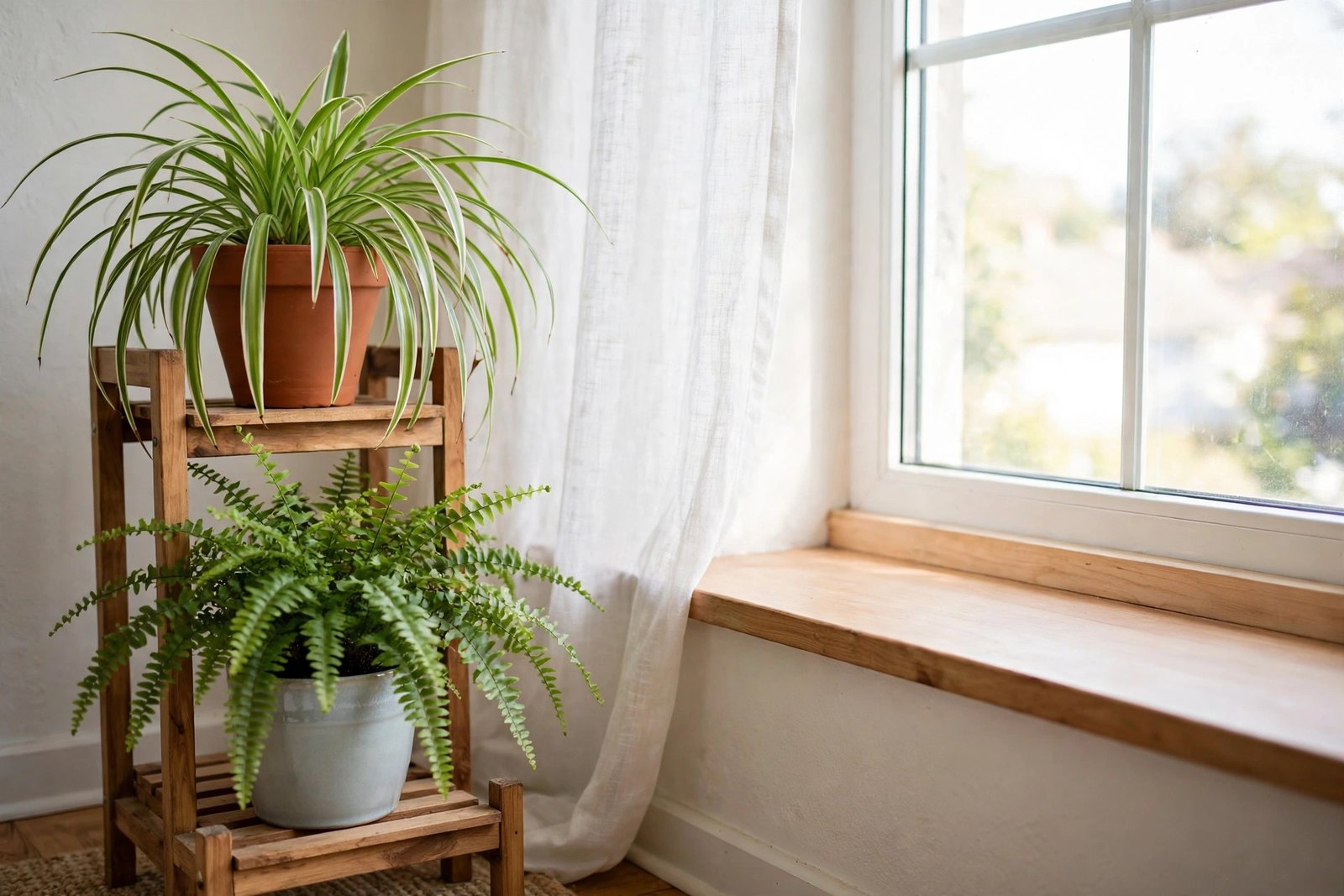
Figuring out where to place houseplants with cats starts at the window, because the window sets the light.
East-Facing Windows: Gentle Morning Sun
East-facing windows give soft, direct morning sun and indirect light.
When you are working out where to place houseplants with cats near an east window, put the plants at the sides of the window rather than in the centre, and leave a clear section of sill for your cat. A stand set a little to one side gives the plant the same morning light while keeping the middle of the sill free. That side-of-window habit is a small, practical part of where to place houseplants with cats.
South- and West-Facing Windows: Strong, Hot Light
South-facing windows get the most light, and west-facing windows get strong, hot afternoon sun. Most common houseplants scorch in direct midday or afternoon sun through glass, bleaching or crisping at the edges.
Place plants a few feet back from a south or west window, or behind a sheer curtain. A stand set back from the glass gives bright light without the burn. For a south or west window, deciding where to place houseplants with cats is really about distance: bright enough for the plant, far enough back that the glass does not cook the leaves.
Best Rooms for Houseplants With Cats
The living room usually has the best light and the most space — and the hardest room to get right, because your cat spends the most time there.

Choosing where to place houseplants with cats in the living room means keeping plants off low coffee tables, sofa arms, and TV stands your cat already walks across. A tall, heavy plant stand in a bright corner works better than a small pot on a surface your cat treats as a path.
Kitchens are bright and warm, but counters are at cat height. In a kitchen, where to place houseplants with cats is mostly about height and distance from the stove. Use a high shelf on a wall your cat cannot easily reach, or a hanging planter over a spot with no surface below it.
Bedrooms are often the easiest room — steady light, low traffic, and a door that can be closed. Place plants on a dresser or a stand away from the bed, not on a bedside table your cat steps on at night. A spare bedroom is the best place for a plant you are unsure about, or a toxic plant you are not ready to rehome.
In any room, thinking through where to place houseplants with cats means checking the route your cat takes through the space, not just the spot.
High Spots That Actually Work: Shelves, Stands, and Hanging Planters
High placement only works when the plant is genuinely out of reach and the support is genuinely stable.
The first rule of where to place houseplants with cats up high is to check the launch pad. A shelf above a sofa, bed, or bookshelf is a stepping stone, not a safe spot. A shelf on a bare wall, with nothing below it to stand on, is much harder to reach.
Wall shelves work when they are fixed with proper brackets and placed where no nearby furniture gives the cat a jumping-off point. That bare-wall rule is the core of where to place houseplants with cats up high. Keep the heaviest pots low, and check brackets regularly — a wet pot is much heavier than a dry one.
A tall plant stand only helps if it is stable. Choose a wide, heavy base and place it against a wall or in a corner, away from cat trees and sofas. When you decide where to place houseplants with cats on a stand, put the heaviest pot at the bottom.
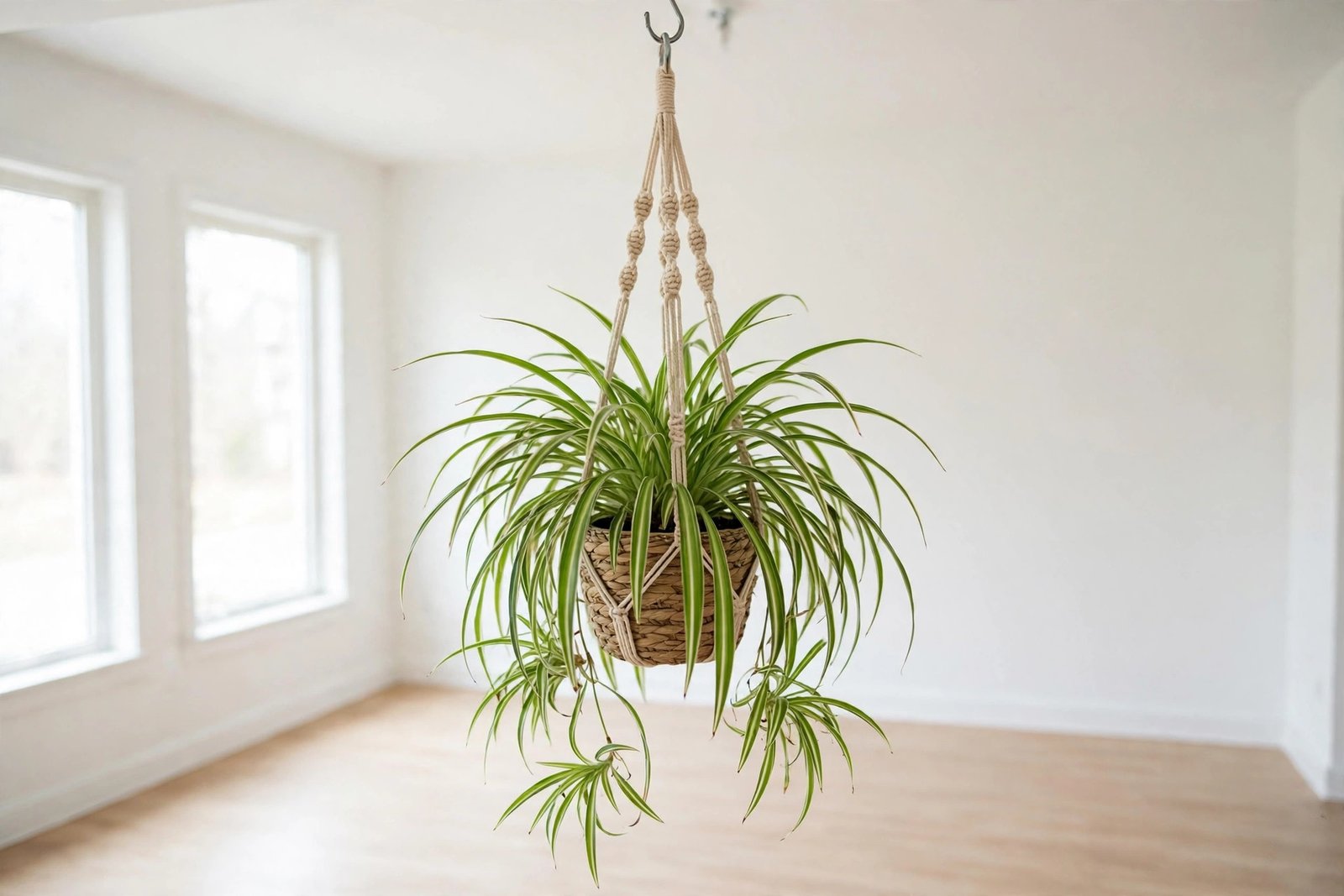
Hanging planters work only when the hook is fixed into a ceiling joist and rated for the full wet weight. Trim trailing stems so they do not reach a surface a cat can stand on.
Hanging does not make a toxic plant safe — only hang plants listed as non-toxic to cats. For more on protecting placed plants, see Best Ways to Protect Houseplants from Curious Cats.
Give Your Cat a Sunny Spot of Their Own
This is the placement tip most people skip: if you fill the only sunny windowsill with plants, your cat will push through them to reach the sun. Leave a clear section of the sill for your cat, or add a window perch or a cat bed in the sun nearby.
The kindest part of where to place houseplants with cats is giving your cat a spot that is better than the plant’s spot. Cats that have their own sunny place are less likely to climb after yours.

Place a pot of cat grass — usually wheatgrass, oat grass, or barley grass — where your cat can reach it, and check the botanical name against the ASPCA list first. A cat with its own sunny spot and safe greens to nibble is far less interested in your houseplants. That is the other half of where to place houseplants with cats: a cat with its own greens leaves the plants alone.
What to Do If Your Cat Chews a Plant in Its New Spot
No guide to where to place houseplants with cats can promise a cat will never chew a leaf. Even in a well-placed setup, a cat may still chew one. Stay calm: move your cat away gently, remove plant material from its mouth only if you can do so safely, and note the plant’s name, roughly how much was eaten, and when.
Then call your veterinarian or an animal poison control service right away: the ASPCA Animal Poison Control Center at (888) 426-4435, or Pet Poison Helpline at (855) 764-7661. A consultation fee may apply. Do not wait for symptoms — early advice matters, and some toxic effects take hours to show.
Do not try home remedies, do not try to make your cat vomit, and do not give milk, oil, or other substances unless a veterinarian tells you to. If it was a true lily or daylily, treat it as an emergency, even if your cat looks well. Even a well-chosen spot cannot prevent every nibble, which is why knowing where to place houseplants with cats also means knowing what to do when the plan fails.
For a fuller guide, see What to Do If Your Cat Eats a Toxic Plant: A Safety Guide.
Frequently Asked Questions
Where is the safest place to put houseplants with cats?
A bright spot your cat cannot easily reach — a fixed wall shelf, a stable plant stand in a corner, or a hanging planter over empty floor — with a non-toxic plant in a heavy pot. No spot is safe for a toxic plant, and none replaces checking the botanical name first.
Can I put plants on a high shelf to keep them away from my cat?
Only if the shelf is genuinely out of reach. Cats jump, so a shelf above a sofa, bed, or bookshelf is easy to reach. A shelf on a bare wall, with nothing below it to stand on, is much harder to reach. The test for where to place houseplants with cats on a shelf is simple: stand where your cat stands, and look for the jump.
Is a windowsill a good place for plants with cats?
It is good for the plant and tempting for the cat. Share the sill — plants at the sides, a clear section for your cat — or move the plants to a stand beside the window and leave the sill for the cat.
Where should I put toxic plants if I already own them?
The safest choice is to remove them from the home or rehome them. If you keep one, it must go in a room your cat cannot enter, with the door kept shut. A high shelf is not enough for a plant such as a true lily or a sago palm. No version of where to place houseplants with cats makes a toxic plant safe in a shared room.
Can I put plants in the bathroom with a cat?
Yes, if the bathroom has enough natural light and the pots sit where a cat cannot knock them over. A wall shelf or a stand by the window is safer than the rim of the bath or sink.
Should plants go in the bedroom?
Bedrooms are often a good choice: the light is steady, traffic is low, and the door can be closed. Place plants on a dresser or stand away from the bed, not on a bedside table.
Conclusion
Knowing where to place houseplants with cats matters as much as which plant you choose. Check the botanical name in the ASPCA list, keep toxic plants — especially true lilies and daylilies — out of the home entirely, and match the plant to the light.
Place plants on fixed shelves, stable stands, or hanging planters your cat cannot reach, in heavy pots that cannot be tipped over, and leave your cat a sunny spot of its own with cat grass nearby. Then pick one room, move one plant to a better spot this week, watch your cat for a few days, and adjust before adding the next plant.
Getting where to place houseplants with cats right is not a one-time job, so check the spots every few months and move a plant early.
Disclaimer: This article is for general information only and does not replace advice from a veterinarian. Plant safety listings can change, and individual cats can react differently. If your cat has eaten a plant and seems unwell, contact your veterinarian or an animal poison control service promptly.
Sources
- ASPCA Animal Poison Control Center. Toxic and Non-Toxic Plants list. https://www.aspca.org/pet-care/animal-poison-control/toxic-and-non-toxic-plants
- ASPCA. Do You Know Which Flowers and Plants Are Toxic to Pets? Our Experts Explain! https://www.aspca.org/news/do-you-know-which-flowers-and-plants-are-toxic-pets-our-experts-explain
- ASPCA Animal Poison Control Center. Toxic and Non-Toxic Plant List — Cats. https://www.aspca.org/pet-care/animal-poison-control/cats-plant-list
- Cornell University College of Veterinary Medicine, Cornell Feline Health Center. Feline Behavior Problems: Destructive Behavior (houseplant chewing). https://www.vet.cornell.edu/departments-centers-and-institutes/cornell-feline-health-center/health-information/feline-health-topics/feline-behavior-problems-destructive-behavior
- Cornell University College of Veterinary Medicine, Cornell Feline Health Center. Common Cat Hazards. https://www.vet.cornell.edu/departments-centers-and-institutes/cornell-feline-health-center/health-information/feline-health-topics/common-cat-hazards
- Cornell University College of Veterinary Medicine, Cornell Feline Health Center. Poisons. https://www.vet.cornell.edu/departments-centers-and-institutes/cornell-feline-health-center/health-information/feline-health-topics/poisons
14 thoughts on “Where to Place Houseplants in a Home With Cats”